
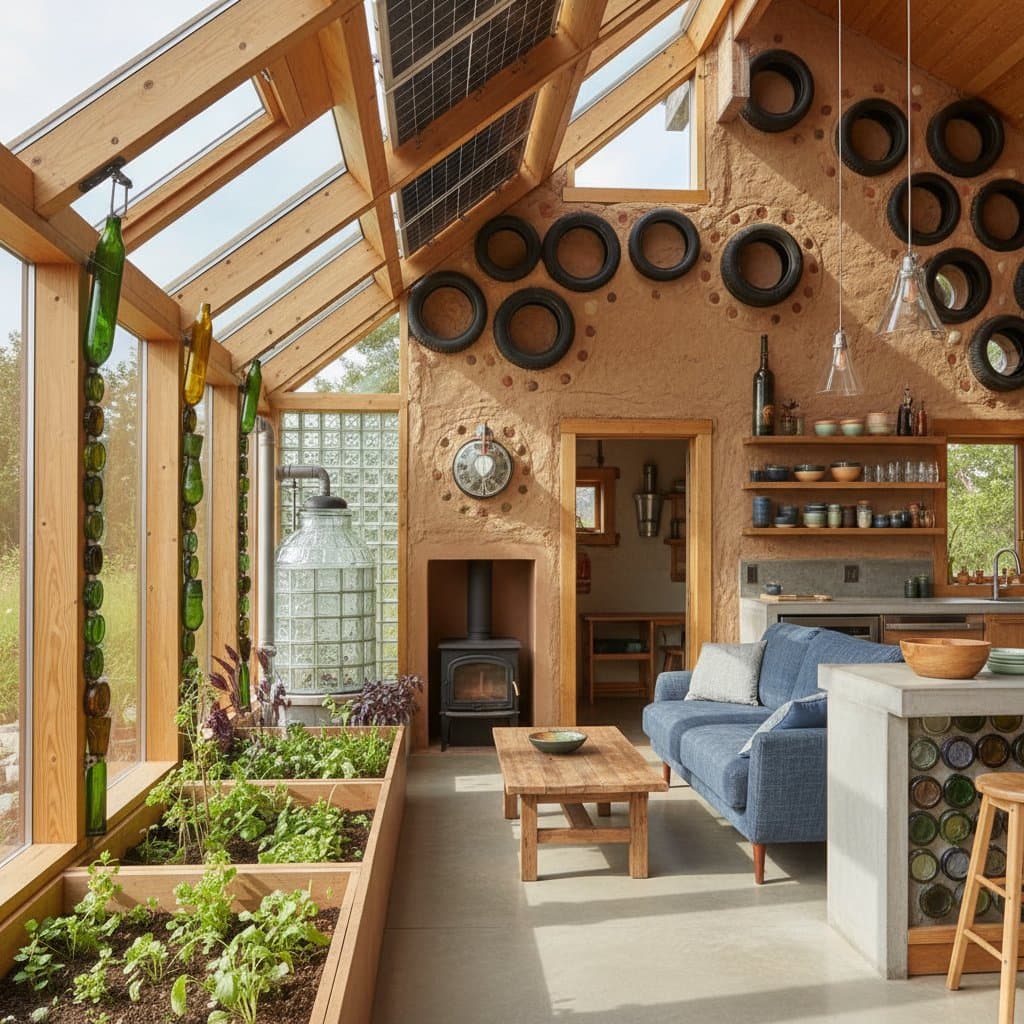
Why Tire Earthships Are Gaining Traction
Consider a pile of discarded tires languishing in a landfill. Increasingly, individuals recognize their potential beyond waste. In off-grid settlements and environmentally focused communities, tire Earthships emerge as viable sustainable housing solutions. Their unconventional appearance belies practical benefits for those pursuing autonomy, efficiency, and reduced environmental impact.
Key Features of Tire Earthships
A tire Earthship utilizes recycled materials, primarily tires packed with rammed earth, to form walls. These walls offer substantial thermal mass and structural integrity. The design incorporates on-site power generation, rainwater harvesting, and waste management, relying on passive solar strategies to maintain comfortable interiors without conventional heating, ventilation, or air conditioning systems.
Initially appealing to off-grid advocates, these homes now attract broader interest for blending self-reliance with everyday conveniences. Residents enjoy electric lighting, potable water, and sanitation without dependence on municipal services.
Factors Driving Adoption of Tire Earthships
Adoption stems from both ecological principles and economic realities. Escalating utility rates, mounting waste challenges, and demand for robust, low-maintenance residences prompt exploration of alternatives. Tires prove ideal: abundant, durable, and transformed into effective thermal barriers when filled with earth, retaining warmth during cold seasons and deflecting heat in summer.
Specific advantages include:
- Energy Autonomy – Integration of solar photovoltaic systems and passive solar design minimizes or eliminates energy expenses.
- Waste Diversion – Each incorporated tire prevents landfill accumulation.
- Reduced Ongoing Expenses – Upfront labor demands yield long-term savings on maintenance.
- Climate Versatility – Modifications in orientation or supplementary materials suit diverse regions.
- Durability – Massive walls and earthen reinforcements withstand severe weather and thermal fluctuations.
Steps to Construct a Tire Earthship
Individuals may construct a tire Earthship independently or engage specialists in green building. The process demands diligence and physical stamina, though straightforward.
- Gather Resources – Obtain tires from tire retailers, auto repair facilities, or recycling operations. A modest dwelling requires 300 to 500 units, depending on dimensions.
- Site Preparation – Clear and grade the terrain, delineating wall positions. Partial embedding into a south-facing slope enhances natural insulation.
- Fill and Compact Tires – Ram earth into each tire using a sledgehammer or pneumatic tamper until firm. Allocate four to six hours per tire layer.
- Assemble Walls – Stack tires in a running bond pattern, ensuring plumb alignment with levels and shims for stability.
- Apply Finishes – Insulate exteriors if needed, then coat with cement-stabilized plaster. Interiors benefit from earthen plasters like clay or lime for breathability and aesthetics.
- Integrate Utilities – Mount solar arrays, install cisterns for rainwater, deploy greywater treatment, and fit composting toilets.
- Complete Interiors – Opt for stained concrete slabs, ceramic tiles, or reclaimed lumber flooring. Maximize passive gain with extensive glazing on southern exposures.
Self-build projects span three to six months with part-time dedication. Professional involvement accelerates completion at the cost of labor fees.
Financial Overview
Expenses for a tire Earthship fluctuate based on scale, locale, and self-participation. Basic units cost 30 to 50 percent less than stick-built equivalents, while elaborate versions with advanced systems approach conventional prices.
Budget allocation typically covers:
- Core Materials – Tires and soil incur negligible fees; allocate for metal roofing, glazing, and piping.
- Workforce – Self-labor saves thousands; contractors charge $50 to $100 hourly.
- Off-Grid Components – Photovoltaics, storage batteries, and filtration systems range from $10,000 to $30,000.
- Interior Elements – Plastering, fixtures, and millwork mirror standard residential outlays.
Post-construction, operational costs plummet, eliminating utility payments and confining upkeep to periodic inspections.
Advantages and Challenges
Prospective builders should weigh benefits against hurdles.
Advantages:
- Virtually eliminated utility expenditures
- Sustainable repurposing of waste
- Robust defense against elemental forces
- Consistent thermal comfort
- Liberation from grid dependencies
Challenges:
- Demanding physical construction phase
- Necessity for targeted expertise
- Potential regulatory obstacles in permitting
- Distinctive aesthetics clashing with uniform suburbs
- Limited secondary market appeal
Research and preparation mitigate most issues, tipping the balance toward rewards.
Essential Planning Steps
Verify compliance with municipal codes and land-use regulations prior to commencement. Earthships occasionally face scrutiny as non-standard builds; consult architects versed in alternative methods to streamline approvals.
Incorporate water and power infrastructure from inception. Dedicated roof areas support photovoltaic mounting and catchment; retrofits prove inefficient.
Assess local conditions: augment insulation in temperate zones or emphasize overhangs in arid areas. Prototyping via smaller outbuildings refines skills before scaling up.
Daily Life in a Tire Earthship
Inhabitation mirrors conventional routines with enhanced efficiency. Kitchens, baths, and lounges function seamlessly, yet resource management fosters mindful consumption. Owners report heightened satisfaction from overseeing their systems, cultivating self-reliance.
Routine care entails solar panel cleaning, filter servicing, and cistern maintenance. The inherent stability demands infrequent structural interventions.
Embracing Autonomy Through Tire Earthships
Tire Earthships offer a pathway to housing that aligns with personal values and fiscal prudence. By harnessing readily available resources, these dwellings not only shelter but also empower, fostering a lifestyle of resilience and stewardship.