
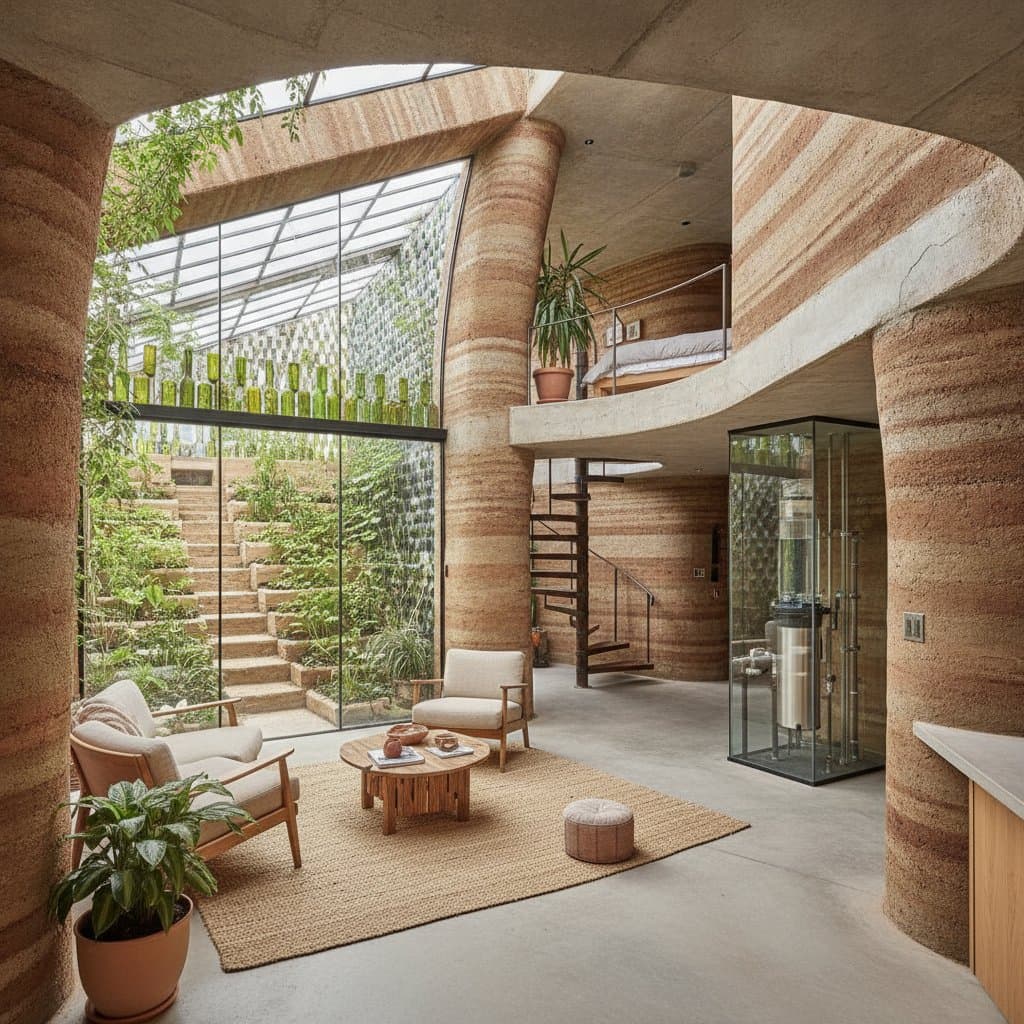
Earthship Homes Deliver Radical Sustainability Off-Grid
Imagine never paying another power bill, never worrying about water restrictions, and living in a home that regulates its own temperature. That is the promise of an Earthship home. The short answer is yes, it can be realistic, but it takes planning, effort, and a willingness to think differently about what a home should be.
Earthship homes are designed to operate completely off-grid. They use natural and recycled materials, harvest rainwater, generate electricity, and even grow food indoors. With the right approach it is achievable on both a small and large scale.
What Makes an Earthship Different
An Earthship is not just a house built with dirt. It is a carefully engineered structure that uses the earth itself for insulation, temperature stability, and strength. The main building material is often rammed earth packed into used tires, which form thick, heavy walls. These walls absorb and store heat during the day, then release it slowly at night, keeping the interior comfortable without heating or cooling systems.
The roof collects rainwater, which is filtered and reused several times. Solar panels and sometimes small wind turbines provide electricity. Greywater from sinks and showers irrigates indoor plants, while wastewater is treated through natural filtration. The design aims for complete independence from public utilities.
You could think of it as a self-contained ecosystem built out of recycled materials. It is both radical and practical, which is why it appeals to people who want a sustainable, low-cost lifestyle.
Why People Choose Earthship Homes
The main reason is sustainability, but there are other benefits too.
Pros:
- No monthly utility bills once the systems are in place
- Natural temperature control that keeps the home comfortable year-round
- Reuse of tires, bottles, and cans that would otherwise become waste
- Independence from the grid, which is valuable in remote areas
- Long life span with minimal maintenance
Cons:
- Labor-intensive construction, especially if you build it yourself
- Upfront costs for solar panels, water systems, and materials can be high
- Local building codes may not recognize Earthships, requiring extra permits
- Earth-packed walls make remodeling or adding windows difficult later
Most people who build or buy an Earthship do it for the long-term savings and environmental benefits rather than quick convenience. It is a lifestyle choice as much as a housing choice.
How the Basic Systems Work
Every Earthship relies on six core systems that work together to keep the home self-sufficient.
1. Structure and Thermal Mass
The walls are built from rammed earth inside used tires. This creates massive walls that stabilize the interior temperature. The front of the home usually faces south in the northern hemisphere to capture sunlight through large windows. The back is buried into the earth for insulation. The result is a home that stays around a comfortable temperature year-round with no mechanical heating or cooling.
2. Power Generation
Solar panels are the main power source. A typical small Earthship might need a 3 to 5 kilowatt solar array, which could cost between fifteen and twenty-five thousand dollars depending on location and setup. Some owners add a small wind turbine for extra energy. Batteries store power for night use. Once installed, ongoing costs are minimal.
3. Water Harvesting and Reuse
The roof is designed to collect rainwater, which flows into cisterns. That water then passes through filters for drinking and household use. Used water from sinks and showers is called greywater. It is redirected to indoor planters where plants clean it naturally. The same water can then flush toilets before it finally goes to a contained outdoor treatment cell.
4. Indoor Food Growth
Many Earthships include a greenhouse strip along the front windows. Here, you can grow vegetables, herbs, and even small fruit trees year-round. The plants benefit from the natural light and recycled greywater. You may not grow all your food inside, but it can significantly reduce grocery costs.
5. Wastewater Treatment
Blackwater, or water from toilets, is treated in outdoor botanical cells. These are shallow, plant-filled beds that filter and break down waste naturally. The process removes odors and turns sewage into clean, nutrient-rich water for landscaping.
6. Natural Ventilation and Lighting
Earthships are designed for airflow. Vents near the floor bring in cool air, which rises and exits through higher vents. The large glass front provides plenty of daylight, reducing the need for electric lighting. The design keeps the home bright and fresh without fans or air conditioners.
Building or Buying an Earthship
If you want to live in an Earthship, you have two main options: build one yourself or buy an existing one. Each has its own challenges.
Building Your Own
Building your own Earthship gives you full control over design and cost. You can start small, such as a one-bedroom unit, and expand later. The main challenge is the labor. Rammed earth walls take time and muscle. It can take hundreds of tires filled and stacked by hand. You may need help or workshops to learn the process.
Budget-wise, a small self-built Earthship might cost between one hundred and fifty to two hundred dollars per square foot, depending on how much work you do yourself. Hiring professionals raises the cost but speeds up construction.
Buying an Existing Earthship
Some areas have established Earthship communities. Buying an existing home can save time but limits design choices. Prices vary widely depending on size, systems, and location. Because Earthships are unique, financing can be tricky. Some lenders hesitate to issue mortgages on unconventional structures, so you may need alternative financing or private funding.
Practical Considerations Before You Start
Before committing to an Earthship, look at these practical points.
- Local Regulations: Some regions require traditional septic systems or electrical hookups, which can conflict with off-grid designs. Check with planning departments before you buy land.
- Climate: Earthships work best in dry, sunny climates where solar power and rainwater collection are reliable. In very humid or cloudy areas, you might need design modifications.
- Maintenance: Systems like filters, solar batteries, and water pumps need regular checks. You will be your own utility company.
- Resale Value: Earthships appeal to a niche market. If you plan to sell later, it may take longer to find the right buyer.
- Learning Curve: Expect to spend time understanding your systems. Knowing how each part works makes maintenance easier and keeps costs down.
Each of these points affects your timeline and budget. Being realistic about them will help you avoid surprises.
Living Comfortably Off-Grid
Once built, an Earthship feels surprisingly normal. You can use standard appliances, regular plumbing fixtures, and comfortable furnishings. The biggest difference is awareness. You will notice how much power you use, how quickly the cistern fills after rain, and how your plants respond to recycled water. Daily life becomes more connected to natural cycles.
Some people find this deeply satisfying. Others prefer more convenience. The key is balance. You can adapt an Earthship design to include certain grid connections, such as backup electricity or municipal water, while still keeping most of the sustainable features.
Planning Your Earthship Journey
If you are serious about going off-grid, start small. Visit an Earthship demonstration site or talk with current owners. Seeing the systems in person helps you understand what daily living looks like. Then, decide what level of self-sufficiency fits your comfort zone.
Earthship homes are not a quick fix, but they offer a durable, inspiring way to live with less waste and more control over your resources. With some patience and research, you can create a home that works with nature rather than against it.