
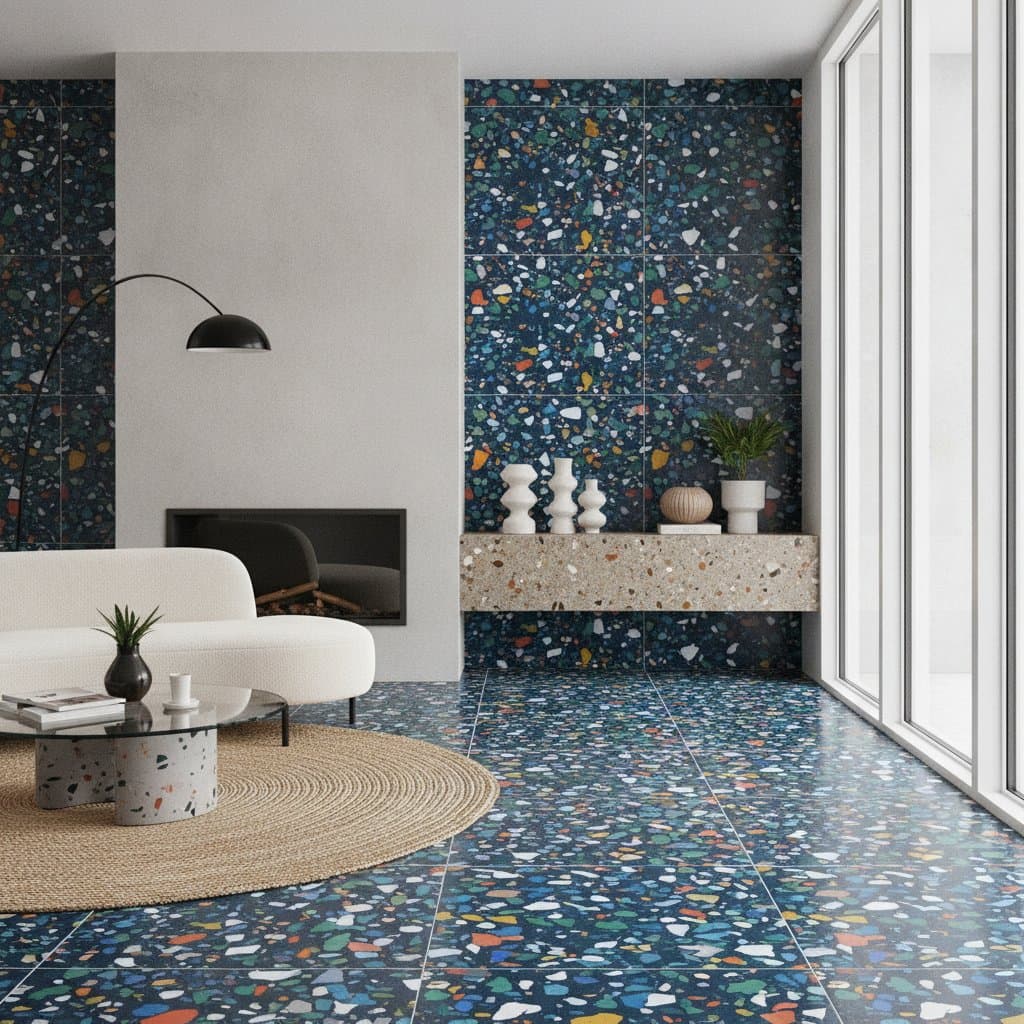
Terrazzo Speckled Surfaces Making a Bold 2026 Comeback
You may have noticed terrazzo appearing in design magazines, showrooms, and local cafes. The colorful, speckled surface that once lined government buildings and mid-century schools now draws fresh attention. What once seemed dated now attracts interest for its combination of color, texture, and durability. Homeowners rediscover terrazzo because it delivers artistic expression alongside practical performance.
New terrazzo finishes offer greater flexibility than older versions. This allows use on floors, countertops, backsplashes, shower walls, and furniture. The revival stems from customization options, sustainable qualities, and design adaptability. The following sections explain the drivers behind renewed interest and outline steps for successful integration.
Key Drivers Behind Renewed Interest
Several practical and aesthetic factors support the current attention to terrazzo.
Design Versatility
Designers and homeowners select terrazzo for subtle or dramatic effects. Small, fine chips produce a refined appearance. Larger, colorful fragments create bold statements. The color range supports neutral minimalist schemes or vibrant mixes such as turquoise, coral, or mustard. Terrazzo pairs effectively with wood, brass, and concrete.
Durability and Longevity
Properly sealed terrazzo withstands decades of use with limited wear. Its hard surface resists scratches and dents more effectively than vinyl or laminate. This quality suits homeowners seeking a long-term surface investment.
Sustainability
Many mixes incorporate recycled stone and glass chips. The extended lifespan reduces replacement frequency and associated waste. Epoxy-based terrazzo can install over existing concrete and thereby avoid demolition expenses.
Low Maintenance
Once sealed, terrazzo requires regular sweeping and damp mopping. It handles pet traffic and high footfall better than hardwood or carpet by resisting stains and scratches.
Artistic Expression
Each terrazzo surface remains unique. Designers create custom patterns, geometric borders, and branded inlays. Homeowners apply similar techniques to kitchen islands, vanity tops, or entryway floors.
Installation Process and Options
Terrazzo installation demands specialized tools and experience.
Professional Installation Steps
- Prepare a clean, level, and stable subfloor while addressing any moisture concerns.
- Blend the chosen binder with aggregates and pour the mixture.
- Allow curing, then grind the surface smooth with polishing equipment.
- Apply a protective sealant.
The full process spans several days. Improper work can produce cracks or uneven results that prove costly to correct.
Smaller-Scale Alternatives
Terrazzo-look tiles or paint finishes replicate the speckled appearance for accent walls, furniture, or small floors without full installation complexity.
Cost Ranges by Application
| Application | Typical Cost Range (per sq. ft.) | Notes |
|---|---|---|
| Cement terrazzo flooring | $20 - $30 | Requires periodic sealing |
| Epoxy terrazzo flooring | $25 - $40 | Supports brighter colors and thinner layers |
| Terrazzo countertops | $80 - $120 | Offers extensive custom color choices |
| Terrazzo tiles | $15 - $30 | Simplifies installation |
Prices fluctuate by region and labor market. Urban high-end areas often command higher rates. Request multiple quotes from contractors experienced specifically with terrazzo.
Practical Factors to Evaluate
Consider these aspects before committing to installation.
- Request a matte or honed finish in wet areas to improve traction.
- Choose epoxy terrazzo for upper floors or newer construction where flexibility helps prevent cracks.
- Verify structural capacity before installing heavier cement terrazzo on upper levels.
- Add radiant floor heating in cooler climates to offset the naturally cool surface temperature.
- Use only pH-neutral cleaners to preserve the sealed finish.
Current Design Directions
Contemporary terrazzo applications move beyond traditional gray-and-white combinations.
Bold Color Mixes
Coral, green, and cobalt chips appear in statement floors and kitchen islands to introduce personality within neutral rooms.
Monochrome Palettes
Tone-on-tone selections produce subtle contrast and a calming effect suited to minimalist interiors.
Large Aggregate Chips
Bigger stone fragments add texture and sculptural presence appropriate for open or commercial spaces.
Geometric Patterns
Metal strips and color divisions create layouts that reference Art Deco influences with updated proportions.
Accessory Options
Terrazzo-patterned wallpapers, planters, and textiles deliver the aesthetic for smaller budgets or temporary updates.
Next Steps for Implementation
Identify high-traffic zones such as kitchens or hallways for full terrazzo flooring when a lasting investment fits the budget. Smaller projects such as backsplash tiles or a custom vanity top allow testing with reduced commitment.
Set a budget that covers labor, materials, and future sealing. Consult a contractor with documented terrazzo experience and request project references. Decide between cement for a classic solid feel or epoxy for expanded color flexibility. Bring cabinetry and paint samples when selecting chip colors. Establish a regular cleaning and resealing schedule with products recommended by the installer.