
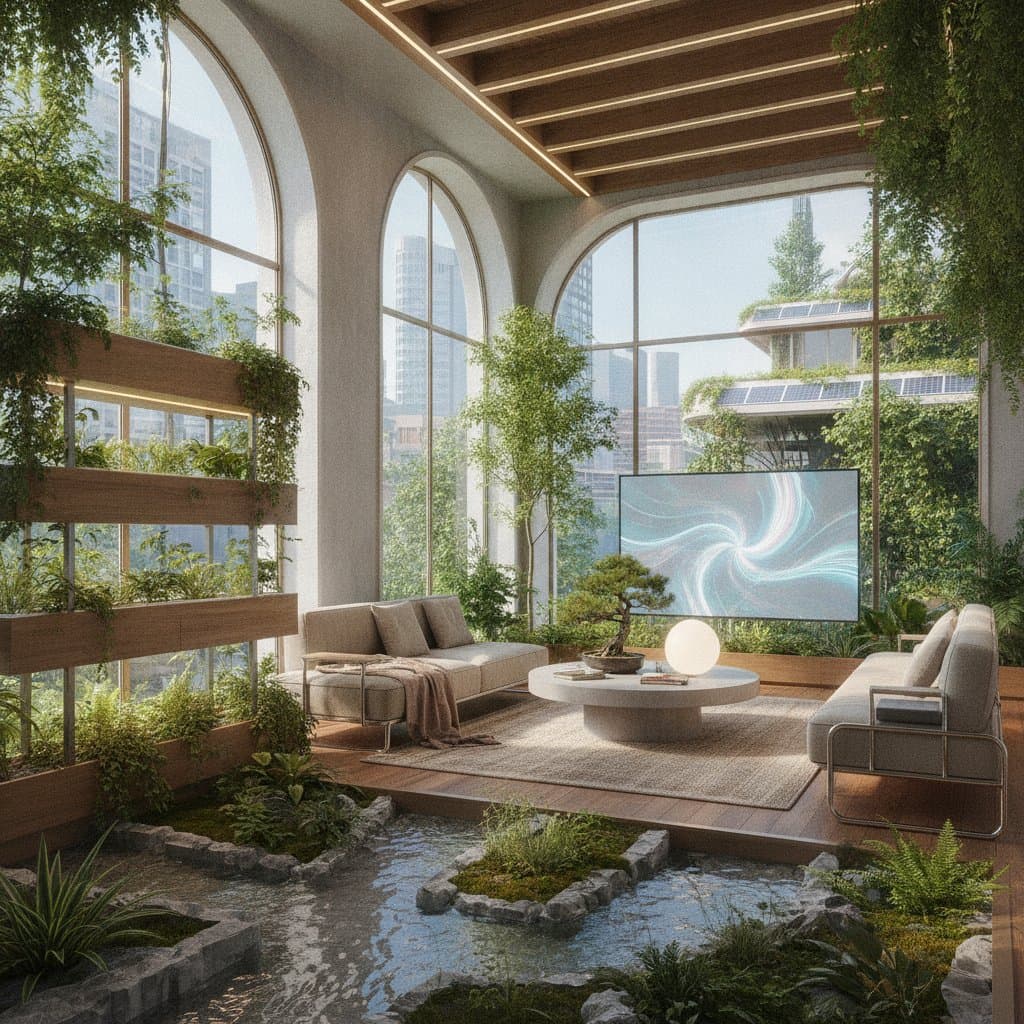
Solarpunk Homes Embrace Optimistic Eco Future Design
Imagine standing in a backyard surrounded by lush green walls, solar panels integrated into the roofline, and a small wind turbine operating quietly nearby. The air feels cleaner. The temperature stays comfortable. Energy bills drop close to zero. This vision drives solarpunk homes, a design approach centered on sustainable living that remains both hopeful and practical.
Homeowners seek ways to cut energy costs, adopt sustainable practices, and shape spaces that respect the planet. Sustainability can appear technical and full of tradeoffs. Solarpunk design provides another path. It combines technology with natural systems to produce homes that operate efficiently, feel comfortable, and lift the spirit.
Core Elements of Solarpunk Homes
Solarpunk design begins with optimism. It envisions neighborhoods that draw power from clean sources, where buildings support local ecosystems and communities benefit from careful planning. A solarpunk home maintains three central goals: energy independence, environmental balance, and occupant comfort.
Key features include the following:
- Solar arrays and other renewable systems built into the architecture from the start.
- Green infrastructure such as rooftop gardens, vertical planters, and rainwater collection.
- Natural materials including bamboo, reclaimed wood, and stone paired with high efficiency equipment.
- Passive strategies that use sunlight, shade, and airflow to limit mechanical energy demand.
A genuine solarpunk home focuses on function and beauty rather than gadgets. It creates an environment that cooperates with natural processes.
Steps Homeowners Can Take
Owners who add even a few solarpunk features often see clear gains in performance and comfort. Utility rates continue to rise, which makes renewable upgrades appealing. Sustainable materials also support long term property value.
Existing homes can incorporate these ideas through targeted updates. Useful actions include improved insulation and windows, solar panels or solar shingles, locally sourced materials during remodels, and outdoor areas designed to manage rainwater while supporting pollinators. Such measures reduce monthly costs, raise resale value, and increase resilience during outages.
Planning a Solarpunk Project
Homeowners ready to move forward follow a straightforward sequence.
- Evaluate site conditions and regional climate patterns with help from an energy auditor or sustainable architect.
- Apply passive strategies by positioning windows for morning light, adding overhangs for shade, and enabling cross ventilation.
- Install renewable equipment. A typical mid sized solar array ranges from 12000 to 25000 dollars depending on roof area and location.
- Add green infrastructure. A basic rain garden starts near 1500 dollars, while a larger living roof can exceed 20000 dollars.
- Select low impact finishes such as low VOC paints, recycled tiles, and reclaimed timber.
- Design for ongoing access so panels, plants, and filters remain easy to service.
Budget, Safety, and Compliance Factors
Project costs vary with scope. Minor additions such as smart thermostats or LED fixtures may stay under 500 dollars. Comprehensive retrofits can reach 40000 dollars or higher. Many owners recover expenses within ten to fifteen years through lower utility bills and available incentives.
Licensed professionals must handle electrical and structural work. Building departments often require permits for solar installations and water systems, so early verification prevents delays. Moderate renovations typically span several months.
Connection to Natural Surroundings
Solarpunk design also supports well being. Interiors filled with plants and natural textures receive soft daylight. Indoor and outdoor areas connect directly. Research shows that regular contact with greenery and daylight lifts mood and focus. Thoughtful placement of these elements delivers those advantages inside the home.
Begin With Targeted Changes
Adoption does not demand perfection. Owners can replace a few synthetic finishes with natural options, add solar panels, or install a rain barrel. Each step moves the property toward greater efficiency and resilience. Homeowners who pursue this path invest in a way of living that values sustainability alongside creativity. The result is a residence where architecture, technology, and nature operate in concert.