
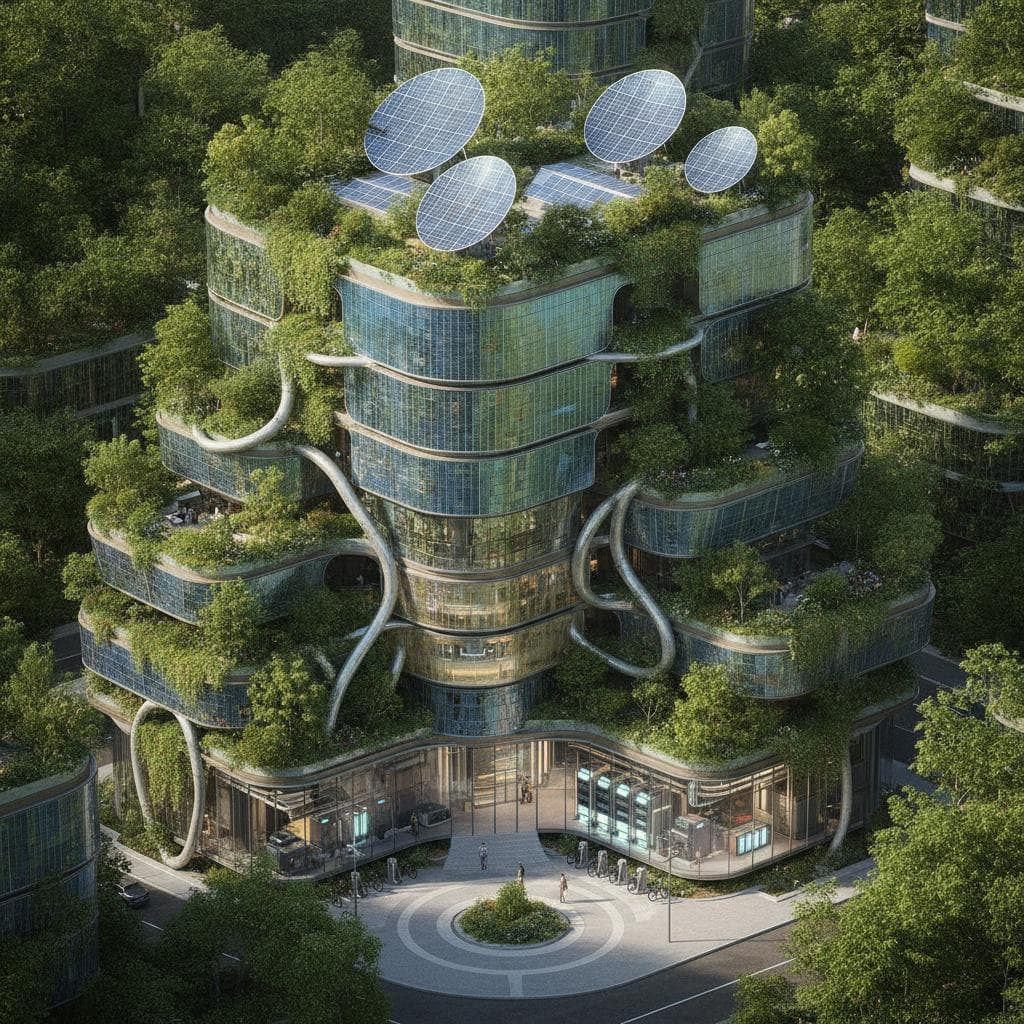
Imagining Green Futures Through Solarpunk Architecture
Have you ever looked at a city skyline and wished it looked more alive? Solarpunk architecture offers a vision of buildings covered in plants and powered by sunlight. This approach creates neighborhoods that function like gardens rather than concrete blocks. The movement combines eco-friendly design with practical innovation that applies right now.
Core Principles of Solarpunk Design
Solarpunk represents a mindset about how people and nature share space effectively. It emphasizes renewable power sources, integrated green spaces, and local resource management. Designers ask how each building can contribute to the environment instead of depleting it. The aesthetic features natural materials, solar panels, vertical gardens, and organic forms that support community balance.
Benefits for Energy Use and Daily Living
Traditional buildings consume large amounts of energy through fossil fuel dependence and mechanical cooling. Solarpunk structures reverse this by prioritizing sunlight, natural airflow, and locally sourced materials. A typical home can reduce energy costs through rooftop solar arrays or small wind turbines. Green roofs and shaded walls maintain comfortable temperatures without constant air conditioning. Rainwater systems and greywater recycling further cut utility expenses while improving indoor air quality.
Steps to Apply Solarpunk Concepts
Implementation does not require a full home rebuild. Start with targeted additions that accumulate over time.
- Install solar panels on south-facing roof sections or solar water heaters to offset electricity needs.
- Incorporate vertical gardens or balcony planters using native plant species that improve air and provide cooling.
- Position furniture to maximize window light and create cross breezes through open windows.
- Set up rain barrels connected to simple filters for plant watering and outdoor cleaning tasks.
- Select bamboo, reclaimed wood, or recycled metals during any renovations instead of synthetic alternatives.
These adjustments create greater self-sufficiency without major disruption.
Weighing Advantages Against Limitations
Solarpunk approaches bring clear long-term gains alongside initial hurdles.
Advantages
- Reduced energy and water expenses after the first few years.
- Better indoor environments through natural light and plant integration.
- Enhanced mental well-being from calmer, greener surroundings.
- Higher resale value as sustainable features gain market demand.
Limitations
- Higher initial investment for equipment and installations.
- Potential need for permits or structural reviews.
- Ongoing garden and system upkeep requirements.
- Constraints in dense apartments or historic properties.
Many homeowners report that ongoing savings and comfort justify the starting effort.
Planning and Execution Details
Careful preparation supports successful projects of any scale. Balcony gardens often cost a few hundred dollars, while full solar setups range higher. Regional incentives frequently offset portions of these expenses. A living wall can be completed in one weekend, whereas roof gardens may take several weeks. Local building codes must be checked before structural changes. Licensed contractors handle complex wiring or safety elements when needed.
Daily Experience With Integrated Design
Residents notice stronger connections to their environment after adopting these elements. Homes respond to sunlight, rainfall, and vegetation to maintain comfort naturally. One focused addition, such as a solar lighting system or herb wall, provides an immediate starting point. Progressive changes lead to spaces that support both personal well-being and environmental health.