
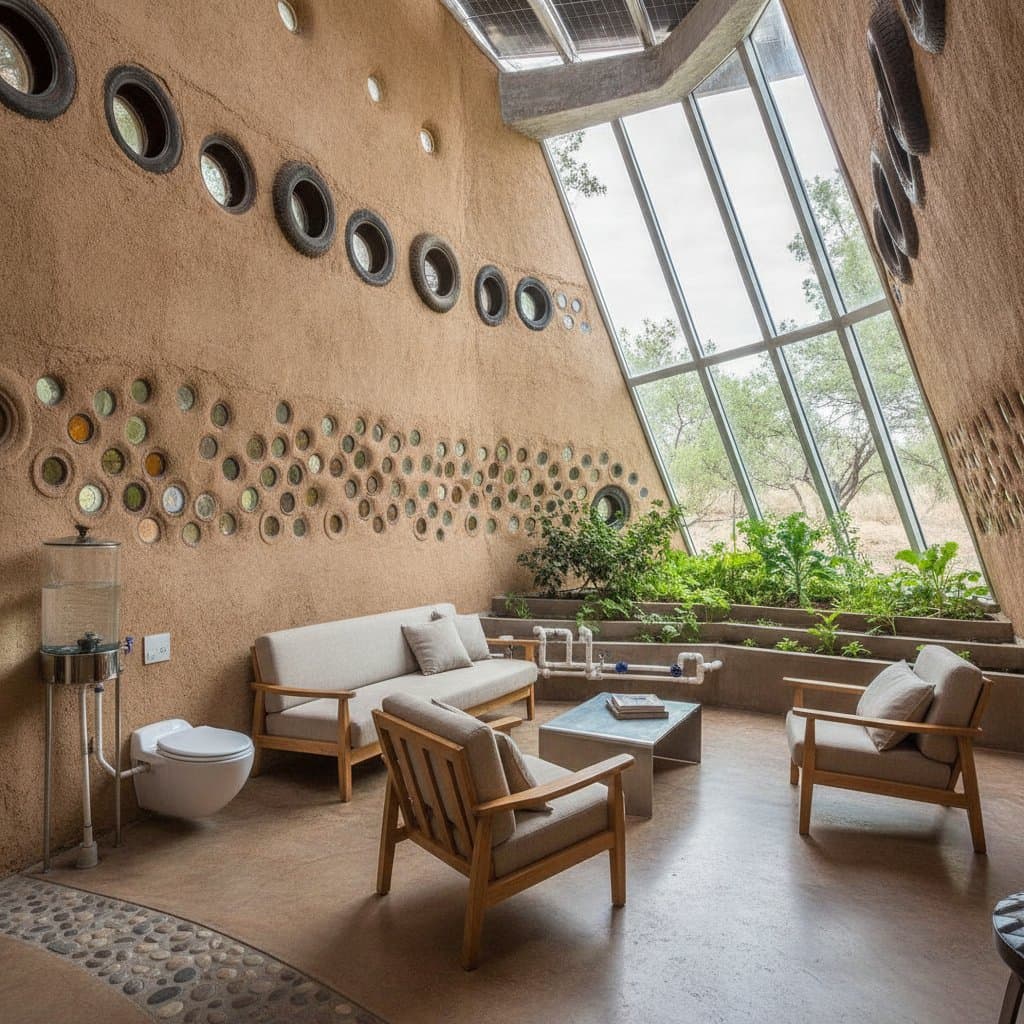
Living Self-Sufficiently in Recycled Earthship Homes
Daydreams of life without utility bills often include sun warmed walls and the steady rhythm of self sufficiency. Earthship homes turn that vision into reality through structures that operate entirely off grid. These dwellings rely on recycled materials and natural systems to generate power, collect water, and regulate temperature.
The Appeal of Off Grid Living
Off grid living centers on intentional choices rather than simple disconnection from utilities. Residents wake to light passing through walls made of reclaimed glass bottles while solar panels supply their electricity. The result combines personal freedom with measurable reductions in environmental impact.
Earthships address the practical challenge of aligning construction with natural cycles. Their designs integrate architecture and ecology so that the home supports daily needs without external infrastructure.
Core Elements of an Earthship
An Earthship functions as a self contained system built primarily from natural and reused materials. Compacted earth tires form load bearing walls, while bottles and cans create colorful masonry. The structure captures rainwater, grows food indoors, and maintains stable temperatures through earth sheltering.
Six essential systems operate together:
- Solar or wind equipment produces electricity.
- Rain and snow supply household water.
- Natural filters treat wastewater for reuse.
- Bermed earth and south facing windows control indoor climate.
- Greenhouse beds produce vegetables year round.
- Salvaged tires, cans, and lumber reduce new material demand.
Construction with Reclaimed Resources
Tire walls deliver both structural mass and thermal mass when packed with soil. Bottle and can masonry adds insulation and transmits daylight in shifting patterns. These choices divert waste from landfills and lower construction expenses compared with conventional builds.
The finished surfaces carry visible evidence of material origins. Homeowners gain a direct sense of resource cycles while achieving lower embodied carbon than standard framing methods.
Year Round Thermal Performance
Earthen walls absorb daytime heat and release it after sunset. Partial burial into the site adds further insulation against temperature swings. Ventilation tubes draw fresh air while large south windows admit winter sun and exclude summer heat.
These passive strategies remove the need for furnaces or air conditioners. Interior conditions remain steady with minimal mechanical input.
Planning and Construction Sequence
Successful projects follow a clear sequence of decisions:
- Verify local climate data and building regulations for alternative methods.
- Select a site with unobstructed southern exposure and good drainage.
- Size solar arrays, batteries, and cisterns to match household loads.
- Collect tires, bottles, and lumber from local suppliers before excavation.
- Engage builders familiar with earth tire techniques for structural review.
- Begin with a small module to test systems before scaling to full residence.
Budget and Compliance Factors
Material savings offset some labor and equipment costs, yet solar arrays, pumps, and filtration units remain significant line items. Owner participation in construction can reduce total outlay. All electrical and plumbing work must satisfy applicable codes, and permits for nonstandard assemblies require advance approval.
Daily Operation and Awareness
Once occupied, the home operates as an integrated system. Greenhouse plants filter air and supply produce while water moves through settling tanks and reuse lines. Residents track solar input and adjust usage according to weather patterns.
Steps Toward an Earthship of Your Own
Contact regional practitioners who have completed permitted projects. Review soil tests, solar data, and water rights for the chosen parcel. With documented plans and qualified oversight, a functional off grid residence becomes attainable.