
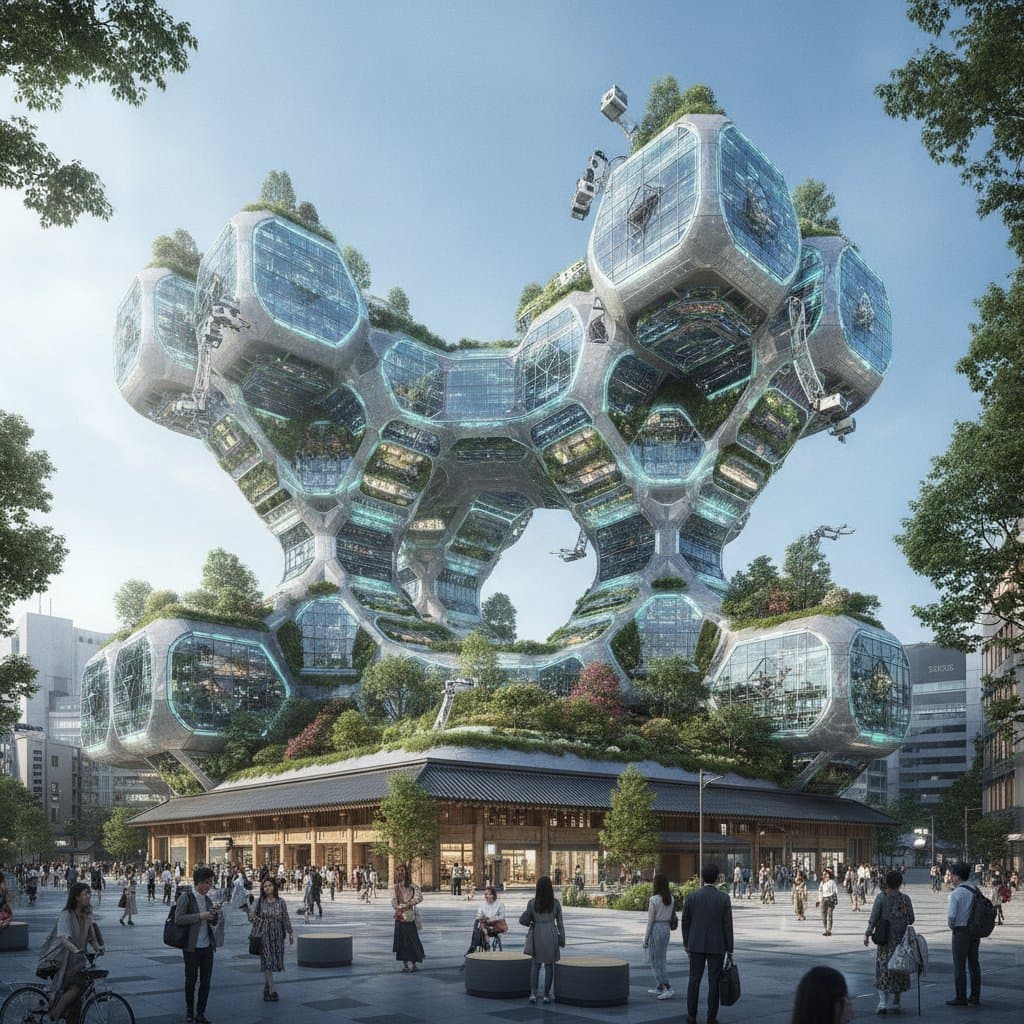
Japan's Metabolist Revival: Modular Design for 2026
Japan's Metabolist movement returns with fresh emphasis on modular systems that respond to changing urban needs. Architects now combine digital fabrication with sustainable materials to create structures that expand, contract, or reconfigure without full reconstruction. This approach aligns with national goals for reduced waste and improved energy performance.
Core Principles of Metabolism
Metabolism treats cities as dynamic organisms rather than fixed forms. Early projects used capsules and plug-in units to accommodate shifts in population and function. Contemporary versions retain this logic while substituting heavy concrete for lighter timber frames and composite panels.
Japanese cultural acceptance of impermanence supports renewed interest in adaptable buildings. Density pressures and housing shortages further encourage designers to favor systems that adjust rather than remain static.
Challenges Addressed by Modular Systems
Conventional construction generates substantial waste and locks layouts into inflexible patterns. Residents increasingly seek spaces that can accommodate remote work, multigenerational living, or reduced footprints over time. Developers face rising material costs and stricter environmental regulations.
Modular methods tackle these issues through factory-controlled production and standardized connections. Projects can scale incrementally as demand appears, avoiding overbuilding at the outset.
Practical Implementation Steps
-
Factory Production
Modules are manufactured in controlled environments that minimize defects and material loss. Precision joints allow rapid on-site assembly once units arrive. -
Integrated Services
Plumbing, electrical, and ventilation lines are pre-installed within each module. Standardized interfaces reduce connection time and simplify future upgrades. -
Organic Growth Patterns
Neighborhoods can add residential or commercial units as needs evolve. Modules can later shift function or relocate to different sites. -
Material Recovery
Units detach for refurbishment and reuse, diverting components from landfills and extending service life.
Technology Enabling Flexibility
Parametric modeling and robotic fabrication support complex yet repeatable geometries. Engineered timber and high-performance composites deliver strength at lower weight. Embedded sensors track energy consumption and adjust heating, cooling, and lighting in real time.
These tools allow buildings to register occupancy changes and modify performance without manual intervention.
Economic and Regulatory Factors
Prefabrication lowers labor expenses and shortens schedules in crowded districts. Initial factory investment is offset by reduced waste and faster revenue generation. Japanese seismic codes require rigorous testing, yet pre-certified modules streamline permitting.
Owners gain options to add workspace modules or remove surplus space as household size changes. Configurations remain customizable within the constraints of the structural grid.
Emerging Projects and Global Reach
Young architects collaborate with municipalities and developers on mixed-use pilots that combine living, working, and shared facilities. These frameworks prioritize affordability and environmental performance over monumental permanence.
International teams now adapt similar principles for compact European housing and rapid-deployment shelters. The Japanese example illustrates how tradition and advanced manufacturing can reinforce each other.
Pathways to Adoption
Project sponsors should consult firms experienced in prefabricated seismic systems and circular material flows. Early coordination with fabricators clarifies module dimensions, service interfaces, and disassembly sequences. Pilot installations demonstrate performance before larger commitments.
The Metabolist revival supplies concrete methods for buildings that serve evolving patterns of life rather than constrain them.