
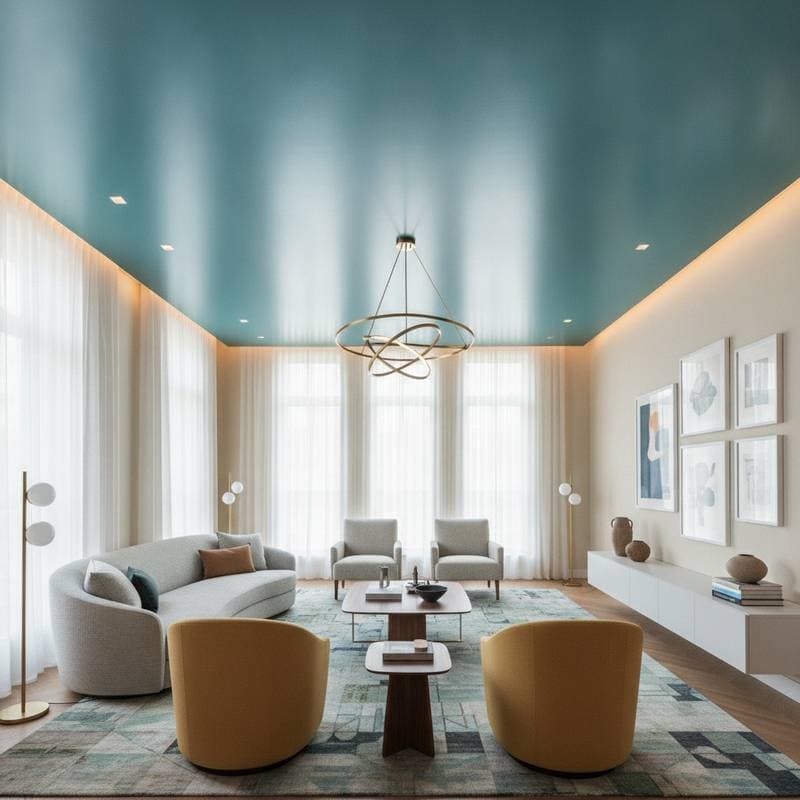
Colorful Ceilings: Why They Deserve Focus
When you enter a room, your attention often goes first to the walls and furnishings. Yet the surface overhead now draws equal notice in many updated homes. A ceiling finished in color supplies depth that white paint alone rarely achieves.
Plain ceilings once served only to reflect light and suggest height. This approach can leave a finished space feeling incomplete. Introducing color overhead corrects that gap with minimal effort.
Reasons to Consider Ceiling Color
Color overhead performs several practical roles. It creates visual height by guiding the eye upward. It also sets the emotional tone through chosen hues such as soft blue for calm or warm terracotta for comfort.
Matching ceiling tone to existing rugs or pillows produces a cohesive result. The same color can contrast with wall paint to define separate zones within one room. Both outcomes make the space feel more deliberate.
Selecting a Suitable Shade
Begin by noting the amount of daylight the room receives. Bright rooms accept stronger colors, while low-light areas benefit from lighter, reflective tones. Next, sample the color on a small section of ceiling and observe it at different times of day.
Rooms with tall proportions gain intimacy from deeper shades. Compact rooms stay open when the ceiling remains pale. Neutral walls allow greater freedom, whereas strongly colored walls call for a complementary ceiling tone.
Low-Commitment Ways to Test the Idea
Apply color only along the perimeter as a border strip. Paint the area directly above a dining table or bed to create a focal zone. Removable ceiling wallpaper supplies pattern without permanent commitment.
Extend wall paint a few inches onto the ceiling edge for a gentle transition. Each option reveals how the change affects daily experience before larger work begins.
Steps for a Full Ceiling Paint Project
Clear the room or cover all surfaces. Clean the ceiling to remove dust. Apply primer when covering dark or stained areas. Use a roller on an extension pole for the main field and a brush for edges.
Two coats produce even coverage. Allow complete drying between coats. One or two gallons of paint usually suffice for an average room, keeping material cost modest.
Situations That Favor Professional Help
High or textured ceilings increase both difficulty and safety concerns. Limited time or physical constraints also support hiring assistance. Professionals supply proper equipment and can address cracks before paint is applied.
Weighing Benefits Against Drawbacks
Color adds personality and disguises minor surface flaws. It suits both contemporary and traditional rooms. On the other hand, very dark tones can shrink small spaces visually, and future changes require additional coats.
Compatible Color Pairings
Soft white walls paired with a sky blue ceiling produce an airy bedroom or bath. Warm gray walls beneath a blush ceiling add gentle warmth to living areas. Beige walls with an olive ceiling create an earthy atmosphere suitable for gathering spaces. Navy walls topped by pale cream maintain contrast without imbalance.
Moving Forward with the Change
Begin in a hallway or office to judge the effect over several weeks. Once comfortable, expand the approach to larger rooms. The result is a finished interior that reflects personal preference from every angle.