
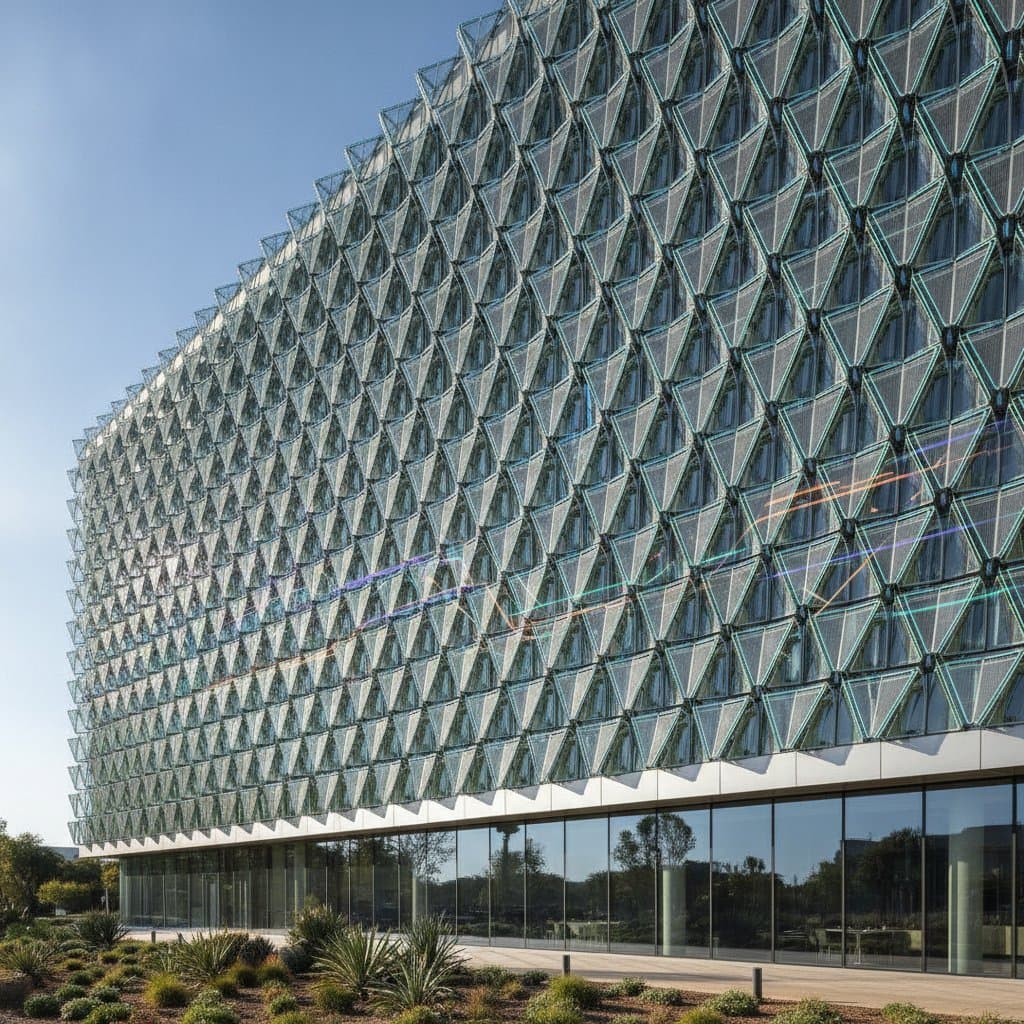
Parametric Facades Driven by Algorithms and Computation
Parametric facades rely on computational rules to create surfaces that adjust to environmental conditions. These systems replace fixed walls with patterns that shift in response to sunlight, wind, or occupancy data. Architects define variables such as panel angle or opening size, then let algorithms generate forms that satisfy both visual and performance targets.
Static Versus Responsive Envelope Performance
Conventional facades remain unchanged after installation. They block weather yet ignore daily shifts in light and temperature. Parametric alternatives embed rules that allow panels to open, close, or rotate. The result is measurable control over heat gain, daylight penetration, and natural ventilation without added mechanical systems.
Designers now apply these methods to mid-scale projects because software and fabrication tools have become more accessible. The same rule set can produce multiple panel variations, reducing the need for entirely new drawings on each iteration.
Core Parameters and Algorithm Logic
Parameters function as adjustable inputs: solar altitude, wind speed, material thickness, and budget caps. Algorithms translate these inputs into geometry by following explicit instructions such as "increase shading depth when incident radiation exceeds 400 W/m^{2}." Computation runs hundreds of iterations in minutes, revealing options that balance daylight, structural limits, and cost.
An architect testing a south-facing wall can link panel rotation directly to hourly weather files. Small changes in one variable propagate through the model, updating every adjacent element automatically.
Documented Performance Gains
- Energy modeling shows properly tuned facades cut cooling loads by 15 to 25 percent in temperate climates.
- Optimized nesting routines reduce sheet waste by up to 30 percent compared with manual layouts.
- Unique panel families emerge from a single script, eliminating repetitive detailing.
- Responsive elements improve indoor comfort scores by modulating glare and airflow in real time.
These outcomes appear only when the initial parameter set accurately reflects local climate data and occupancy patterns.
Implementation Constraints and Mitigation
Custom fabrication raises upfront costs, and moving components require scheduled inspection. Early collaboration with fabricators identifies tolerance issues before tooling begins. Static parametric screens avoid mechanical maintenance yet still demand precise joint detailing to prevent water intrusion.
Local codes may lack language for adaptive systems. Submitting performance simulations alongside traditional drawings helps reviewers evaluate safety and durability.
Design Sequence
- State measurable targets such as maximum annual cooling energy or minimum daylight autonomy.
- Import site-specific weather and solar data to anchor the parameter list.
- Encode response rules inside visual scripting environments.
- Generate and rank variants against the stated targets.
- Prototype critical connections at full scale to confirm material behavior.
- Issue files for digital fabrication and coordinate installation tolerances.
- Commission sensors or schedule periodic visual checks for static assemblies.
Material Selection Criteria
Metals accept sharp folds and long spans but conduct heat readily. Glass offers transparency yet requires careful edge support to avoid breakage under movement. Wood introduces thermal breaks and texture; it needs coatings rated for the local exposure class. Composites allow compound curves at lower weight, though their long-term UV resistance varies by resin system.
Budget and Schedule Realities
A static parametric screen on a 200 m^{2} facade typically adds 10 to 18 percent to conventional cladding costs when panels are nested efficiently. Responsive systems increase that premium because of actuators and controls. Modeling time rises, yet prefabrication often shortens site installation by one to two weeks.
Energy and maintenance savings appear within five to seven years on most commercial projects.
Designer and Client Perspectives
The method lets architects embed performance criteria inside aesthetic decisions rather than applying them afterward. Clients receive a building whose appearance changes with the seasons while its operating costs decline. Smaller practices now adopt the workflow after completing one or two pilot installations.
Practical Starting Points
Begin with fixed shading geometries before introducing motion. Share the parameter file with structural and envelope engineers at the first modeling stage. Build a one-by-one meter mock-up to verify finish, tolerance, and drainage. Detail access panels or inspection ports into the supporting frame from the outset. Retain the script file and a record of the final parameter values for future modifications.