
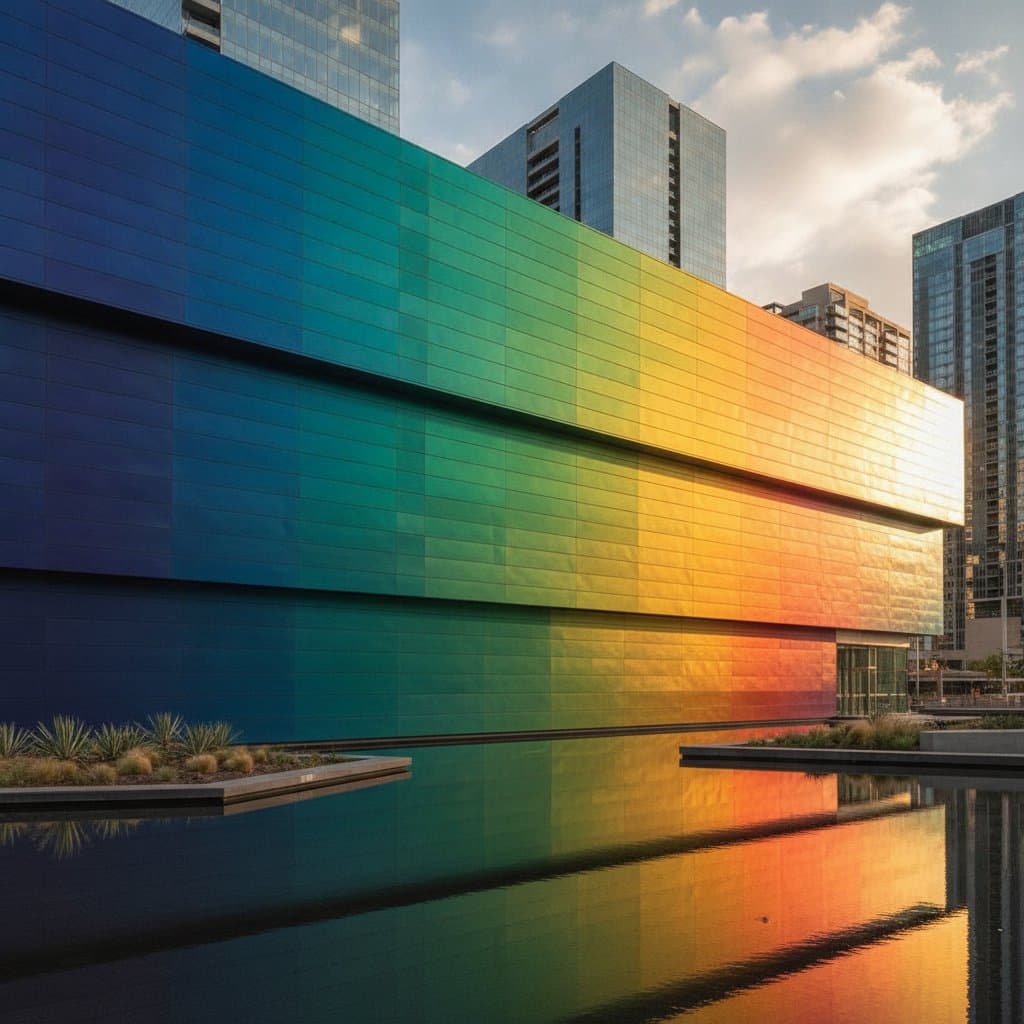
The Rise of Color-Shifting Facades in Architecture
Color-shifting facades allow buildings to change appearance based on light angle and viewer position. These surfaces create dynamic visual effects through specialized materials rather than electronic displays. Architects apply the approach to deliver structures that evolve throughout the day.
Reasons for Growing Adoption
Designers seek finishes that respond to environmental conditions. Traditional paints lock a building into one static appearance until repainting occurs. New coatings and panels overcome this limit by refracting light across multiple thin layers.
The resulting surfaces produce smooth transitions between hues without added energy use. Similar optical effects appear in natural structures such as butterfly wings, yet engineered versions deliver controlled, repeatable results.
Benefits for Project Owners
Owners gain several practical advantages from these systems.
- Distinct presence that differentiates a property within its surroundings.
- Reflective properties that reduce heat gain and support lower cooling loads.
- Resistance to fading, corrosion, and surface contamination that extends service life.
- Flexible branding opportunities that adapt without physical signage changes.
Higher initial costs and the need for specialized installation crews represent the main constraints. Careful coordination during design minimizes these issues.
Core Material Types
Three primary options dominate current projects.
- Interference coatings apply successive metal-oxide layers to generate angle-dependent color shifts.
- Treated glass incorporates micro-thin films that alter light paths across each panel.
- Pigmented metal panels embed microscopic flakes that produce shimmer or gradient effects.
Glass systems typically add 15 to 30 percent to standard glazing costs. Metal panels with interference coatings occupy the upper end of the price range.
Steps for Successful Integration
Define the desired intensity of color change before material selection. Engage the design team early to align panel orientation with site-specific sun paths. Check municipal rules governing reflective surfaces near roads or historic zones.
Request physical samples evaluated on site under actual daylight conditions. Schedule periodic cleaning with nonabrasive methods to preserve optical performance.
Cost and Performance Data
Expect total facade expenses 20 to 50 percent above conventional cladding. Reduced repainting cycles and extended warranties offset part of the premium. Installation duration matches standard rainscreen systems when crews follow manufacturer alignment protocols.
Properly installed assemblies maintain appearance for decades. Many products carry environmental certifications that document solar reflectance and recyclability.
Common Project Applications
Museums and cultural buildings employ bold shifts to create landmarks. Commercial towers use the finishes for skyline differentiation. Residential and retail projects apply subtle gradients on accent walls or entries to introduce movement without dominating the composition.
Selection Guidance
Choose palettes that transition between adjacent tones for refined results. Stronger contrasts suit public or creative environments. East- and west-facing elevations display the widest daily variation, while north-facing surfaces produce more restrained effects.
Pair the dynamic panels with matte concrete or textured metal to maintain visual balance. Limit application to focal areas rather than entire elevations.
Execution Recommendations
Engage fabricators experienced with optical coatings to ensure consistent seams and alignment. Allocate budget for on-site mockups that confirm final appearance before full procurement. These steps reduce the risk of mismatched expectations once installation begins.