
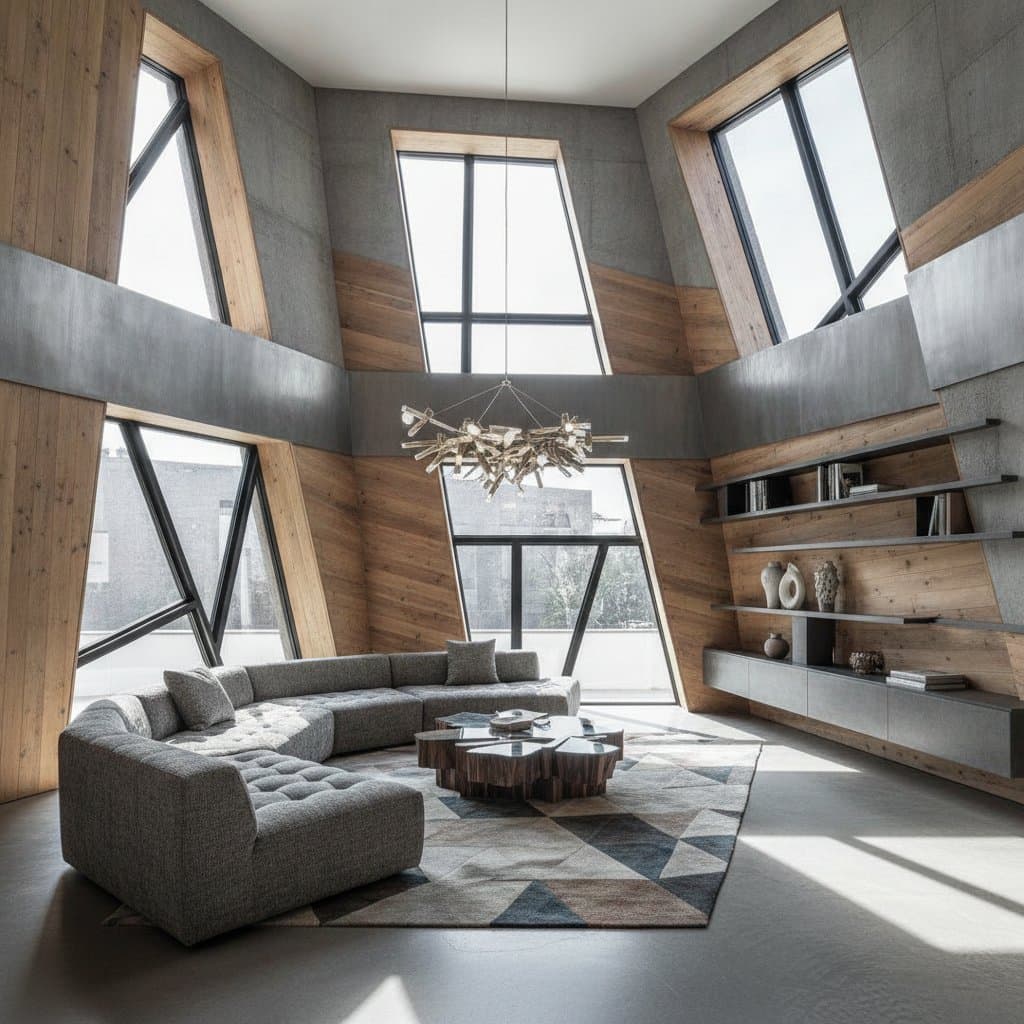
Why Fragmented Deconstructivist Interiors Are Trending Now
You walk into a living room and notice that nothing feels quite symmetrical. Angled walls, exposed joints, and overlapping materials pull your eye in unexpected directions. Yet somehow, it all feels intentional and balanced. That space is likely shaped by a design movement known as fragmented deconstructivist interior design.
Many homeowners are drawn to this look because it challenges predictability. It reflects a shift away from minimal perfection toward something that feels more personal and authentic.
The Appeal of Controlled Disorder
Traditional interiors are built around symmetry, proportion, and clean lines. Deconstructivist design breaks those rules. It uses asymmetry, irregular geometry, and layered materials to create visual tension. The result is a space that feels dynamic rather than static.
Fragmented interiors take this one step further by emphasizing disjointed forms. Walls may not align perfectly. Lighting may cut across planes at sharp angles. Furniture may sit within intersecting zones of color and texture. It looks spontaneous, but it is highly intentional.
For many homeowners, this approach feels refreshing. It reflects real life, where things are rarely perfectly ordered. The fragmented aesthetic captures that sense of imperfection while still maintaining craftsmanship and purpose.
How Fragmented Deconstructivism Took Hold
The roots of deconstructivist design come from architecture. Buildings that appeared to be pulled apart or twisted challenged the notion that structure must always follow a predictable logic. As the style evolved, interior designers began to apply those same ideas inside the home.
The fragmented version of this approach responds to modern living habits. Open floor plans, multifunctional rooms, and the blending of work and personal spaces all invite more flexible layouts. Designers are celebrating the irregularities instead of trying to make everything line up neatly.
As a result, fragmented deconstructivist interiors are showing up in lofts, townhouses, and even suburban homes. They feel urban and contemporary, yet adaptable to different architectural contexts.
Recognizing a Fragmented Deconstructivist Space
If you are trying to identify whether a space follows this style, look for these key elements:
- Asymmetrical Geometry: Walls, ceilings, and built-ins may appear slightly off-kilter. Angled partitions, slanted doorways, or stepped ceilings are common.
- Exposed Structure: Beams, joints, and connections are often left visible. This creates honesty in design and highlights the building framework.
- Intersecting Materials: Designers layer wood, concrete, glass, and metal in overlapping planes. The contrast creates depth and movement.
- Fragmented Light: Lighting is used to break up the space. Recessed fixtures, hidden strips, and angled sconces cast shadows that reinforce the geometry.
- Nonlinear Flow: Rooms may not follow a predictable path. Circulation is guided by sightlines, material changes, and visual anchors rather than centered hallways.
While these features might sound abstract, they translate beautifully into a lived environment when handled by a skilled designer.
Why Homeowners Are Drawn to It
Fragmented deconstructivist interiors fit a growing desire for individuality. Many people are seeking designs that feel less staged and more expressive. In a market saturated with minimalist white spaces and mid-century replicas, this style feels bold and personal.
It also responds to changing lifestyles. Homes now serve as workplaces, studios, and gathering spots. The fragmented approach helps define zones without relying on solid walls. A diagonal bookshelf might separate a workspace from a lounge. A break in ceiling height can mark a transition between cooking and dining areas.
There is also a psychological component. The irregularities invite curiosity. You move through the space differently, noticing textures, angles, and shadow patterns that shift throughout the day.
Balancing Complexity and Comfort
The biggest challenge with fragmented interiors is avoiding visual chaos. When every surface competes for attention, the space can feel disjointed rather than intentional. The best results come from balance.
Designers often start with a restrained color palette. Neutral backgrounds allow the geometry to stand out without feeling overwhelming. Textures become the focus instead of bright hues. For example, a matte concrete wall might meet a brushed steel partition, with soft oak flooring to ground the space.
Furniture selection also matters. Clean-lined pieces work best, even in a complex setting. A simple sofa or table anchors the room and prevents the design from feeling too experimental. Comfort is never sacrificed, even when the layout challenges convention.
Cost and Complexity
Creating a fragmented deconstructivist interior is not inexpensive. The irregular geometry and custom details require precision. Costs can vary widely by region, but homeowners should expect to spend about $150 to $400 per square foot for a full remodel in this style. Smaller updates, like adding fragmented wall panels or lighting, may range from $10,000 to $35,000 depending on scope.
Labor costs are higher because standard framing or cabinetry often needs modification. Angled joints require careful measurement, and unusual material intersections demand skilled installation. These details can extend the project timeline by several weeks or more.
For this reason, hiring an experienced architect or interior designer is essential. Professionals familiar with deconstructivist work understand how to balance aesthetic goals with structural realities.
Safety and Structural Considerations
While the style emphasizes distortion, safety should never be compromised. Any angled wall or unconventional framing must still meet local building codes. Structural loads must be properly distributed, and any exposed connections must use rated hardware.
Electrical and lighting systems require careful planning. Fragmented layouts often involve concealed wiring paths and hidden fixtures, which can complicate installation. Always hire licensed electricians and ensure compliance with inspection requirements.
If your design includes suspended elements, such as floating ceilings or asymmetrical shelving, verify that the supporting structure can handle the load. A structural engineer may be needed to confirm these calculations before construction begins.
Regional Variations
The fragmented deconstructivist look can be adapted to suit different climates and architectural contexts.
- Urban Lofts: Exposed concrete and structural steel fit naturally within this style. Large windows provide opportunities for dramatic light play.
- Suburban Homes: Wood and plaster can soften the edges while still maintaining asymmetry. The result feels more approachable while preserving the design intent.
- Coastal Properties: Weathered finishes and layered glass can echo the motion of waves, creating a fragmented yet organic feel.
Local building codes may influence how far you can push the geometry. Coastal or seismic regions often have stricter framing requirements, which can affect design freedom.
Practical Tips for Homeowners
If you are considering this style, start small. You can introduce fragmented deconstructivism gradually without committing to a full remodel.
- Experiment with Lighting: Use angled track lights or recessed strips to create shadow patterns on walls and ceilings. This mimics the fractured light effect that defines the style.
- Play with Materials: Combine concrete, wood, and glass in unconventional ways. A concrete countertop that intersects a wood backsplash at an angle can create a striking focal point.
- Rework One Wall: Install overlapping panels or geometric shelving on a single wall. It gives you a taste of the style without disrupting the entire room.
- Use Rugs and Furniture to Define Zones: Layer rugs or offset furniture placement to create visual breaks in an open plan. This approach mirrors the nonlinear flow of fragmented interiors.
- Hire a Designer for Key Details: Even if you manage some work yourself, professional input ensures the geometry feels deliberate rather than accidental.
Long-Term Value
Fragmented deconstructivist interiors are not about following short-lived trends. They offer lasting value through craftsmanship and structural creativity. Homes with this design tend to attract buyers who appreciate distinctive architecture. While resale value depends on market preferences, well-executed examples often stand out in competitive listings.
Maintenance is straightforward once construction is complete. Materials like concrete, steel, and treated wood age gracefully, developing patina over time. Regular cleaning and occasional refinishing will keep surfaces looking sharp without constant upkeep.
The key to long-term satisfaction is restraint. Spaces that blend expressive geometry with comfortable function age better than those that chase shock value.
Bringing Fragmentation Into Everyday Living
You do not need a museum-scale home to enjoy deconstructivist design. The principles behind it can enrich any environment. Think of it as a mindset as much as a style. It encourages creativity, honesty in materials, and respect for imperfection.
Whether you choose to rework an entire floor plan or simply introduce asymmetrical lighting, the fragmented approach allows your home to tell a story. It celebrates contrast and complexity without losing warmth or usability.
Making It Happen
If this style speaks to you, begin with a consultation from a designer familiar with asymmetrical architecture. Discuss what you like about fragmented interiors and how those qualities could fit your space. Bring photos or sketches to illustrate your preferences. A professional can translate those ideas into a practical design plan that fits your budget and structural constraints.
Be prepared for a design process that involves experimentation. Materials may need mockups before final installation. Angles might be adjusted several times to achieve the right balance. Patience pays off when working with a style that thrives on precision within apparent disorder.
Fragmented deconstructivist interiors may appear complex, but they are grounded in craftsmanship and thoughtful planning. When executed well, they transform spaces into living works of art that reflect both structure and emotion.