
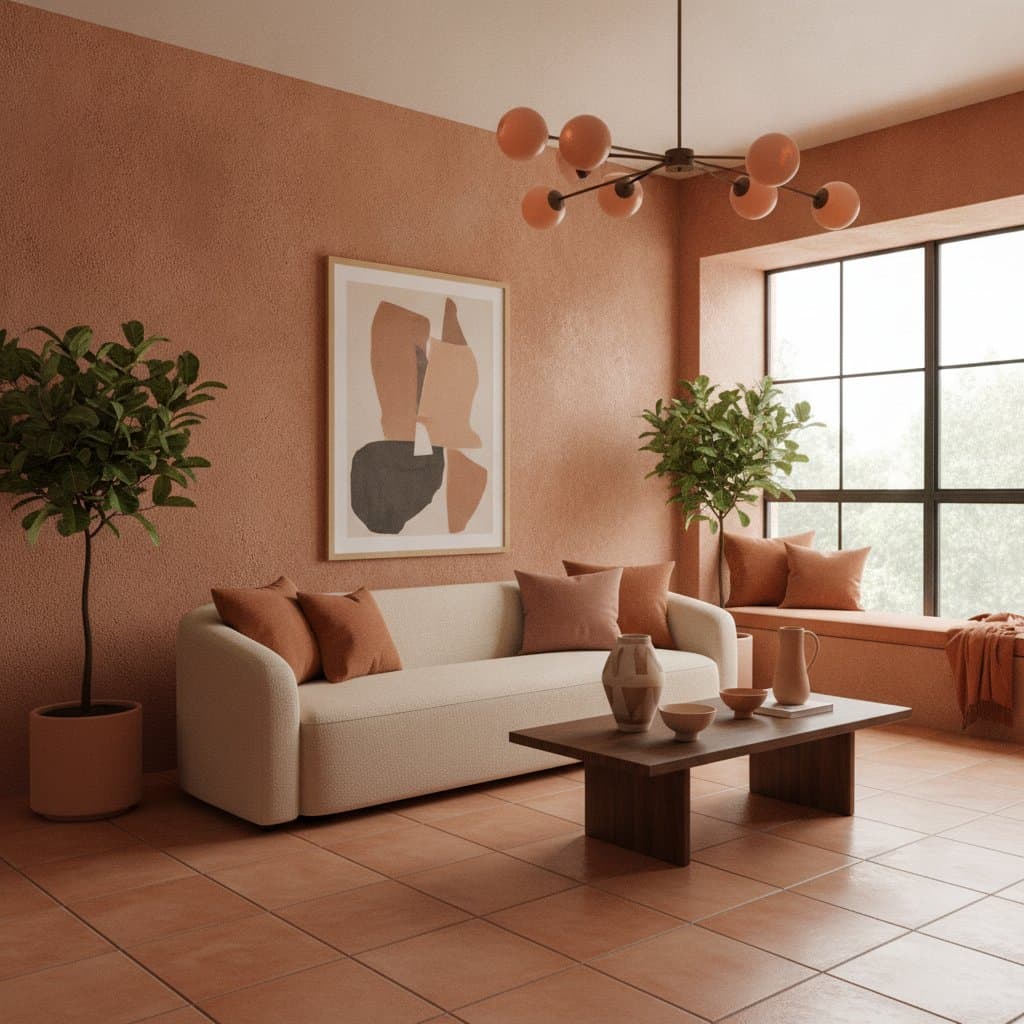
Terracotta Brings Warmth Back to Modern Interiors
Warm earth tones are appearing in homes and commercial spaces. Terracotta surfaces now appear on floors, walls, and accents in settings that range from minimalist apartments to renovated farmhouses. This shift favors materials that feel grounded rather than glossy or cold.
The following sections explain why the material has returned, where it performs best, and how to apply it without large budgets or complex renovations.
Reasons for the Current Revival
Terracotta is clay fired at high temperatures, producing a range of hues from pale peach to deep rust. Its natural variations in tone and texture suit current preferences for authentic surfaces over uniform finishes.
Five practical advantages support wider use. The material connects interiors to outdoor environments. Clay production requires limited processing and often incorporates local or recycled content. The resulting palette creates a sense of warmth under both natural and artificial light. It functions on floors, walls, and objects in both rustic and streamlined rooms. Many tile and plaster options cost less than comparable stone or marble.
Applications in Residential and Commercial Projects
Architects apply terracotta beyond traditional tiles. Exterior cladding, sculptural screens, and 3D-formed panels now appear on new buildings because the material offers thermal mass and weather resistance.
Homeowners can adopt the same material at smaller scale. Exterior options include cladding panels and roof tiles. Outdoor patios and garden borders accept unglazed pavers. Interior uses cover kitchen backsplashes, bathroom floors, and fireplace surrounds. Freestanding planters, lamp bases, and vessels introduce the color without construction.
Color Pairing and Material Combinations
Earth-tone palettes extend beyond orange to include clay, sand, ochre, sienna, taupe, and brown. Successful rooms balance these shades with lighter neutrals so the space remains airy.
Five pairing rules produce reliable results. Keep the main field in cream, white, or soft gray. Introduce wood, linen, or rattan for tactile contrast. Position living plants against the terracotta to add freshness. Verify that chosen lighting enhances rather than flattens the color. Prefer matte or hand-finished surfaces over high gloss.
Installation Options by Effort and Budget
Tile Flooring
Effort: moderate. Installed cost: ten to twenty dollars per square foot. Seal all surfaces before use. Leave slight grout variation for a less uniform appearance. The finished floor resists wear once protected, yet it remains porous until sealed.
Painted or Plastered Walls
Effort: low to moderate. Material cost: fifty to one hundred dollars per room. Apply mineral paint or limewash behind a bed or around a fireplace. The finish can be refreshed later without structural change.
Kitchen and Bath Accents
Effort: moderate. Cost varies with tile grade. Limit use to backsplashes or shower niches. Pair with brass or matte black fittings and neutral stone for contrast. Seal grout lines to simplify cleaning.
Accessories and Textiles
Effort: very low. Cost: twenty to three hundred dollars. Swap cushions, throws, or ceramics in terracotta tones. This approach suits renters and allows seasonal updates.
Maintenance and Site Considerations
Raw terracotta absorbs moisture and stains. Apply a penetrating sealer to floors and wet zones, then reapply every two to three years. In freeze-thaw climates, confirm that selected products carry exterior ratings.
Level substrates before setting large tiles. Allow full cure time for grout and sealer. Test a sample piece under the actual lighting conditions of the room.
Balancing Old and New Elements
Terracotta softens sleek architecture when placed against white walls or steel details. In older homes it emphasizes original woodwork without appearing dated. Alternate glazed and unglazed finishes or combine smooth plaster with rough clay to maintain visual interest.
Errors That Reduce Impact
Excessive coverage makes rooms feel heavy. Always seal surfaces before daily use. Evaluate samples under morning, afternoon, and evening light. Match shade depth to room size and window orientation. Schedule periodic cleaning and resealing to preserve appearance.
Current Design Direction
Designers now treat terracotta as part of a broader earth-tone scheme that includes layered plasters and natural textiles. Slight surface irregularities are valued because they convey craft rather than perfection. The material supports relaxed interiors that age gracefully.
First Steps for Any Project
Begin with one wall painted in a clay tone or a set of planters on a terrace. Observe how the color alters the perceived temperature of the room. Once the effect is confirmed, proceed to larger surfaces such as flooring or cladding.