
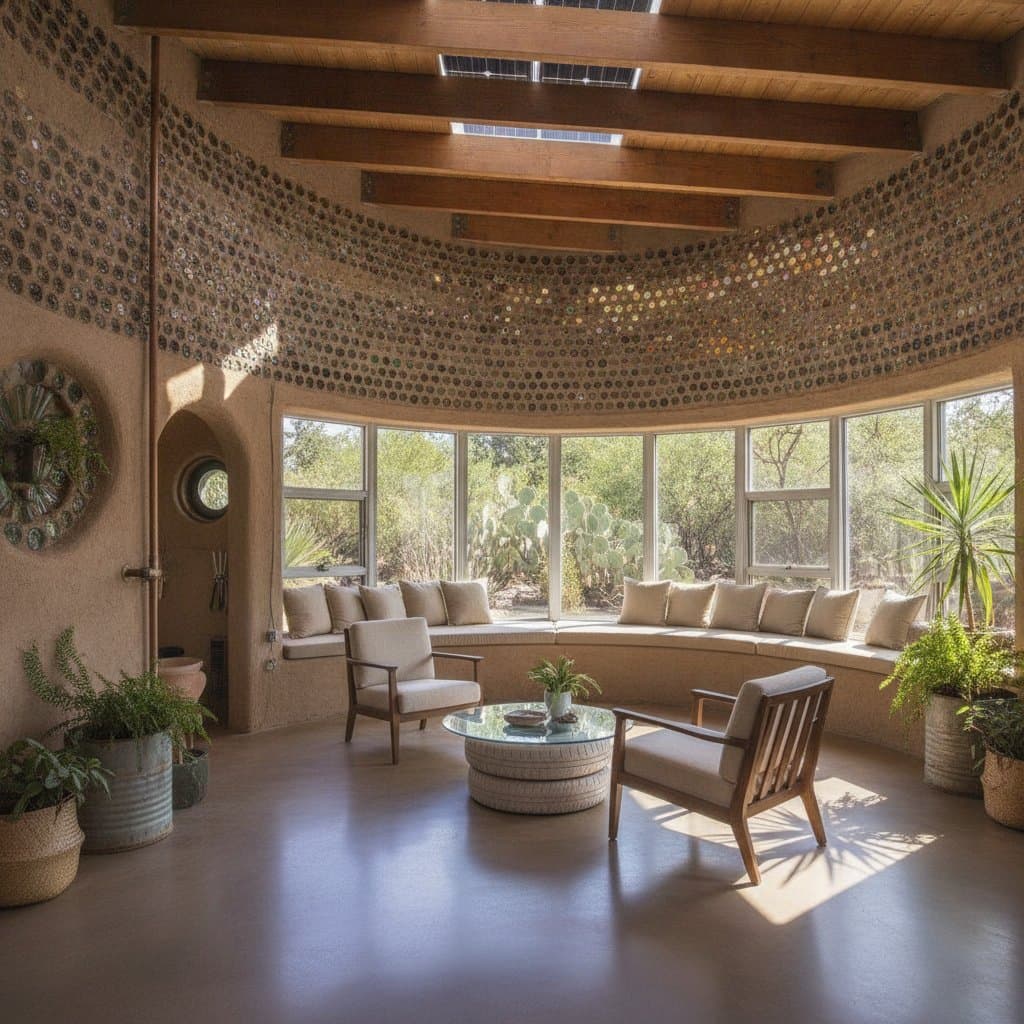
Earthship Homes: Sustainable Living from Recycled Materials
Imagine walking into a home built from old tires, glass bottles, and earth packed walls that stay comfortable without traditional heating or cooling. For many homeowners seeking off grid independence, an Earthship offers that mix of sustainability and self reliance.
The Problem: Rising Costs and Resource Strain
Energy prices, water scarcity, and construction waste have made conventional homes expensive to build and maintain. Many homeowners want a way to live more efficiently without sacrificing comfort. Traditional construction relies on new materials and grid utilities, which increases long term costs and environmental strain.
The Solution: Self Sufficient Design
Earthship homes operate independently from public utilities. They combine recycled construction materials with natural systems for heating, cooling, power, and water. The result is a home that uses what is already available and minimizes ongoing costs.
Each Earthship follows six core principles:
- Thermal and solar heating and cooling through earth packed walls and passive design.
- Solar and wind power generation for electricity.
- Water collection from rain and snowmelt.
- Sewage treatment through contained plant based systems.
- Food production with indoor and outdoor gardens.
- Use of recycled materials such as tires, cans, and bottles.
How an Earthship Comes Together
Tires filled with compacted soil form the main structural walls. Each tire acts like a large brick and provides mass that stores heat. The walls receive a finish of adobe or plaster for a clean appearance.
The earth packed design regulates temperature naturally. The home stays warm in winter and cool in summer with minimal mechanical systems.
Solar panels and small wind turbines supply electricity stored in batteries. Most Earthships operate fully off grid, though some connect to backup power for convenience.
Roofs collect rainwater into cisterns. The water passes through filters for household use, then flows into indoor planters that clean greywater before reuse for flushing toilets or outdoor irrigation.
Vent boxes and skylights help regulate airflow. The design encourages cross ventilation without electric fans or air conditioning.
Practical Considerations
Building costs range from 150 to 250 dollars per square foot depending on location, labor, and material sourcing. Owner builders who use local soil and recycled materials can reduce expenses substantially.
Zoning and building codes vary widely. Some regions classify Earthships as alternative dwellings that require special permits. Check with local authorities early in the planning stage.
Basic construction knowledge helps, yet professional assistance is recommended for electrical, plumbing, and structural inspections.
A small Earthship may take several months for an owner builder to complete. Larger or custom designs often require a licensed contractor and extended schedules.
Systems such as solar panels and water filters need regular upkeep. Once installed and balanced properly, the maintenance demands remain minimal.
Planning Your Earthship Project
Visit existing builds or workshops to observe the systems in action. Review local codes and consult an architect experienced in passive and off grid design. With careful planning and recycled materials, you can create a durable home that works with the environment.