
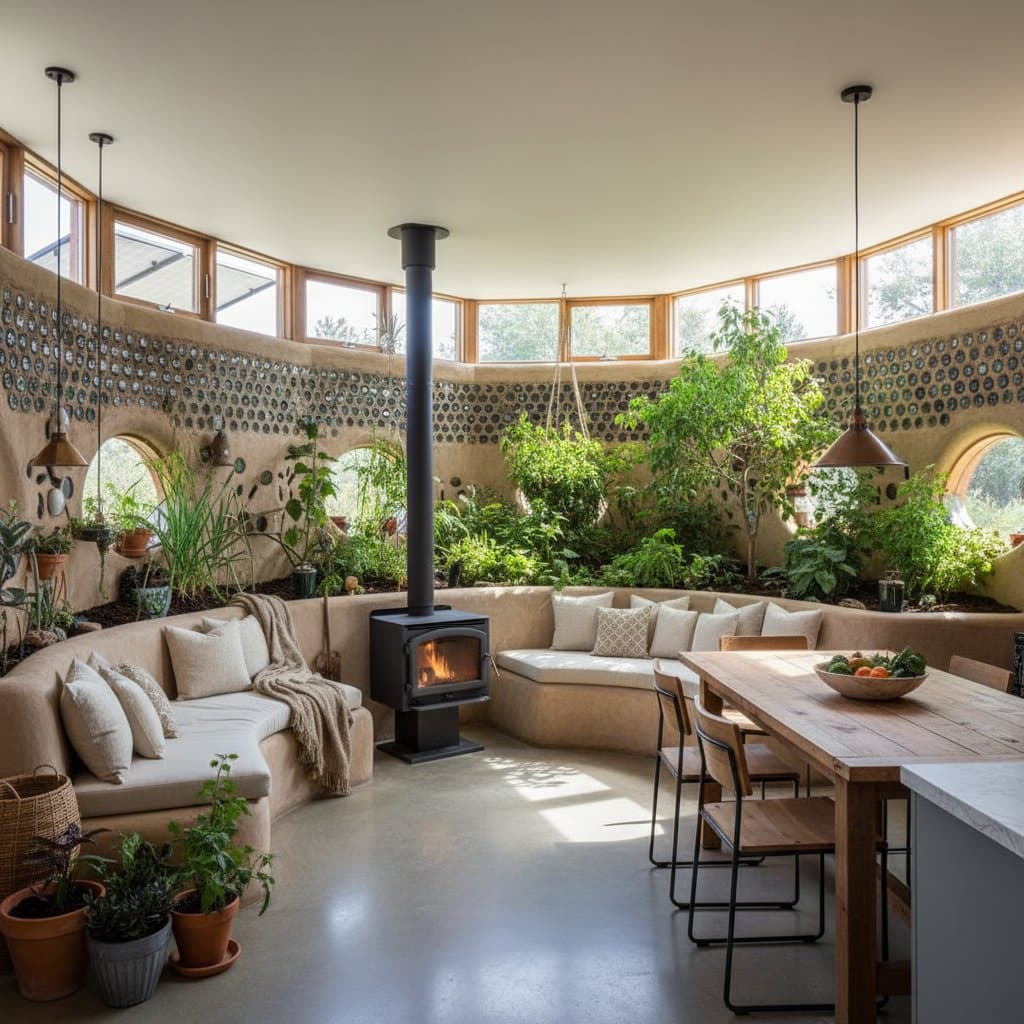
Understanding Earthship Homes
Earthship homes represent a distinct approach to residential construction that prioritizes complete independence from municipal utilities. These structures combine passive solar design, thermal mass, and recycled materials to create living spaces that generate their own power, collect water, and manage waste. Residents gain reliable comfort along with reduced long term expenses.
The concept originated in the 1970s and has since evolved through practical testing in varied climates. Builders focus on six core systems that work together without external inputs. This integrated method delivers both environmental benefits and operational autonomy.
Water Collection and Treatment
Rainwater and snowmelt supply all household needs through rooftop collection and storage in cisterns. Filtration and solar powered pumps move water through stages that produce drinking quality output. Greywater from sinks and showers feeds indoor planters that clean it further before reuse in toilets.
This closed loop eliminates reliance on city water lines and sewer connections. Annual maintenance involves simple filter checks and occasional cistern inspections. Homeowners report consistent supply even during dry periods when collection surfaces are properly sized.
Energy Production and Climate Control
Photovoltaic panels and wind turbines generate electricity stored in battery banks for continuous use. Thermal mass walls made from earth filled tires absorb daytime heat and release it slowly at night. South facing windows maximize winter sun while overhangs block summer rays.
Backup systems such as wood stoves or propane generators remain optional for extreme conditions. Energy modeling during design ensures the array meets calculated loads for appliances and lighting. Occupants adjust habits slightly to align with available generation rather than unlimited grid access.
Food Production and Waste Management
Interior greenhouses allow year round growing of vegetables and herbs using the treated greywater. Exterior gardens and fruit trees supplement diets with seasonal produce. Composting toilets convert human waste into safe soil amendment after a required aging period.
These features reduce grocery costs and transportation emissions associated with food supply. Soil building occurs naturally through ongoing organic cycles. Garden yields vary by climate yet provide meaningful portions of household needs after the first year.
Construction Considerations
Site selection requires good solar exposure and proper drainage to support the systems. Foundations incorporate recycled tires packed with earth to form sturdy, insulated walls. Local building codes may require engineering review or variances for certain features.
Material sourcing emphasizes reclaimed items such as bottles for walls and salvaged doors and windows. Professional oversight helps coordinate the specialized trades involved. Total project timelines often span several months depending on crew size and weather.
Steps to Begin an Earthship Project
- Assess local climate data and sun angles to confirm system viability.
- Secure land with appropriate zoning and water rights if needed.
- Consult certified Earthship builders for design templates tailored to regional conditions.
- Calculate material quantities and budget for both labor and specialized components.
- Obtain permits and schedule phased construction starting with the foundation and water systems.
Long Term Benefits
Owners experience stable monthly costs once construction concludes. The homes maintain comfortable interior temperatures across seasons with minimal intervention. Connection to natural cycles fosters awareness of resource use and environmental impact.