
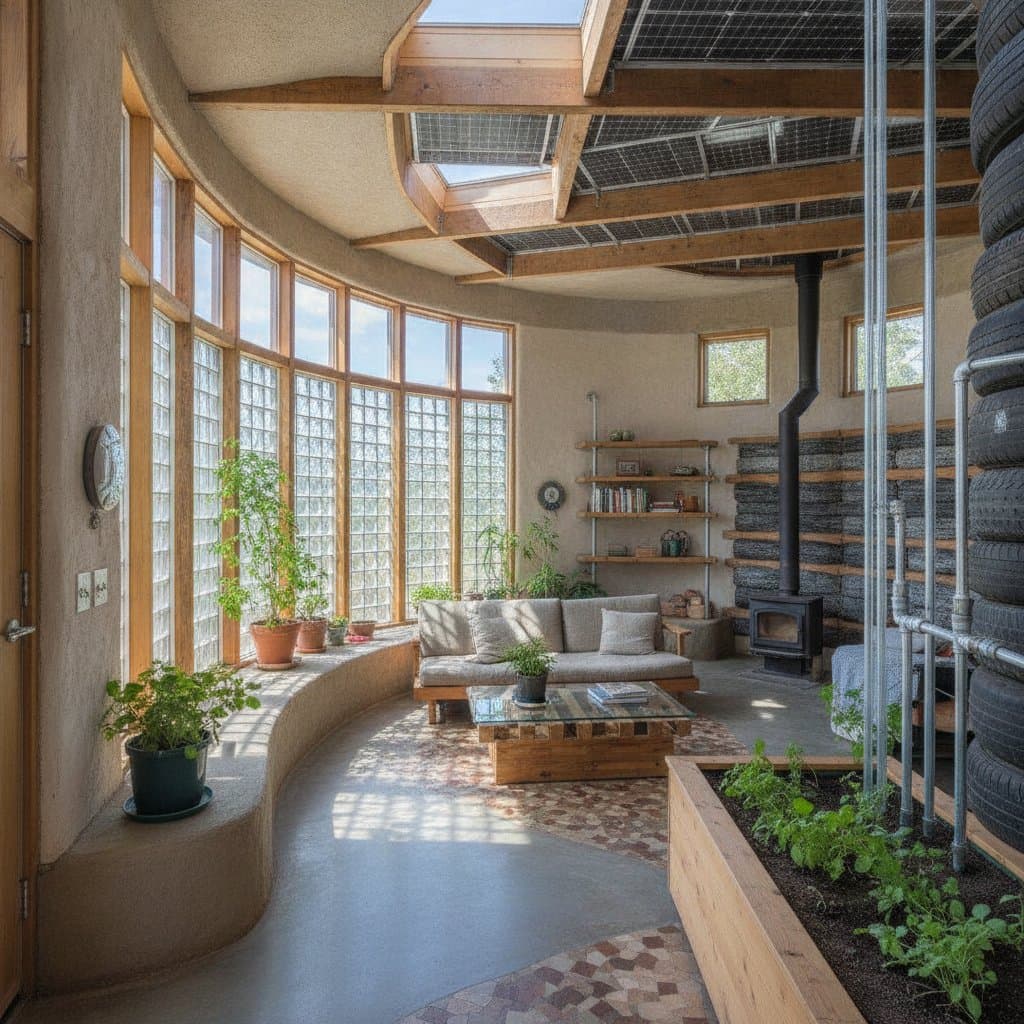
Earthships Bring Recycled Homes into the Mainstream
Have you ever wondered what it would be like to live in a house that practically runs itself? Imagine a home that heats and cools naturally, collects its own water, and even grows part of your food. That is the idea behind an Earthship, a type of off-grid home built with recycled materials. What once seemed like an experiment in sustainable living is now becoming a practical choice for regular homeowners.
The Problem and the Opportunity
Many people want to save money on utilities and reduce their environmental footprint. Traditional homes can be expensive to run, especially if you live in a place with harsh weather or limited resources. High energy bills, water restrictions, and waste management all add up. This is where Earthships come in. They use everyday waste like old tires, bottles, and cans to create strong, energy-efficient homes that can operate independently from public utilities.
What an Earthship Really Is
An Earthship is built around six basic principles. These include using recycled and natural materials, generating power from renewable sources, collecting and filtering rainwater, using passive heating and cooling, managing waste on-site, and producing food. The idea is to create a home that supports itself with minimal outside input.
At first glance, an Earthship may look unusual. Its thick walls, rounded corners, and large south-facing windows stand out compared to a standard house. But those features are functional. The thick walls made from packed earth inside tires store heat during the day and release it at night. The orientation of the windows captures sunlight for warmth and natural light.
How to Get Started
If the idea of building an Earthship sounds appealing, here are the main steps to take:
-
Choose Your Site Wisely
Look for land with good sunlight exposure and natural drainage. Rural locations are often better because you can manage your own power and water systems without city restrictions. -
Check Local Building Rules
Some areas have special codes for alternative homes. You might need to show that your structure meets safety standards. It helps to talk with local building officials early in the process. -
Create a Design Plan
You can buy ready-made Earthship plans or work with an architect who understands sustainable design. Layouts can range from small single-room dwellings to large family homes. -
Gather Materials
You will need hundreds of used tires, glass bottles, aluminum cans, and other recycled materials. Local recycling centers or cleanup programs are good places to find these. -
Start Building the Walls
Each tire is filled with compacted earth, then stacked like bricks. This step takes time and effort, but the result is a wall that is solid and well-insulated. -
Add Systems for Power and Water
Solar panels, battery storage, and rainwater collection systems are common choices. Greywater recycling can be used for gardens or toilets. -
Finish with Natural Materials
Interior walls are often plastered with adobe or lime to create a smooth, natural look. Floors can be made from earthen materials, tile, or reclaimed wood.
Pros and Cons to Keep in Mind
Pros:
- Very low utility costs after construction
- Uses recycled and natural materials
- Comfortable indoor temperature year-round
- Can operate off-grid
- Reduces waste and environmental impact
Cons:
- Labor-intensive to build
- May require special permits or inspections
- Finding skilled builders can be difficult
- Upfront costs for solar and water systems can be high
Practical Considerations
Cost:
Building an Earthship is not necessarily cheaper than a conventional home at first. You can expect to spend roughly the same amount per square foot, depending on the systems you include. The real savings come later in reduced energy and water bills.
Time:
Most owner-builders take several months to more than a year to complete a full-size Earthship. The pace depends on how much help you have and the complexity of your design.
Effort:
Pounding earth into tires is hard work. You can rent pneumatic tools to speed up the process, but you will still need physical stamina and patience.
Permits and Inspections:
Some local governments are catching up to the idea of sustainable homes, but others may not have clear rules yet. You might need to provide engineering reports or make adjustments to meet safety standards.
Maintenance:
Earthships are designed to be low-maintenance, but they still require care. Solar panels need cleaning, water filters must be replaced, and gardens need seasonal attention.
Different Approaches for Different Budgets
If you want to test the concept before committing to a full build, you can start small. A simple studio-style Earthship or even a greenhouse built from similar materials can help you learn the basics. For a larger project, you can hire professionals who specialize in Earthship design and construction.
Some owners choose a hybrid approach. They combine Earthship principles with modern materials. For example, you might use traditional framing for part of the house and earth-packed tires for the foundation walls. This can make the permitting process easier while still keeping the benefits of thermal mass and recycled content.
Living with an Earthship
Once your Earthship is complete, the real reward begins. You will notice how steady the indoor temperature stays, even when the weather changes outside. Your power bills will drop dramatically, and you will have the satisfaction of knowing that your home works with nature instead of against it.
Many owners describe the experience as freeing. There is comfort in knowing that your home can function even during power outages or water shortages. You may also find that your connection to your surroundings deepens when your home produces its own resources.
Taking the First Steps Toward an Earthship
If you are serious about sustainable living, an Earthship is a strong step in that direction. Start by visiting one if you can, or take a workshop to understand the building process. Gather information about local building codes, and decide what level of self-sufficiency you want. Whether you build a small cabin or a full-sized family home, the principles remain the same.
You do not have to be an expert builder to make it work. What you need most is patience, planning, and a willingness to learn.