
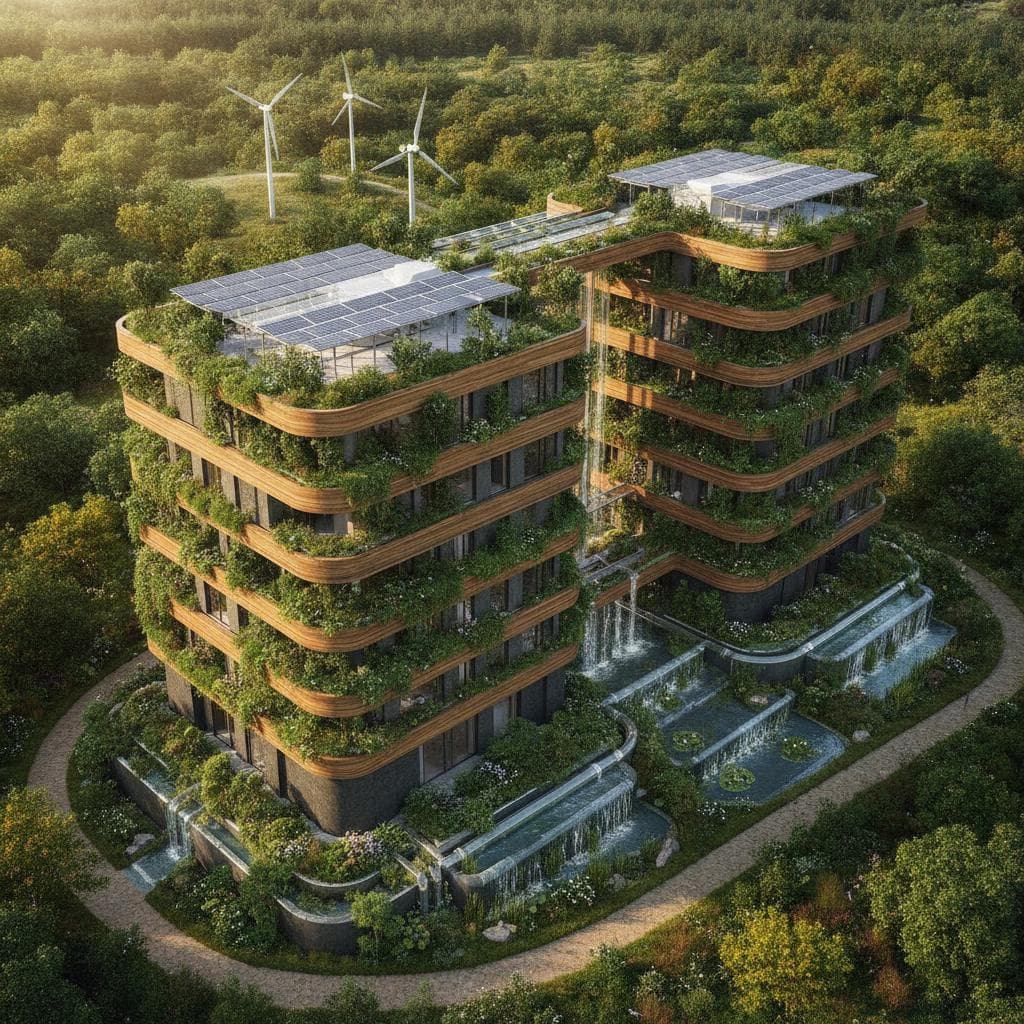
Living Buildings That Heal the Environment Naturally
Imagine walking into a home that feels alive. The walls breathe. The roof collects rain. Fresh air fills the interior without mechanical assistance. These living buildings already exist and operate as self-sustaining systems.
Traditional construction consumes resources and generates waste. Living buildings reverse the pattern by producing surplus energy, recycling water on site, and storing more carbon than they release. Homeowners gain lower operating costs along with measurable environmental gains.
This guide explains the core systems, outlines realistic costs, and shows how to apply the same principles to existing homes.
How Living Buildings Work
A living building functions through interconnected systems that mimic natural cycles. Each component supports the others to maintain balance without external inputs.
Energy Independence
Renewable systems supply all required power and generate a surplus. Solar arrays, geothermal loops, and small wind turbines combine to achieve net-positive performance.
Installation costs range from 15000 to 30000 dollars for solar and 20000 to 40000 dollars for geothermal. In sunny regions these systems reach payback within ten years. Cooler climates benefit from hybrid setups that maintain output year-round.
Water Collection and Treatment
Rainwater captured from roofs flows into cisterns for filtration and household use. Greywater passes through planted beds before reuse in irrigation.
Essential elements include roof catchments, underground storage, biological filters, and closed recycling loops. A complete system costs between 10000 and 25000 dollars and typically cuts municipal water demand by more than half.
Natural Ventilation and Air Quality
Passive airflow replaces constant mechanical conditioning. Operable windows, strategic room layouts, and stack-effect vents move air without electricity.
Interior surfaces use clay plaster, limewash, or low-VOC coatings. Some walls integrate moss panels that capture airborne pollutants. Residents report fewer respiratory irritations and stable humidity levels.
Materials that Store Carbon
Carbon-negative construction relies on timber, hempcrete, straw bale, and reclaimed wood. These substances sequester carbon for the life of the building while providing superior insulation.
Initial material premiums are offset by reduced energy demand and longer service life. Local sourcing further lowers transport emissions.
Integrated Landscaping
Outdoor design manages stormwater, supports pollinators, and moderates temperatures. Native plantings, permeable surfaces, green roofs, and bioswales form a continuous ecological network around the structure.
Costs and Practical Considerations
Construction expenses exceed those of conventional homes, yet lifetime operating costs drop sharply. Regenerative homes range from 350 to 600 dollars per square foot compared with 200 to 300 dollars for standard custom builds.
Major cost drivers include renewable equipment, water systems, specialized materials, and monitoring controls. Projects often require extra months for permitting and specialized inspections.
Licensed professionals must handle electrical, plumbing, and structural elements. Homeowners can manage landscaping and interior finishes directly.
Adapting Living Building Ideas to Existing Homes
Full reconstruction is unnecessary. Incremental upgrades produce measurable progress.
- Install solar panels or heat pumps and switch to LED lighting.
- Add rainwater barrels and low-flow fixtures.
- Apply natural plasters and reclaimed finishes during renovations.
- Convert turf to native plantings and add composting areas.
Each step reduces resource consumption while improving comfort.
Starting Your Regenerative Home Project
Engage an architect or builder with documented regenerative projects. Define energy and water targets, confirm material availability, and establish a phased budget before design begins.
Ongoing monitoring of energy production, water cycles, and plant health allows the building to stabilize. The result is a residence that maintains comfort while actively restoring its surroundings.