
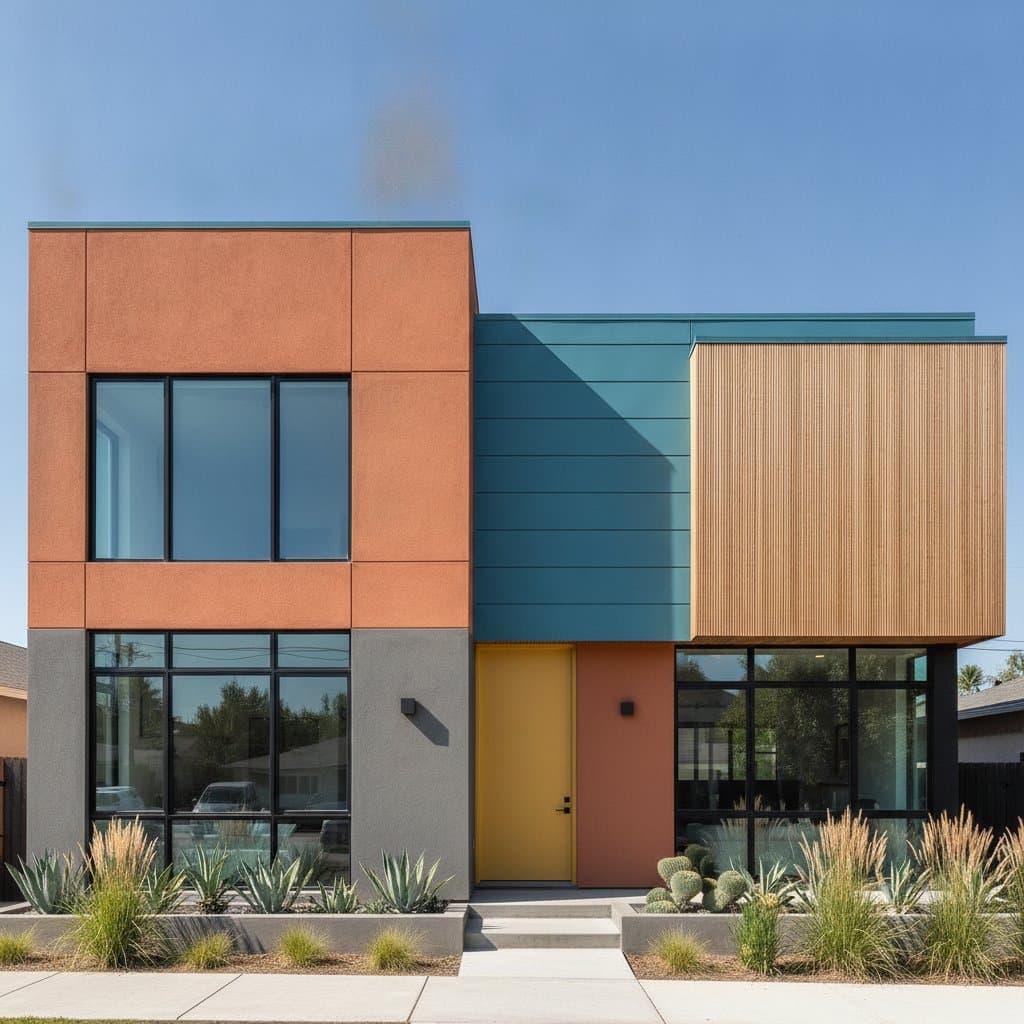
Color-Blocked Facades: Bold Trends in Architecture
You pull into a neighborhood and one house instantly catches your eye. The walls are divided into vivid sections of deep blue, warm terracotta, and crisp white. It looks fresh and confident, a clear break from the endless shades of beige next door. This is color blocking in architecture, a trend that is turning standard facades into striking design statements.
Homeowners are embracing color-blocked exteriors as a way to express personality and modern taste without major structural changes. With careful design, the right color combinations can add depth, define features, and improve curb appeal. Yet this approach takes more than just picking your favorite colors and painting large rectangles on the wall. It requires planning, an understanding of materials, and a sense of proportion.
This guide will walk you through what color blocking means, how it can be applied to different home styles, the costs involved, and what to consider before taking the plunge.
Why Homeowners Are Choosing Color-Blocked Exteriors
Many homeowners want a design that feels modern but not extreme. Color blocking offers flexibility because it can be as bold or as subtle as you like. You can use saturated hues for a dramatic effect or soft neutrals for a calm, layered look.
Common motivations include the following.
- Distinct identity. A color-blocked house stands out without needing extensive architectural changes.
- Highlighting features. Contrasting tones can emphasize entryways, rooflines, or window frames.
- Budget-friendly updates. Repainting sections is often less costly than full exterior renovations.
- Improved curb appeal. A cohesive but bold color palette can make a property more memorable to potential buyers.
Material Choices and Their Effects
Paint is the most common way to achieve a color-blocked look, but it is not the only one. Many homeowners are blending materials to create natural divisions between color zones.
Popular material combinations include the following.
- Fiber cement siding and wood panels. The smooth surface of cement siding contrasts beautifully with the texture of wood.
- Stucco and metal cladding. Matte stucco pairs well with glossy metal panels for a modern industrial feel.
- Brick with painted sections. Leaving some brick exposed while painting adjoining walls can create an authentic layered effect.
Each material reacts differently to color. Textured surfaces absorb light, softening bright tones, while glossy finishes amplify color intensity. Keep this in mind when selecting paint finishes or stains.
Safety and Maintenance Considerations
Color blocking can refresh your home look, but like any exterior project, it requires preparation and maintenance.
Safety tips include the following.
- Always use stable ladders or scaffolding when painting upper sections.
- Avoid painting on extremely hot or humid days to prevent peeling or uneven drying.
- Wear protective gear, especially when sanding or cleaning old paint that may contain hazardous materials.
Maintenance expectations include the following.
- Plan to repaint every 7 to 10 years, depending on exposure and material.
- Dark colors fade faster in direct sunlight, so consider UV-resistant paint.
- Inspect joints and trim regularly to prevent moisture damage between color zones.
Balancing Boldness and Resale Value
It is easy to get carried away when experimenting with color. The key is balance. While statement designs can attract attention, overly intense combinations may limit future buyers. If resale value matters, choose a contemporary palette that feels fresh but not overwhelming.
Good strategies include the following.
- Accent only one major wall. Keep surrounding areas neutral.
- Use color to define function. For example, paint the garage and utility spaces in a darker tone and living areas in a lighter shade.
- Rely on texture and tone rather than saturation. Muted variations of bold colors often age better and require fewer touch-ups.
Planning Your Project
Color blocking is not just a passing trend. It is a practical way to give your home personality and structure without major renovations. Whether you start small with painted window surrounds or commit to a full facade transformation, the principles remain the same. Deliberate planning, smart color selection, and quality workmanship produce the best results.
If you are confident with exterior painting, you can handle smaller areas on your own. For multi-surface homes or intricate designs, hiring a professional painter or designer is well worth the cost. They can ensure smooth transitions, proper material compatibility, and long-term durability.
A color-blocked facade can change how your home feels and how others see it. Done well, it conveys confidence and creativity, turning an ordinary exterior into a visually balanced statement piece. Take time to test, plan, and invest in quality materials.