
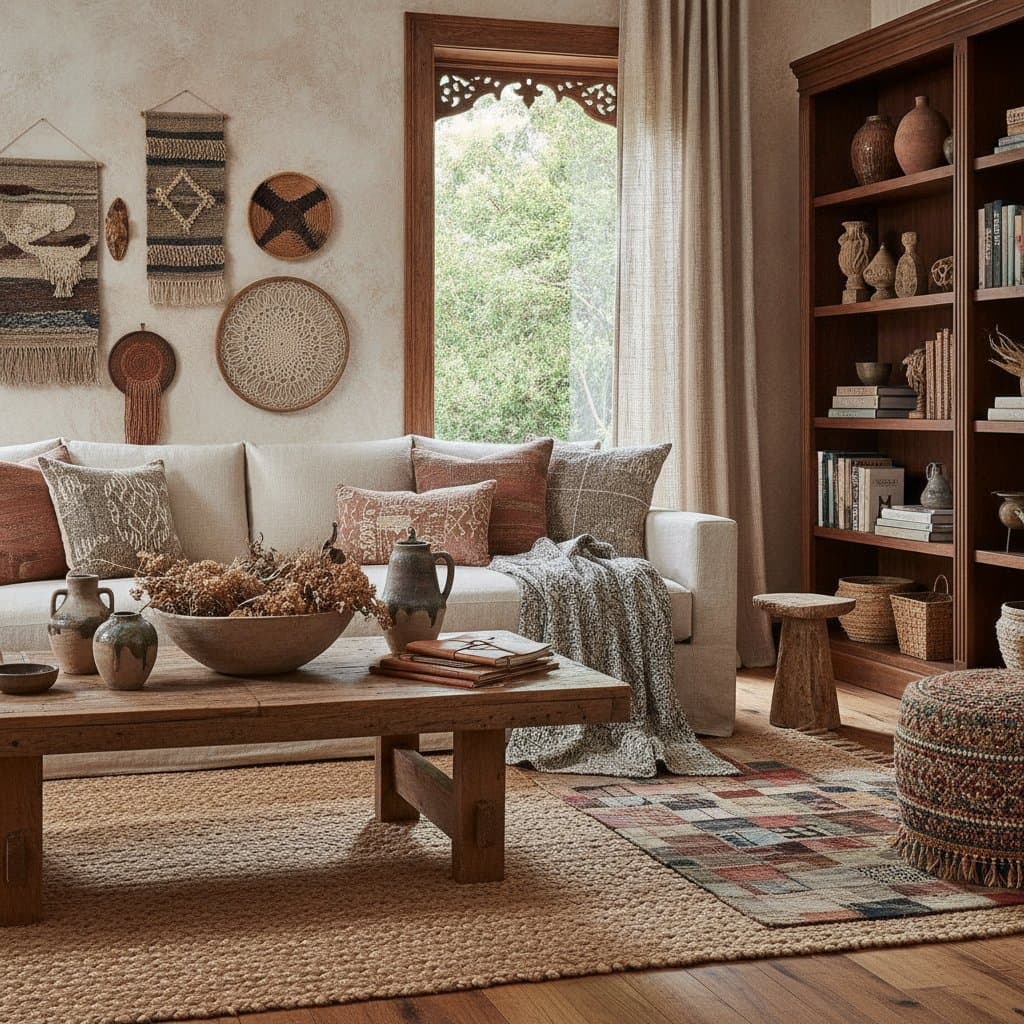
Artisan Maximalism Brings Handcrafted Textures to 2026
Richly layered interiors that feel equal parts gallery and gathering space continue to draw attention. Every corner tells a story. Every surface invites touch. Artisan maximalism emerges as the next major movement in interior design. This approach celebrates craftsmanship, individuality, and the beauty of imperfection. It remains bold yet grounded.
A room where sunlight catches on hand-thrown pottery offers one example. A woven wall hanging softens the edges of a plastered wall. Each piece feels chosen rather than purchased in bulk. Artisan maximalism invites a slower pace and a connection with authentic materials.
Moving from Minimalism to Meaningful Design
Minimalism held the spotlight for years. Clean lines and neutral palettes promised calm. Many homeowners instead sought warmth and genuine connection. Artisan maximalism responds with texture, craft, and storytelling. It encourages spaces filled with objects that carry presence and purpose.
This style suits regions with active local art scenes and strong cultural traditions. Coastal towns with pottery studios and urban neighborhoods with textile makers both benefit. Artisan maximalism weaves local identity into daily living.
The Appeal of Handcrafted Imperfection
Tactile experience defines the style. Factory-smooth finishes give way to surfaces marked by human touch. Brushstrokes remain visible in a hand-painted vase. Subtle irregularities appear in a carved wooden sideboard. These qualities enhance rather than diminish value.
Texture functions as the primary design element. Layered textiles, plaster walls, linen drapery, and handmade tiles create an environment that feels alive. Curation replaces clutter. Each selected piece carries a story or reflects a craft tradition.
Practical Steps to Introduce Artisan Maximalism
A full renovation is unnecessary. Begin with small additions and build layers gradually.
- Prepare surfaces first. Apply limewash, clay plaster, or hand-troweled concrete. These finishes establish an organic foundation.
- Combine materials with intention. Pair rough stone with smooth ceramics. Place woven fibers beside polished metal. The contrasts maintain visual interest.
- Select with purpose. Choose items that resonate personally, such as a locally made vase or a vintage rug. Allow each object to justify its presence.
- Support local makers. Commission a woodworker for a custom bench or a ceramicist for dinnerware. Direct collaboration adds authenticity.
- Layer varied lighting. Position table lamps, sconces, and pendants made from rattan, clay, or glass. Soft illumination highlights texture.
- Introduce pattern and color. Position a deep ochre velvet pillow next to an embroidered linen throw. The combination creates a lived-in appearance.
Sources for Artisan Objects
Local markets and craft fairs allow direct purchases from makers. Independent boutiques offer curated collections of handmade goods. Online platforms connect buyers with artisans worldwide. Custom commissions produce one-of-a-kind furniture and accents. Each acquisition supports both artistry and narrative.
Balancing Expression and Comfort
Artisan maximalism relies on contrast. Vibrant elements pair with grounding pieces. A bold patterned wallpaper works beside a neutral linen sofa. A sculptural fixture can hang above a simple wooden table. The result remains inviting rather than overwhelming.
Key Planning Factors
Handcrafted items carry higher initial costs yet deliver longer service and greater personal value. Mix investment pieces with more accessible finds. Custom work requires advance scheduling. Natural materials develop patina over time. Review local codes before structural or plaster modifications. A qualified contractor assists with finishes such as polished concrete or hand-applied wall treatments.
Reasons for Current Popularity
The movement reflects a desire for tangible authenticity after extended periods of digital interaction. Handcrafted surroundings provide evidence of human creativity. Beauty appears in imperfect forms. Sustainability enters through small-batch methods and reclaimed materials.
Regional Craft Traditions
Coastal areas feature seagrass baskets and driftwood sculptures. Mountain communities highlight wool textiles and hand-thrown ceramics. Urban settings incorporate metalwork and glass art. Drawing from nearby makers anchors the home in its specific location.
Daily Experience with the Style
Morning light through linen curtains softens. Meals served on handmade plates gain significance. The space evolves as new pieces are added or rearranged. Patience rewards the process. New artisans appear over time. The home becomes a living record of personal choices.
Beginning the Transformation
Define personal standards of authenticity. Visit local studios and artisan markets for direct inspiration. Discuss custom projects with craftspeople who can match both space and budget.