
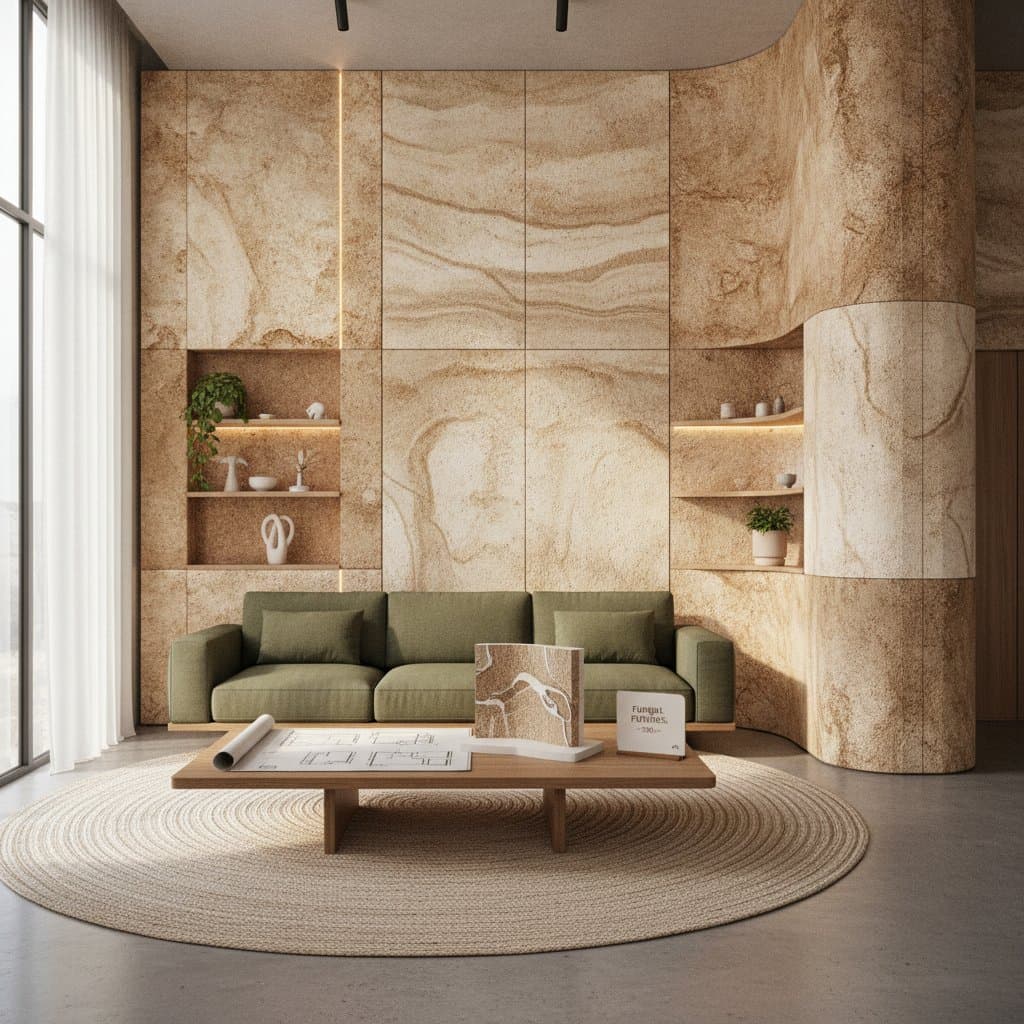
Growing Walls from Agricultural Waste
Architects and builders now have a material that literally grows into shape. Mycelium, the threadlike network of fungal fibers, binds agricultural waste into lightweight panels and insulation. The process turns discarded plant matter into functional building components without the energy demands of conventional manufacturing.
How Mycelium Composites Form
Manufacturers mix fungal fibers with materials such as hemp hurd, sawdust, or straw. They place the blend into molds and maintain controlled temperature and humidity while the mycelium grows through the particles and binds them together. Once the desired density develops, heat halts further growth and removes moisture from the finished product.
The result is a stable composite that can be cut, drilled, or finished like other rigid panels. Properly processed mycelium products contain no active fungi and will not continue growing under normal indoor conditions.
Current applications include interior acoustic panels, nonstructural insulation, decorative wall tiles, temporary exhibition structures, protective packaging, and custom furniture components. Most products serve as interior finishes or cavity insulation rather than load-bearing elements.
Performance Characteristics
Mycelium panels offer several practical advantages over traditional materials. Their low density reduces handling effort and transportation energy. The porous structure absorbs sound effectively in offices, recording studios, restaurants, and residential spaces.
Thermal performance varies with density and installation details. Some formulations provide measurable insulation value, though they typically supplement rather than replace dedicated insulation systems. Custom molding reduces cutting waste compared with sheet materials that require extensive trimming.
Uncoated products can break down under proper composting conditions at the end of their service life. However, resin coatings, synthetic membranes, or energy-intensive processing can reduce these environmental benefits. Request complete ingredient lists, production energy data, and disposal instructions from manufacturers before specifying products.
Installation Requirements
Mycelium wall systems combine conventional framing with moisture protection and the mycelium components. Installation follows procedures similar to rigid insulation or acoustic board work, but each product requires specific handling.
Begin by confirming that framing is dry, properly spaced, and structurally sound. Complete all electrical, plumbing, and ventilation work before covering cavities. Cut panels with manufacturer-recommended tools to avoid edge damage. Fit joints tightly to maintain acoustic and thermal performance.
Protect panels from moisture sources including plumbing leaks, rising damp, and condensation. Apply approved finishes such as breathable coatings, plaster, or fabric coverings as specified. Keep product documentation, installation instructions, and fire ratings available for inspections and future modifications.
Moisture and Fire Safety
Moisture presents the primary installation concern. Finished mycelium products tolerate normal indoor humidity levels, but repeated wetting causes swelling, deterioration, or renewed fungal activity. Avoid installation in basements with active seepage, behind showers, or in exterior walls with unresolved condensation issues.
Fire performance requires product-specific testing. Flame spread, smoke development, and fire resistance ratings vary according to density, binders, facings, and coatings. Local building officials may require complete assembly testing rather than material ratings alone.
Wear eye protection and dust masks during cutting operations. Maintain clean work areas, particularly when releasing dust or plant fibers. Individuals with severe mold sensitivities should consult medical professionals before working with these materials.
Cost Considerations
Mycelium products remain specialty materials with prices typically ranging from ten to thirty dollars per square foot for finished panels. Basic molded components may cost less in volume orders. Additional expenses include framing, coatings, shipping, and professional installation.
Regional agricultural waste availability affects pricing and delivery times. Areas near manufacturers often see lower freight costs and faster supply. Remote locations may face extended lead times. Request samples before large orders to verify color, texture, and density consistency between batches.
Project Planning
Start with limited applications such as acoustic feature walls rather than whole-house installations. This approach controls costs while allowing evaluation of appearance, durability, and maintenance requirements. Compare installed costs with alternatives including cork, wood fiber, cellulose, and recycled textile products.
Professional installation becomes necessary for structural walls, fire-rated assemblies, moisture-prone locations, or projects requiring electrical modifications. Request contractor references, product data sheets, and written scopes that specify cutting, sealing, and repair responsibilities.
Practical Applications
Mycelium materials work best where their specific properties align with project needs. Acoustic treatment, lightweight interior design, and low-waste construction represent the strongest current applications. Test samples in actual room conditions before committing to larger installations.
Verify that local building codes accept the proposed assembly. Confirm moisture management strategies and fire protection requirements with qualified designers or inspectors. Document all materials and installation details for future reference.