
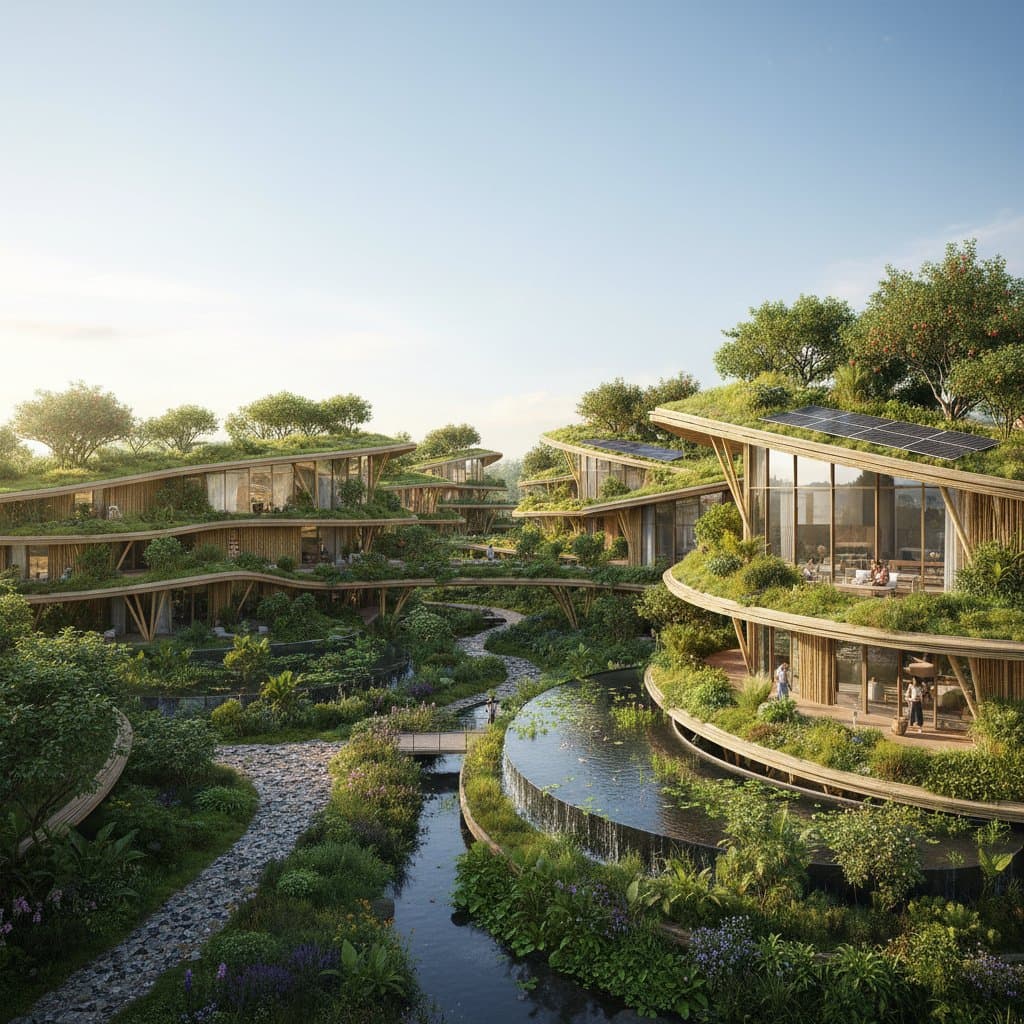
Regenerative Architecture: Giving More Than It Takes
Many people encounter the term regenerative architecture and seek clarity on its meaning. Familiarity with sustainable design, such as energy-efficient windows or low-flow fixtures, provides a foundation. Regenerative architecture extends this concept further. It rejects minimal harm in favor of active restoration. Consider a residence that revitalizes the underlying soil, purifies surrounding air, and generates surplus energy. This principle redefines construction, habitation, and integration with the natural environment.
Limitations of Sustainability
Sustainability has long directed environmentally aware architecture. However, professionals increasingly debate its adequacy. A sustainable structure preserves existing conditions by definition. Depleted resources, such as eroded soil, contaminated air, and overburdened water supplies, demand more than preservation.
Regenerative architecture adopts a proactive stance. Structures function as dynamic systems that repair, renew, and fortify affected ecosystems. Materials, energy mechanisms, and landscapes actively enhance their contexts rather than simply reducing impact. This optimistic framework questions traditional notions of residential potential.
Core Elements of Regenerative Buildings
View a regenerative building as an integral ecosystem component. It engages with soil, water, flora, and inhabitants rather than standing apart. Design choices, from foundations to surfaces, address one central query: How does this element contribute positively?
Key characteristics include:
-
Net Positive Energy Production
Structures produce more renewable energy than required. Solar arrays, geothermal installations, and compact wind turbines contribute. Excess energy returns to the grid or bolsters local facilities. -
Carbon Sequestration Integration
Materials capture and retain carbon. Options encompass hempcrete, rammed earth, bamboo, and salvaged wood. Landscaping aids through deep-rooted native species that sequester carbon in soil. -
Water Renewal Systems
Designs capture and treat stormwater rather than channeling it away. Bioswales, rain gardens, and greywater reuse facilitate natural flow, supporting vegetation and aquifer recharge. -
Ecological Harmony
Sites integrate seamlessly into designs. Existing trees remain, contours follow natural topography, and pathways for wildlife persist. Landscapes emerge vibrant and integrated. -
Occupant Health Focus
Connections to nature enhance well-being. Atria with open air, abundant natural light, and organic materials foster tranquility. Research confirms biophilic settings boost mental and physical vitality.
Significance of Surplus Contribution
The philosophy underpins its value. Regenerative construction yields ongoing benefits beyond shelter. Residences generate clean power, sustain biodiversity, and elevate water purity. They alleviate communal utility demands.
Evaluation extends past initial expenses to enduring gains. Cleaner atmospheres lower healthcare costs. Reduced energy consumption trims bills. Resilient materials demand minimal upkeep. Cumulative savings often exceed construction outlays.
Initiating Regenerative Projects
Renovations or new constructions benefit from regenerative principles without complete overhauls. Incremental progress yields results. Follow these steps to align designs accordingly.
Assess the Site Thoroughly
Observe the property prior to finalizing blueprints. Track solar patterns, rainwater accumulation, and prevailing winds. These insights optimize orientation for illumination, airflow, and hydrology. Alignment with site features cuts expenses and ecological strain.
Select Carbon-Capturing Materials
Opt for biological alternatives to standard concrete or steel. Hempcrete sequesters carbon throughout growth and assembly. Reclaimed timber completes its carbon lifecycle while providing aesthetic appeal. Clay plasters and lime coatings manage moisture, promoting superior indoor air quality.
Integrate Systems Holistically
Coordinated elements maximize performance. Roofs collect precipitation for irrigation. Gardens provide shade to moderate temperatures. Shading decreases cooling needs, freeing solar output for external use. This interconnected loop surpasses disjointed components.
Prioritize Flexibility
Enduring designs adapt over time. Adjustable partitions, modular configurations, and versatile exteriors accommodate evolving requirements without extensive alterations. Extended utility embodies regenerative endurance.
Cost and Feasibility Factors
Regenerative approaches suit varied budgets. Expenses vary by material sourcing, regional access, and technological scope. Consider these benchmarks for planning.
- Energy Installations: Solar panels with storage vary by scale. Incentives like rebates or export tariffs offset investments.
- Material Sourcing: Local natural options often prove economical compared to transported synthetics, factoring in durability.
- Hydrological Features: Harvesting and recycling systems recoup costs via utility reductions within years.
- Expert Guidance: Engage regenerative-savvy architects to ensure compliance with codes and ecology. Specialists in low-carbon builds assist with approvals.
Regulatory adherence safeguards all aspects. Certified professionals verify installations meet standards.
Community-Wide Effects
Individual regenerative residences amplify through aggregation. Neighborhood solar networks enhance reliability. Indigenous plantings revive pollinator routes. Retention features mitigate flooding. These synergies bolster ecosystems and foster communal cohesion.
Municipalities promote adoption via grants and demonstrations. Some waive fees for net-positive initiatives. Participants inspire scalable urban evolution.
Insights from Natural Models
Natural systems exemplify regeneration. Forests recover post-disturbance, rivers self-purify via deposition, and soils regenerate through decomposition. Architecture emulates these cycles.
Roofs emulate foliage by harvesting light and moisture. Walls facilitate vapor exchange like organic barriers. Atria ventilate akin to respiratory organs. Such biomimicry yields comfort, efficiency, and vitality.
Fostering Emotional Ties
Inhabiting regenerative spaces cultivates awareness. Seasonal shifts, solar trajectories, and avian activity become tangible. Residences evolve from assets to allies, nurturing health and terrain.
This bond instills responsibility. It counters disconnection in conventional settings. Younger generations absorb lessons of restorative design through daily immersion.
Assembling a Competent Team
Collaboration drives success. Architects, engineers, landscapers, and constructors align on regenerative goals. Seek expertise in certifications for carbon neutrality or site renewal. Review portfolios emphasizing holistic outcomes.
Platforms like Doric South facilitate connections to verified local experts in sustainable practices. This streamlines selection while advancing environmental aims.
Incremental Regenerative Actions
Modest modifications accumulate impact:
- Substitute turf with pollinator-friendly natives.
- Deploy barrels for garden irrigation from rainfall.
- Apply carbon-absorbent lime paints.
- Incorporate vents for natural cooling.
- Compost organics to bolster soil and curb emissions.
These steps form a progressive framework.
Sustaining Regenerative Features
Ongoing care emphasizes rejuvenation. Living roofs require pruning yet provide insulation and filtration. Natural wood treatments avoid synthetics, preserving air purity. Track metrics on energy and water to gauge systemic efficacy.
Properties flourish accordingly. Flora develops, earth enriches, and habitats diversify. Residences persist as evolving sanctuaries.
Experiencing Regenerative Living
Regenerative environments deliver tangible rewards. Filtered breezes, silent renewables, and alignment with equilibrium redefine daily life. They prompt intentional engagement with nature.
Design here promotes reflection and synergy. Each feature dialogues between ingenuity and ecology.
Advancing Your Vision
Define personal regenerative priorities, whether self-sufficient power, biodiversity support, or carbon storage. Collaborative expertise realizes these ideals.
Utilize Doric South to link with regenerative specialists at no initial cost. Construct not merely to house, but to heal. This paradigm prioritizes enrichment over restraint, empowering your residence as a catalyst for positive transformation.