
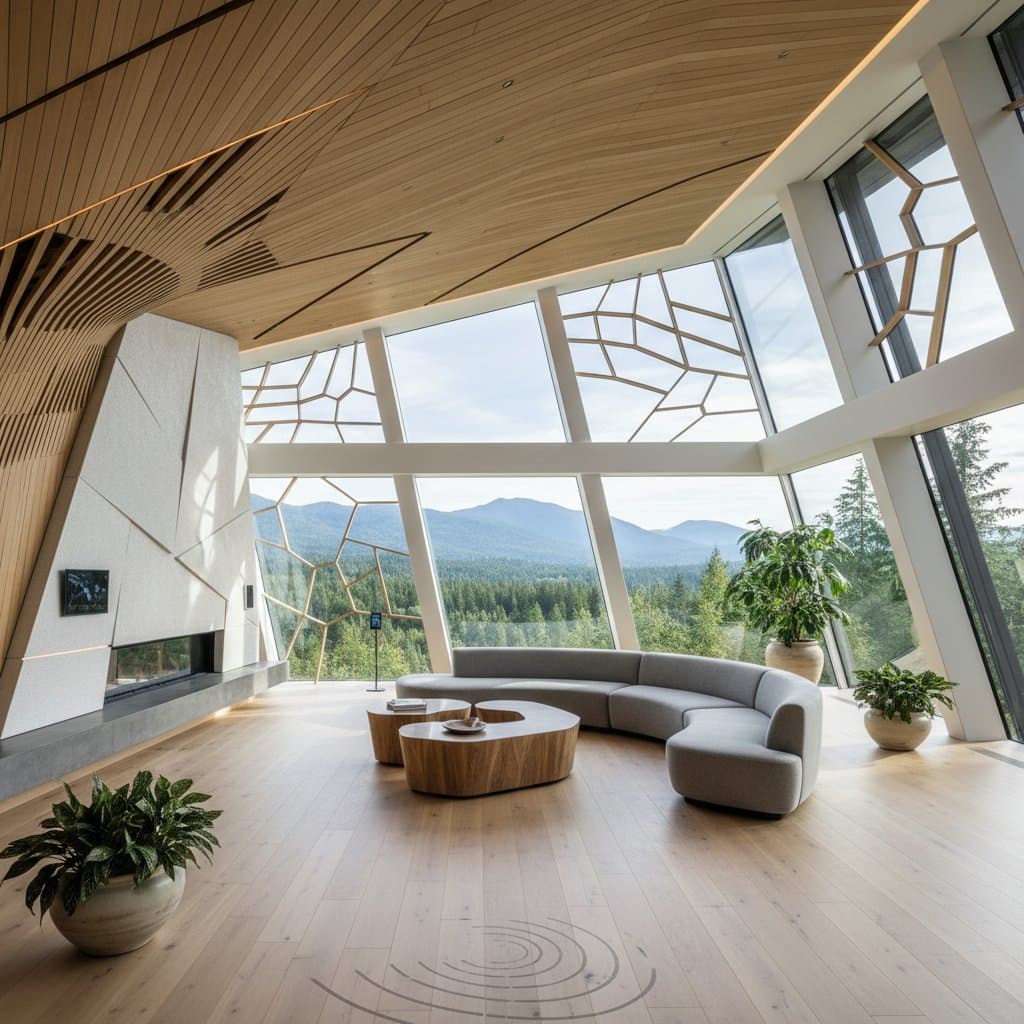
Parametric Design Reshapes Modern Home Architecture
Homeowners often notice residences with fluid curves or facades that shift with sunlight. These structures raise questions about their creation process. Parametric design provides the solution, an emerging method in architecture that merges computational tools with artistic vision.
This technique enables architects to build homes responsive to local climate, terrain, and daily routines. Beyond aesthetics, it delivers practical efficiency and personalized comfort. Homeowners benefit from spaces that align precisely with their needs.
Limitations of Conventional Design Methods
Standard architectural processes rely on sequential steps: initial sketches lead to detailed plans, with revisions demanding extensive manual rework. Such approaches suit simple rectangular forms but falter with intricate shapes, challenging sites, or objectives like enhanced natural cooling or optimal daylight distribution.
Contemporary clients seek residences that balance energy savings with distinctive appearances. Achieving these through traditional means frequently escalates expenses and prolongs schedules. Parametric design addresses these constraints by introducing dynamic, data-informed alternatives.
Advantages of Data-Driven Architectural Modeling
Parametric design employs algorithms to establish interconnections among structural components. Designers input variables like building orientation, material selections, or load capacities, allowing software to produce multiple iterations swiftly.
Consider a residence requiring ample morning sunlight while minimizing afternoon heat buildup. A parametric system evaluates numerous window placements in moments, highlighting optimal configurations for thermal comfort and efficiency prior to groundbreaking.
This iterative capability fosters adaptability throughout development. Homeowners gain opportunities for extensive ideation and evidence-based choices at early stages, enhancing overall project outcomes.
Core Principles of Parametric Design
Parametric design hinges on interdependent relationships within digital models. Modifications to one feature propagate changes across linked elements via predefined equations.
A basic workflow illustrates this:
- Architects establish roof pitch using precipitation statistics.
- This pitch parameter governs gutter dimensions and adjacent wall elevations.
- Alterations to drainage specifications trigger corresponding updates to interconnected parts.
Such interconnected systems minimize discrepancies and enhance synergy between aesthetics and functionality. Projects remain malleable well into planning, permitting broader exploration without comprehensive redesigns.
Essential Software and Methods
Professionals leverage platforms like Grasshopper integrated with Rhino or Dynamo paired with Revit. These interfaces facilitate algorithm creation through intuitive drag-and-drop elements, bypassing complex programming.
Models simulate environmental factors including solar paths, air circulation, and load distributions. Integration of budgetary inputs allows evaluation of material economies; for instance, refining a facade's radius might decrease bespoke panel requirements, maintaining vision while curbing expenditures.
Key Advantages for Residential Clients
Though rooted in technology, parametric design yields tangible gains for those constructing or updating homes.
Tailored Adaptations at Controlled Expenses
Custom features in conventional projects demand fresh blueprints and engineering validations, inflating budgets. Parametric frameworks embed variations within governed parameters, automating recalibrations of sizes and resources.
Resizing windows or altering roof angles prompts immediate systemic adjustments. This efficiency trims professional hours, encouraging thorough testing without fee surges.
Enhanced Ecological Efficiency
Algorithmic optimization excels in refining environmental interactions. Simulations assess solar exposure, breezes, and thermal dynamics to elevate indoor quality and curb utility demands.
Resulting structures typically secure superior daylight penetration and airflow. In varied climates, these designs can lower energy bills by 10 to 20 percent, scaled to regional conditions and scale.
Optimized Resource Allocation
Tools scrutinize material behaviors under diverse stresses, preventing excess specifications and curtailment. Feasible implementations include undulating roofs or asymmetrical openings, with calculations ensuring exactness in fabrication.
This accuracy advances ecological aims by diminishing scraps, thereby reducing procurement costs and ecological impact.
Streamlined Progression from Concept to Completion
Digital prototypes interface seamlessly with manufacturing devices like CNC machines or additive printers. Precise data transfers yield components with minimal on-site modifications, accelerating timelines and accuracy.
Builders access comprehensive specifications, mitigating errors that traditional handoffs might introduce.
Evaluating Expenses and Practicality
Accessibility defines parametric design's viability for typical projects.
Design charges typically range 5 to 15 percent above standard rates, accounting for advanced simulations offset by downstream economies in fabrication and assembly.
Building expenses vary from baseline to 10 percent elevated, influenced by form complexity or specialized production. Long-term gains from reduced operations and elevated market appeal often recoup upfront investments.
Solicit detailed estimates encompassing modeling and execution phases. Hybrid strategies, applying parameters selectively for key optimizations while retaining familiar construction, manage outlays effectively.
Ensuring Structural Integrity and Regulatory Adherence
Advanced modeling complements, rather than supplants, mandatory approvals for stability, wiring, and systems. Simulations inform but require professional authentication for endorsements.
For novel substances or bespoke elements, engage authorities promptly. Jurisdictions might necessitate supplementary proofs or inspections. Partnering with computational-savvy firms expedites navigation of these protocols.
Adapting to Local Contexts
Parametric approaches excel in site-specific tailoring. Arid regions benefit from automated louvers curbing heat influx; temperate zones maximize glazing for warmth retention. Maritime structures incorporate gust analyses or corrosion modeling.
Automated recalibrations surpass hand computations in precision. Clients receive environments attuned inherently, avoiding post-design tweaks to off-the-shelf templates.
Selecting Expert Collaborators
Accessible tools tempt amateur use, yet expertise remains essential for safety and approvals.
Engage firms with documented parametric portfolios, reviewing executed works showcasing algorithmic applications. Prioritize squads integrating engineers and makers for cohesive delivery.
Recreational modeling suits ideation but defers to specialists for official plans and builds.
Steps to Integrate Parametric Methods
Initiate by clarifying objectives: prioritize sustainability, aesthetic distinction, or modular flexibility. Convey these to professionals to calibrate initial variables accurately.
Seek visualizations of parametric impacts, such as illumination forecasts or form variants, contrasting with orthodox proposals to gauge merits.
Allocate funds for ancillary elements like digital prototyping or custom outputs, minor relative to total outlays yet vital for planning.
Parametric design permeates routine home creation, empowering responsive habitats. Through computational precision, residences harmonize lifestyle and locale in ways conventional practices cannot replicate.