
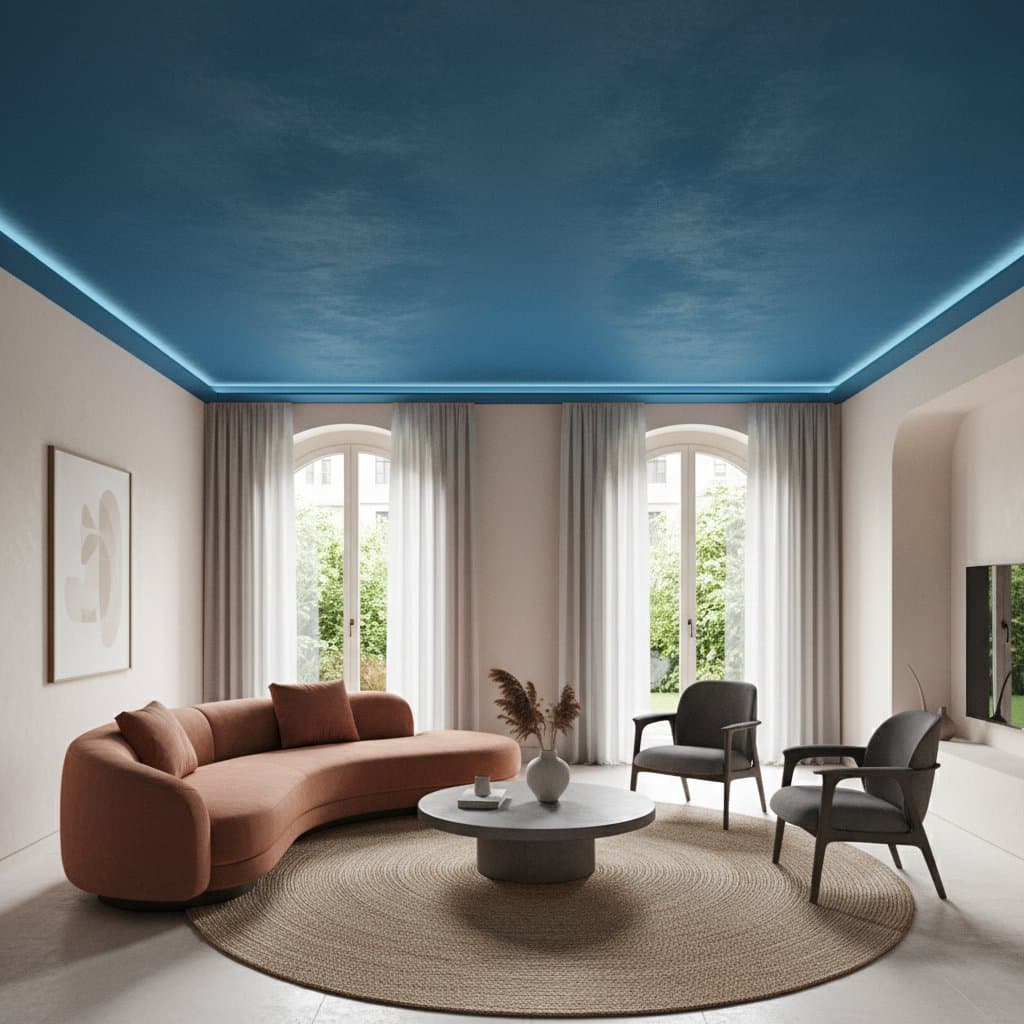
Colorful Ceilings: The Fifth Wall Design Shift
You finish painting the living room walls and rearranging the furniture, but the space still lacks something essential. A glance upward reveals the plain white ceiling blending into obscurity. This surface, known as the fifth wall, offers untapped potential to elevate your interiors.
The fifth wall emerges as a key element in contemporary home design. Homeowners now recognize ceilings as dynamic canvases capable of adding color, texture, and depth. Picture a ceiling in a gentle blush that captures morning light or a rich navy that envelops the room in elegance. Such choices create layered, expressive environments.
The Problem with Neglecting the Fifth Wall
Ceilings have long received minimal attention, typically coated in white to maximize light reflection and maintain an airy feel. This approach suits certain rooms but often results in spaces that appear flat despite investments in floors, furnishings, and wall treatments.
A colored or textured ceiling introduces emotional and visual richness. It directs attention upward, fostering balance across all surfaces. This integration from floor to ceiling produces harmony and prevents the room from feeling incomplete.
The New Design Movement: Turning Ceilings into Statements
This trend aligns with a shift toward personalized, vibrant interiors. Designers move beyond neutral minimalism to embrace bold color applications. Ceilings become platforms for individuality without requiring overwhelming changes.
Intentional choices define the room's narrative. A subtle pastel might amplify natural illumination, while a striking shade establishes the space's core identity. The focus remains on how the ceiling enhances the overall composition.
How Color Transforms Space
Ceiling colors shape both spatial perception and emotional response. Darker shades contract large areas into intimate settings, fostering warmth. Lighter options mitigate stark lighting and accentuate features such as exposed beams or molding.
- Soft Neutrals: Options like warm ivory, pale gray, or muted peach promote tranquility and unity. These selections preserve brightness while introducing gentle layers.
- Mid-Tones: Sage green, denim blue, or terracotta add substance without dominance. They complement natural materials like wood or stone effectively.
- Bold Hues: Emerald green, charcoal gray, or plum provide grounding drama. These suit dining areas, powder rooms, or evening retreats.
Evaluate interactions with walls, floors, and lighting when choosing. Natural daylight softens hues, whereas artificial sources amplify them. Apply test patches in place to assess true appearance.
Beyond Paint: Texture, Pattern, and Finish
Texture and finish extend the fifth wall's impact beyond mere color.
- Plaster and Lime Wash: These create dimension via nuanced color variations. Light shifts across the surface throughout the day, infusing vitality.
- Wallpaper: Geometric or botanical patterns bring refined playfulness. They excel in bedrooms, nurseries, or powder rooms.
- Wood Paneling: This material delivers tactile warmth and artisanal quality. Light stains fit coastal or modern aesthetics; darker tones ground traditional spaces.
- Metallic Sheen: Subtle gold or silver paints or foils introduce understated luxury. They reflect light to enhance ambiance without excess.
Select based on the room's function and desired atmosphere. Each option alters the sensory experience uniquely.
The Psychology Behind Looking Up
Gazing upward instinctively elevates mood. A detailed ceiling completes the visual field, promoting a sense of wholeness.
Colored or textured surfaces adjust spatial dynamics. They cozy up bedrooms or expand small areas with reflective finishes. The result feels deliberate and nurturing, influencing comfort subtly yet profoundly.
Practical Considerations for Your Ceiling Project
Ceiling updates demand preparation to achieve flawless results.
- Preparation: Address visible flaws by sanding inconsistencies, repairing cracks, and applying appropriate primer.
- Color Testing: Apply a substantial sample and monitor it under varying light conditions. Overhead views often darken colors unexpectedly.
- Lighting: Account for fixtures like recessed cans or pendants. Warm bulbs enrich tones; cool ones highlight subtle shades.
- Safety: Use stable ladders and proper tools for overhead work. Professionals handle heights and precision with expertise.
- Permits and Codes: Basic painting rarely needs approval. Structural additions, lighting, or vents require local verification.
Budgeting for the Fifth Wall
Expenses depend on scope and materials.
- Paint: Professional application for a standard ceiling starts at several hundred dollars, factoring in preparation and access.
- Wallpaper or Decorative Finish: These demand more due to specialized labor and supplies.
- Architectural Upgrades: Elements like coffers, beams, or paneling elevate costs through materials and installation.
Begin in compact areas like powder rooms to test impact affordably. Scale up once satisfied with the transformation.
Matching Ceiling Color to Room Function
Tailor selections to enhance utility and mood.
- Living Rooms: Soft blues or warm neutrals foster relaxation for social gatherings.
- Kitchens: Pale greens or creamy tones brighten and warm cooking zones.
- Bedrooms: Deep aubergine or midnight blue envelop spaces for restorative sleep.
- Dining Spaces: Terracotta or subdued gold complements ambient lighting during meals.
- Bathrooms: Sky blue hues refresh and expand compact layouts.
Ensure the ceiling supports rather than overshadows other elements. This alignment optimizes functionality.
The Fifth Wall in Local Design Culture
Southern traditions include blue porch ceilings to deter pests and mimic the sky. This practice illustrates ceilings' role in regional identity.
Modern adaptations bring such elements inside. A Charleston kitchen might feature pale aqua to evoke coastlines. An Atlanta loft could employ matte charcoal to highlight industrial features. These nods preserve heritage while innovating.
Working with Professionals
DIY painting proves feasible for simple projects. Yet experts deliver accuracy in color application, clean edges, and durable finishes.
For extensive work, connect with local specialists via Doric South. The platform matches you with reviewed contractors familiar with southern codes and styles. This allows focus on design without logistical concerns.
Bringing the Fifth Wall to Life
Ceilings evolve from overlooked planes to integral design assets. They infuse spaces with narrative through color, texture, or pattern.
Experiment with samples to witness light's influence. Observe the enhanced character and invite the transformation. Your home gains depth and intention with each upward glance.