
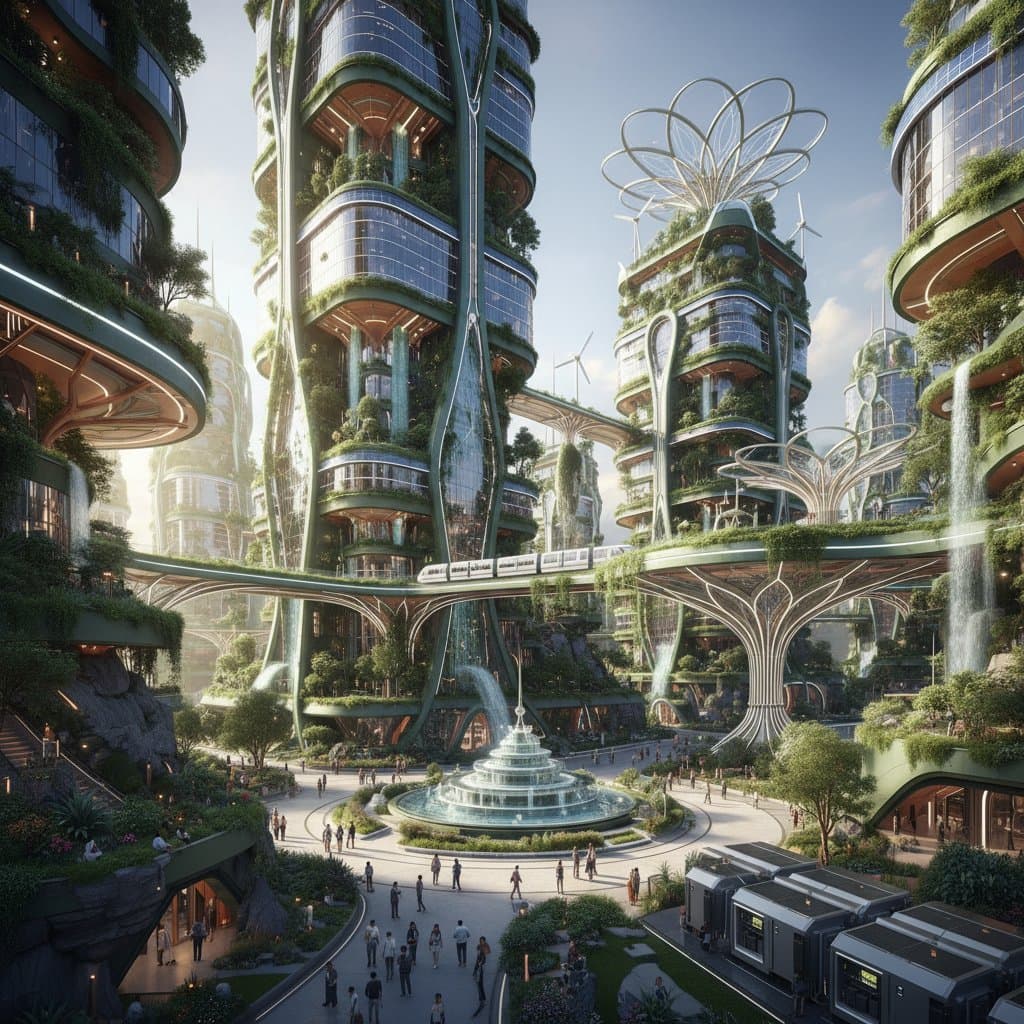
Why Solarpunk Redefines Green Architecture
Picture a city where sunlight reflects from verdant rooftops, structures feature breathing walls of foliage, and technology collaborates with nature instead of opposing it. The atmosphere carries a sense of purity, environments promote tranquility, and each edifice embodies equilibrium and revitalization. This scenario captures the core of solarpunk, a movement reshaping construction practices and visions of planetary coexistence.
The Evolution of Green Design
Traditional green architecture primarily aims to minimize environmental damage. Solarpunk advances this by envisioning sustainability as the bedrock of aesthetic appeal, livability, and social bonds. Although the concept evokes the future, its principles remain profoundly rooted in human experience. Solarpunk architecture fuses advancement with intimacy, incorporating solar elements, intelligent materials, and biological shapes to craft environments that appear innovative yet comforting.
Such designs manifest beyond theoretical ideals. In urban centers and rural areas, elements emerge through rooftop vegetation in crowded districts, photovoltaic glazing in fenestration, and localized energy networks distributing renewable power. This transition moves from notions of limitation to prosperity, from depletion to restoration.
The Timely Appeal of Solarpunk
Discussions on sustainability often carry tones of caution and remorse. Solarpunk introduces an alternative: positive outlook. It positions ecological stewardship as an avenue for innovation rather than constraint. Its attraction stems from pragmatic enthusiasm. Individuals seek elegance and ease alongside functionality. A solarpunk residence or edifice does not only conserve energy; it pulses with vitality.
Professionals in architecture and design gravitate toward this perspective for its union of visual and moral considerations. Selections of materials prioritize durability alongside tactile qualities and thermal properties. Layouts promote interpersonal links, featuring communal green areas and partially enclosed patios that facilitate gatherings. Technological components exist unobtrusively, enhancing daily existence without overwhelming it.
Core Components of Solarpunk Architecture
Solarpunk functions as both a stylistic vocabulary and a guiding philosophy. It merges inspirations from the natural world with advanced innovations, yielding designs that balance futurism with stability. Consider these essential attributes in solarpunk-influenced structures:
-
Seamless Solar Integration
Photovoltaic arrays transcend mere rooftop additions. In solarpunk applications, they integrate into the building envelope. Exterior surfaces gleam with photovoltaic glazing, and outer layers transform illumination into electricity while offering thermal regulation and shelter from direct sun. -
Biophilic Building Elements
Vegetated roofs, upright plantings, and foliage-clad exteriors form the aesthetic cornerstone. These installations purify atmosphere, mitigate thermal buildup, and temper cityscapes. Visualize climbing greenery interlaced with lattices of repurposed metal or lichen surfaces dampening noise along thoroughfares. -
Regenerative Resource Cycles
Discarded materials serve as inputs. Reclaimed water irrigates elevated plantings, and organic refuse from residences fertilizes regional agriculture. Construction employs reused, refurbished, or proximate origins to lessen transit-related emissions and bolster local economies. -
People-Focused Spatial Planning
Environments prioritize relational dynamics. Collective patios, collaborative housing, and shared power infrastructures cultivate partnership. Objectives center on fostering unity while honoring individual boundaries. -
Contextual Customization
Solarpunk adapts to locales. In tropical zones, emphasis falls on airflow and overshadowing. In temperate areas, configurations optimize incidental solar warmth. Local conditions and customs inform unique expressions of the style.
Implementing Solarpunk Principles
Solarpunk architecture inspires through its forward-looking nature, yet its tenets prove attainable. Incorporate these concepts into current dwellings and locales without complete overhauls.
1. Initiate Modest Projects
Commence with straightforward initiatives such as photovoltaic illumination, erecting a vegetated partition, or incorporating salvaged elements in updates. Incremental modifications accumulate toward enhanced ecological living.
2. Evaluate Enduring Benefits
Initial expenditures in solarpunk features yield returns via diminished utility expenses and upkeep demands. Photovoltaic installations, high-performance glazing, and botanical barriers substantially lower recurring costs.
3. Collaborate with Regional Specialists
Local climates dictate variables like solar incidence and precipitation. Engaging architects and builders versed in site-specific challenges guarantees efficacy and regulatory compliance. Platforms like Doric South facilitate connections to green design experts for realizing concepts.
4. Leverage Available Supports
Numerous areas provide financial offsets for photovoltaic setups, efficiency assessments, or conservation technologies. Such programs alleviate startup costs and accelerate return timelines.
5. Cultivate Collective Networks
Solarpunk flourishes through joint endeavors. Participation in regional ecological initiatives or resource pooling with adjacent properties amplifies impacts and motivates broader adoption.
The Deeper Resonance of Solarpunk
Solarpunk transcends mechanics to touch fundamental aspirations for optimism, elegance, and community. Residing in such a setting resembles dwelling within an evolving entity that synchronizes with inhabitants. The subtle operation of photovoltaic generation, aromas from terrace botanicals, and diffused daylight across interiors affirm that ecological practice enriches rather than restricts existence.
For households, these spaces impart natural reverence via routine immersion. For collectives, they engineer areas promoting alliance over seclusion. For metropolitan areas, they chart courses merging expansion with fortitude.
Solarpunk's Role in Urban Transformation
Municipal strategies increasingly embody solarpunk ideals concretely. Neighborhoods evolve into self-sustaining biomes beyond rigid layouts. Transit systems rely on clean sources. Green zones manage water overflow. Built forms integrate into broader webs advancing species diversity and societal health.
Solarpunk's strength resides in flexibility. Rural settlements may emphasize renewable communal hubs and joint plantings. Metropolitan hubs employ tiered woodlands and decentralized grids. All pursue nurturing habitats over exhaustive ones.
Steps to Integrate Solarpunk into Your Space
To infuse solarpunk into personal environments, commence with clear objectives and expert input. Determine primary focuses, whether self-reliant power, natural affinity, or minimal discards. Designers then convert these into feasible blueprints suited to scale and finances.
Doric South links property owners to qualified builders excelling in ecological builds. Submit projects at no cost, receive pairings with solarpunk-savvy professionals, and review bids merging ingenuity with feasibility. This method streamlines efforts, eliminates uncertainties, and aligns outcomes with ecological and visual aims.
Solarpunk represents more than stylistic evolution; it signals a paradigm of positivity, ingenuity, and shared responsibility. Every vegetated canopy, photovoltaic exterior, and cooperative grid advances this ideal. Embracing these in construction or renewal enhances personal realms while advancing collective prospects for vitality and verdure.