
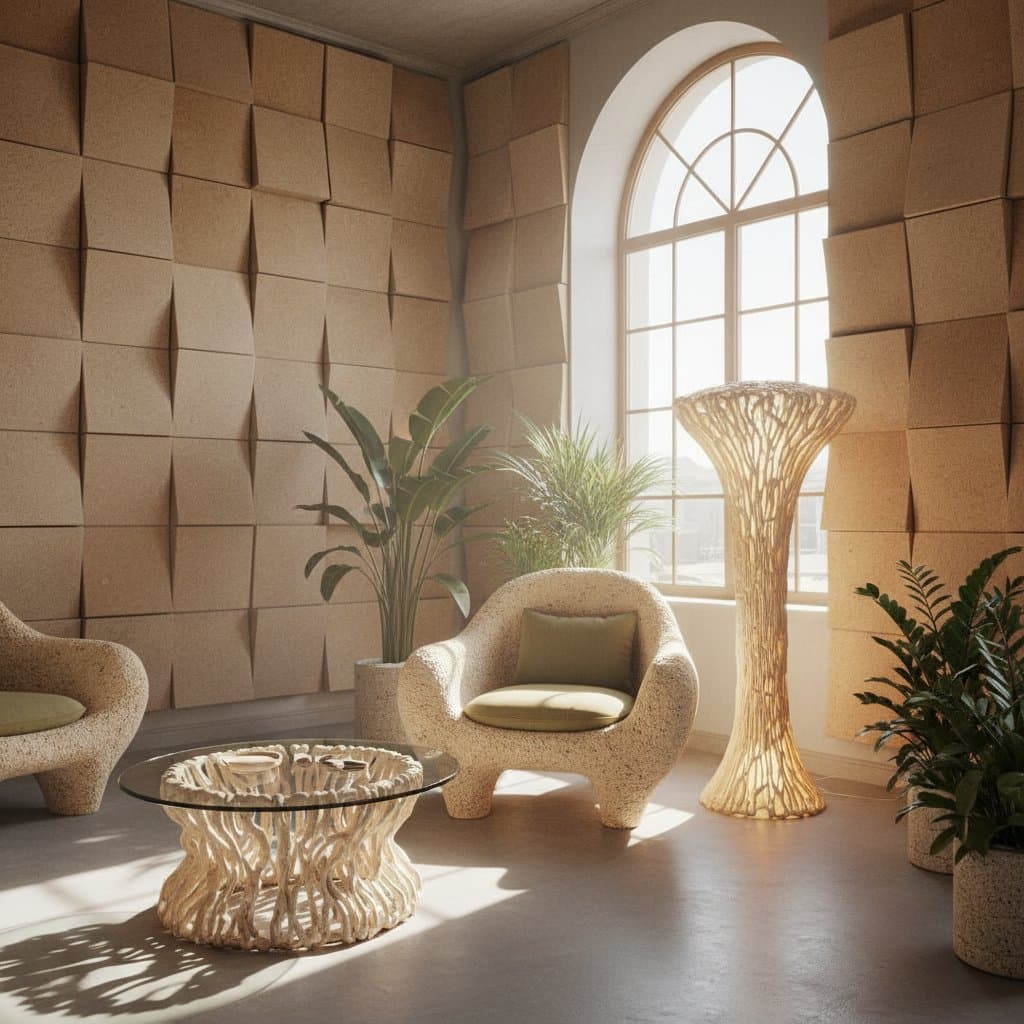
Biodegradable Mycelium: Transforming Interior Design
Homeowners increasingly seek decor and construction materials that minimize waste and environmental harm. Mycelium, the thread-like root system of fungi, provides a compelling solution. This material grows into durable, lightweight forms suitable for furniture, walls, and accents, offering beauty alongside ecological benefits.
Initial impressions of fungal-based products may seem unconventional. However, mycelium demonstrates remarkable practicality and adaptability. It appears in lampshades, acoustic tiles, structural panels, and custom furnishings, reshaping perspectives on texture, form, and eco-responsibility.
Reasons for Mycelium's Rising Popularity
Conventional materials such as plastics, concrete, and synthetic foams persist in landfills for centuries. Mycelium contrasts sharply by growing from natural sources and decomposing harmlessly at end-of-life. Designers mold it into diverse profiles, including minimalist tiles or organic wall treatments.
Consider mycelium as nature's analog to foam or engineered wood, absent the ecological drawbacks. Its low weight facilitates easy installation, while indoor durability ensures longevity. Proper disposal returns it to the soil without residue.
The Production Process for Mycelium Materials
Creation starts with blending mycelium spores with substrates like sawdust, hemp hurds, or straw. This composite fills a custom mold and incubates for several days at controlled temperatures. The fungal network colonizes the fibers, forming a cohesive block.
Drying halts growth, yielding a stable product ready for finishing. Artisans then sand, coat, or treat surfaces akin to traditional woods or plasters. Variations in incubation duration, substrate ratios, and mold geometry yield tailored densities and patterns, empowering precise creative outcomes.
Incorporating Mycelium into Indoor Spaces
Mycelium extends beyond novelty to functional applications. The following examples highlight common integrations:
-
Lighting Elements – Lampshades crafted from mycelium diffuse light softly, evoking organic warmth. Their featherweight nature supports intricate, bespoke forms. Costs generally fall between fifty and two hundred dollars, influenced by dimensions and complexity.
-
Wall Coverings and Tiles – These elements provide tactile depth and thermal insulation. They serve as alternatives to foam boards in feature walls or noise-reduction setups. Pricing averages fifteen to thirty dollars per square foot.
-
Furniture Components – Innovators produce stools, end tables, and modular shelves from mycelium blends. Protective sealants enhance resilience, allowing pieces to endure indoor conditions for extended periods.
-
Artistic Installations – Grown sculptures add focal points to sustainable interiors. Such items spark discussions on green practices while elevating room aesthetics.
Advantages and Limitations of Mycelium
Every emerging material presents trade-offs. Understanding these informs strategic use within home environments.
Advantages:
- Completely biodegradable and suitable for composting
- Derived from abundant agricultural residues
- Balances lightness with sufficient strength for ornamental purposes
- Exhibits inherent resistance to fire and mold with appropriate treatments
- Supports local production, curbing transport-related emissions
Limitations:
- Requires sealing for exterior exposure
- Offers restricted palette for hues and surface treatments
- Commands premium pricing over standard foams or sheets in limited runs
- Demands moisture avoidance to preserve form
Accounting for these factors enables effective deployment in protected indoor settings, ensuring performance without durability concerns.
Mycelium Versus Conventional Alternatives
Environmental profiles distinguish mycelium from established options. Petroleum-derived foams and plastics emit volatile compounds during production. Harvesting wood demands resource-intensive logging and milling, despite renewability.
Mycelium repurposes discards, sidestepping such impacts. Economically, it exceeds mass-market equivalents in initial outlay, though scaling production lowers costs. For boutique applications, the premium aligns with gains in uniqueness and conscience.
Sourcing and Creating Mycelium Products
Pre-fabricated panels arrive from specialized suppliers, while home experimentation yields prototypes. DIY enthusiasts allocate incubation periods and secure ventilated spaces. Starter kits, priced from thirty to seventy dollars, include spores, molds, and guides.
For bespoke commissions, consult eco-design workshops. Specify desired contours, grains, or strengths to match visions. Integrations of plant-based pigments maintain compostability, broadening visual possibilities.
Handling and Upkeep Guidelines
Dried and finished mycelium poses no health risks, free of active spores or scents. Preserve appearance by shielding from moisture and wiping with soft fabrics. Enhance wall installations with breathable waxes or oils for enduring protection.
Damaged items integrate seamlessly into compost systems, unlike landfill-bound synthetics. This cycle underscores mycelium's alignment with circular principles.
Integrating Mycelium for Greener Interiors
Adopting mycelium advances eco-conscious design without sacrificing elegance. It infuses spaces with authentic, earthy tones unattainable through industrials. Begin with modest additions like a fixture or accent, scaling as familiarity builds.
This material exemplifies harmony between innovation and nature. Incorporating it fosters not only refined aesthetics but also a deeper connection to sustainable habitats.