
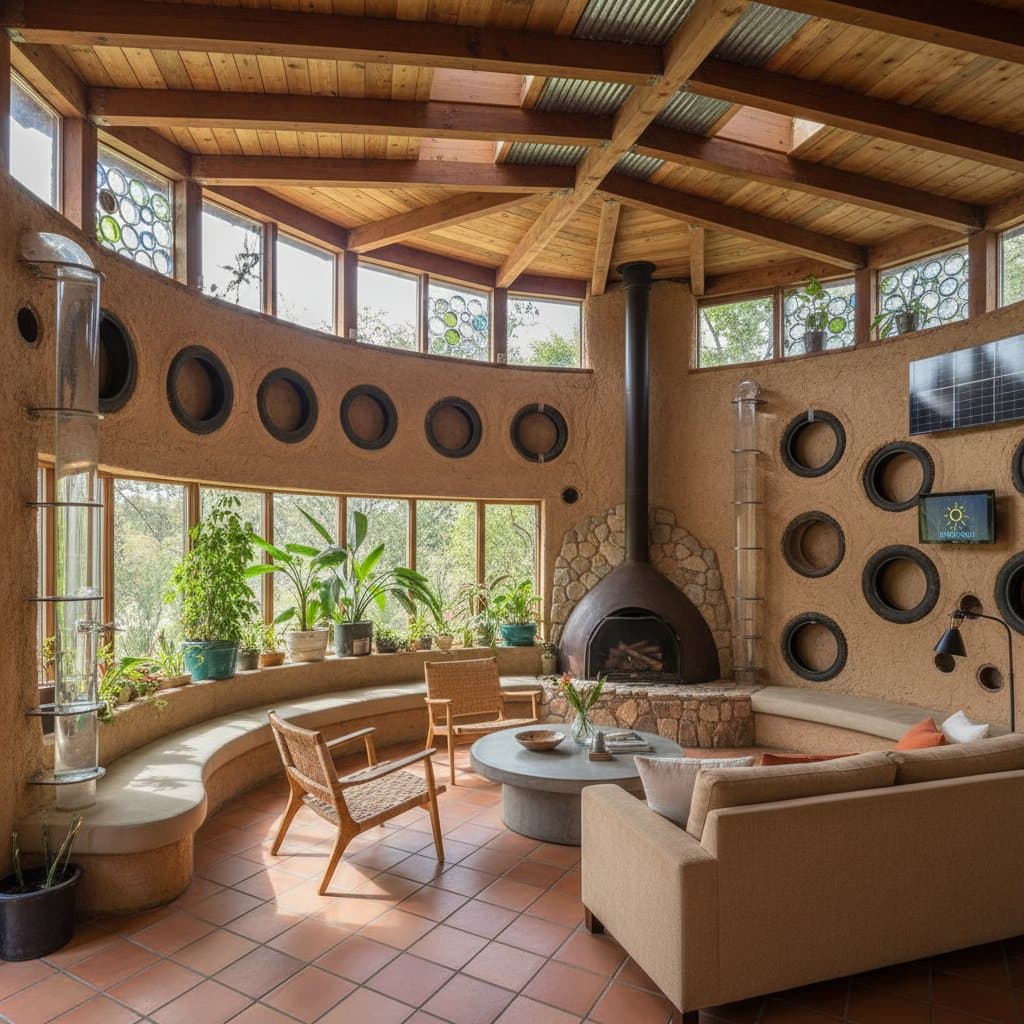
Earthship Revival: Tire Homes Power Sustainable Living
Consider a stack of discarded tires repurposed as the foundation of a durable home. This concept forms the core of Earthships, an innovative method for sustainable habitation that gains renewed attention among those seeking autonomy from conventional energy sources and waste streams. Individuals drawn to simpler, greener lifestyles find Earthships appealing, as these structures require no advanced expertise to understand or inhabit.
Rising utility expenses and landfill overflows prompt many to explore alternatives to standard housing. Traditional construction materials escalate in price, exacerbating financial pressures. Earthships break this pattern by incorporating recycled items and on-site resource management, producing electricity, conserving water, and minimizing environmental impact while ensuring resident comfort.
For those contemplating an Earthship lifestyle, this overview details construction techniques, operational mechanics, and implementation requirements, providing a clear path to informed decision-making.
Why the Earthship Concept Is Making a Comeback
Sustainability and self-reliance drive the resurgence of Earthships amid broader shifts toward eco-friendly architecture. Homeowners face mounting housing affordability challenges alongside growing awareness of waste accumulation, leading to interest in utility-independent designs. The prospect of a residence that operates without grid connections resonates with urban escapees and rural dwellers alike.
An Earthship functions as both shelter and integrated ecosystem. Its design addresses thermal regulation, hydration, sanitation, and electricity generation with limited external inputs. In remote settings, this capability translates to genuine liberation from infrastructural dependencies.
Beyond practicality, Earthships deliver unexpected livability. Massive walls retain heat during cold seasons and deflect summer warmth, creating stable indoor climates. Integrated planters cultivate herbs and vegetables year-round, infusing spaces with vitality and improving air quality. Residents often describe a profound sense of alignment with surrounding ecosystems, fostering well-being through environmental integration.
The philosophy originated in the 1970s with architect Michael Reynolds, who pioneered rammed-earth tire walls in Taos, New Mexico. Today, communities worldwide adapt these principles, from arid Southwest U.S. sites to temperate European locales, demonstrating versatility. As climate change intensifies, Earthships position themselves as resilient solutions, blending aesthetics with functionality in forms ranging from compact studios to expansive family compounds.
How Earthships Are Built: From Tires to Functional Structures
Construction begins with site selection, favoring south-facing slopes for optimal solar exposure in the northern hemisphere. Foundations involve excavating trenches where tires serve as primary building blocks. Workers pack each tire with 200 to 300 pounds of compacted earth, creating insulated, earthquake-resistant walls that measure two feet thick.
Subsequent layers incorporate recycled glass bottles for light-transmitting panels and aluminum cans for additional insulation. South-facing walls feature large windows to capture passive solar gain, while north sides remain bermed with soil for thermal mass. Roofing typically employs metal or green sod, directing rainwater into cisterns for collection and purification.
Interior spaces divide into zones: living areas, indoor greenhouses for food production, and utility rooms housing greywater systems that recycle household wastewater for irrigation. Electrical setups rely on photovoltaic panels connected to battery banks, powering lights, appliances, and pumps without fossil fuels. The entire process emphasizes modularity, allowing phased builds that start with basic shells and evolve over time.
Permitting varies by region; some areas classify Earthships as experimental, requiring engineering reviews. However, established blueprints and builder networks streamline approvals, ensuring compliance with codes for structural integrity and sanitation.
How Much Does an Earthship Cost?
Expenses fluctuate based on scale, complexity, and labor involvement. A modest 400-square-foot unit, assembled through owner-led efforts, approximates $20,000 to $50,000, comparable to a basic tiny home. Expansive 2,000-square-foot models with advanced features and contractor assistance range from $150,000 to $300,000, aligning with entry-level conventional housing.
Key cost components include:
- Materials: Recycled tires, bottles, and cans incur no acquisition fees, often sourced from local dumps or businesses. Locally harvested dirt and gravel reduce expenses, while purchased items like timber, glazing, and sealants total $5,000 to $15,000.
- Labor: Self-construction eliminates payroll, though it demands 1,000 to 3,000 labor hours over months. Professional crews add $50,000 or more, depending on project scope.
- Systems: Renewable energy arrays, comprising panels, inverters, and storage, cost $10,000 to $30,000 for reliable off-grid performance. Water infrastructure, including tanks and filters, adds $5,000 to $10,000.
Initial investments yield substantial savings: zero monthly utilities offset construction outlays within 5 to 10 years. Maintenance remains low, with tire walls enduring decades without major repairs, and solar components warrantied for 25 years.
Financing options encompass personal savings, eco-loans, or grants for green builds. Some regions offer tax incentives for energy-efficient homes, further easing affordability.
Common Myths About Tire Homes
Myth 1: Tires are unsafe to use in houses.
Properly sealed with adobe plaster and earth, tires emit no volatile compounds. Research from the Earthship Biotecture organization confirms that off-gassing ceases once encased, with indoor air quality matching or exceeding standard homes.
Myth 2: They look rough or unfinished.
Rustic exteriors belie sophisticated interiors, where smooth plaster finishes, hardwood accents, and contemporary fixtures prevail. Custom designs incorporate aesthetic elements like curved walls and skylights, rivaling modern architecture.
Myth 3: They only work in deserts.
Adaptations for humid, cold, or coastal environments include enhanced ventilation, supplemental heating, and robust drainage. Successful installations span from snowy Colorado to tropical Hawaii, proving climatic flexibility.
Myth 4: Maintenance is overly complex.
Systems mimic natural processes, requiring routine checks akin to gardening rather than mechanical overhauls. Owners report fewer issues than with traditional HVAC and plumbing.
Pro Tips for Success
-
Start Small
Begin with a pilot project, such as a tire-walled shed or aquaponic garden, to master techniques like tire ramming and earth packing without full-scale commitment. -
Join a Workshop
Enroll in certified Earthship academies or community builds to acquire hands-on experience. These programs cover everything from permitting to system integration, often culminating in a functional prototype. -
Use Local Materials
Incorporate regional resources like clay soils or native stone to minimize shipping costs and enhance site-specific performance. This approach also supports biodiversity by reducing imported material transport. -
Plan for Scalability
Design with expansion in mind, using modular tire units that allow additions like extra rooms or expanded solar capacity as needs evolve. -
Consult Experts Early
Engage architects familiar with alternative builds to navigate regulations and optimize energy flows, preventing costly redesigns.
Steps to Build Your Earthship
Embark on this journey by researching local Earthship communities for inspiration and support. Assess your land's solar potential and water access to inform design choices. Gather materials through partnerships with recycling centers, then schedule a workshop to build foundational skills.
During construction, prioritize safety with proper lifting aids for heavy tire packing. Integrate systems progressively: erect walls first, then install electrical and plumbing. Post-build, monitor performance through the first seasons, adjusting as needed for peak efficiency.
Owners frequently highlight the transformative rewards: financial autonomy, reduced carbon footprints, and a deeper connection to sustainable principles. Earthships not only shelter but empower, turning everyday living into an act of environmental stewardship.