
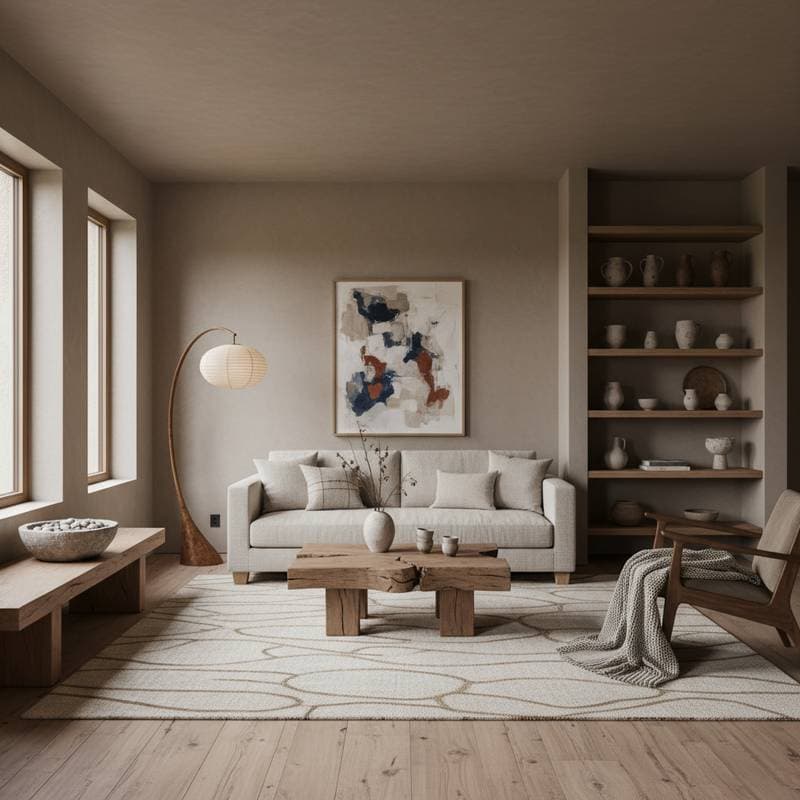
Embrace Imperfect Beauty: Wabi-Sabi in 2026 Design
Many individuals seek a home environment that promotes peace and a sense of grounding without excessive effort. Images of pristine interiors often appear on social media, yet these spaces can evoke a sense of detachment. Consider an alternative where perfection yields to character, and each element reveals a narrative shaped by time and use. This approach defines Wabi-Sabi, a Japanese philosophy that values imperfection, and it influences contemporary interior design by fostering genuine, human-centered spaces.
The Allure of Imperfect Beauty
Wabi-Sabi draws its strength from simplicity and authenticity. The style rejects rigid symmetry and flawless surfaces in favor of irregular textures, aged materials, and signs of daily life that affirm a space is actively inhabited. For instance, a ceramic bowl with a visible firing crack, linen drapes that fold naturally in sunlight, or a dining table marked by countless gatherings convey histories of thoughtful engagement. Such elements emphasize acceptance over disregard, highlighting how true beauty emerges from subtle flaws.
This mindset aligns seamlessly with the rising emphasis on intentional living. Homeowners select durable items that develop patina over time rather than discarding them for newer models. Spaces avoid accumulation by prioritizing objects that inspire tranquility. The result is an evolving design that adapts alongside its occupants, promoting harmony and sustainability.
Building a Wabi-Sabi Home
Integrating Wabi-Sabi requires deliberate choices that prioritize serenity and purpose. Each addition should enhance calm without overwhelming the senses. Begin by evaluating your current furnishings and envisioning how they can evolve to embody these principles.
-
Incorporate natural materials
Select elements like raw stone, terracotta clay, breathable linen fabrics, and untreated wood. These choices evolve gradually, developing rich patinas that infuse rooms with organic warmth. Examples include salvaged oak flooring that reveals grain patterns over years, matte-finish granite surfaces in kitchens that resist artificial shine, and artisan pottery that bears unique fingerprints from creation. -
Opt for subdued, earth-inspired colors
Employ palettes of soft taupes, faded ivories, and deep umbers to establish a soothing atmosphere. These hues echo landscapes such as misty forests or sun-bleached sands, facilitating seamless visual flow across furnishings and walls. Layer them thoughtfully, for example, by pairing a neutral linen sofa with woven cushions in warm clay tones for balanced depth. -
Choose handcrafted items
Source works from skilled local makers who employ traditional techniques. A pottery vessel shaped on a wheel or a tapestry knotted by hand imparts irreplaceable individuality absent in factory goods. Seek out pieces like irregular wooden shelves carved from fallen branches or metal lanterns hammered with visible tool marks to add tactile interest. -
Streamline spatial arrangements
Allow ample negative space to foster openness and reflection. Retain only cherished possessions and eliminate distractions to spotlight essential forms and qualities. In a living area, for example, position a single low-slung bench amid potted ferns, creating a focal point that invites pause rather than busyness. -
Harness natural illumination and contrast
Rely on daylight to accentuate depth and mood. Position sheer rice paper screens or gauzy fabrics near windows to diffuse light softly, turning mundane areas into contemplative zones. Observe how afternoon shadows play across textured walls, enhancing the organic rhythm of the day.
Practical Considerations
Adopting Wabi-Sabi principles demands minimal financial outlay, as the focus lies in transformation rather than acquisition. Repurpose household items to amplify authenticity; smooth an antique chest with fine sandpaper to reveal its natural grain, integrate salvaged mosaic tiles into a backsplash for subtle variation, or restore a timeworn entry panel with natural oils for renewed vitality. Sustainable options such as fast-growing bamboo flooring, durable jute rugs, and upcycled stone accents align with the ethos while supporting environmental responsibility.
For projects involving modifications to load-bearing elements or electrical systems, consult municipal authorities to verify code adherence. Engage professionals versed in understated aesthetics and cultural influences from Japan to streamline the process. Doric South provides complimentary services to pair clients with qualified contractors who align with personal visions and financial parameters.
Living with Imperfection
As your environment embodies these ideals, subtle shifts in perception occur. A mug with a small chip gains prominence in daily rituals. Textured walls that deviate from straight lines appear purposeful and inviting. Wabi-Sabi extends beyond aesthetics to cultivate a perspective that values presence, observation, and the inevitable flow of time within domestic life.
Daily routines benefit from this foundation; mornings spent sipping tea from an asymmetrical cup foster mindfulness, while evenings in a softly lit nook encourage reflection. Over time, the home becomes a mirror for personal growth, where imperfections serve as anchors for gratitude and resilience.
Transforming Your Space
Initiate the journey by selecting a single area, such as a bedroom alcove, and layering in tactile elements like a coarsely woven throw over a simple frame. Allow sensory cues, from the rustle of natural fibers to the play of light on uneven surfaces, to inform decisions. For comprehensive updates, utilize Doric South to share your vision at no cost and collaborate with reliable specialists. In this way, your residence evolves into a haven of understated elegance, where imperfection reveals enduring tranquility.