
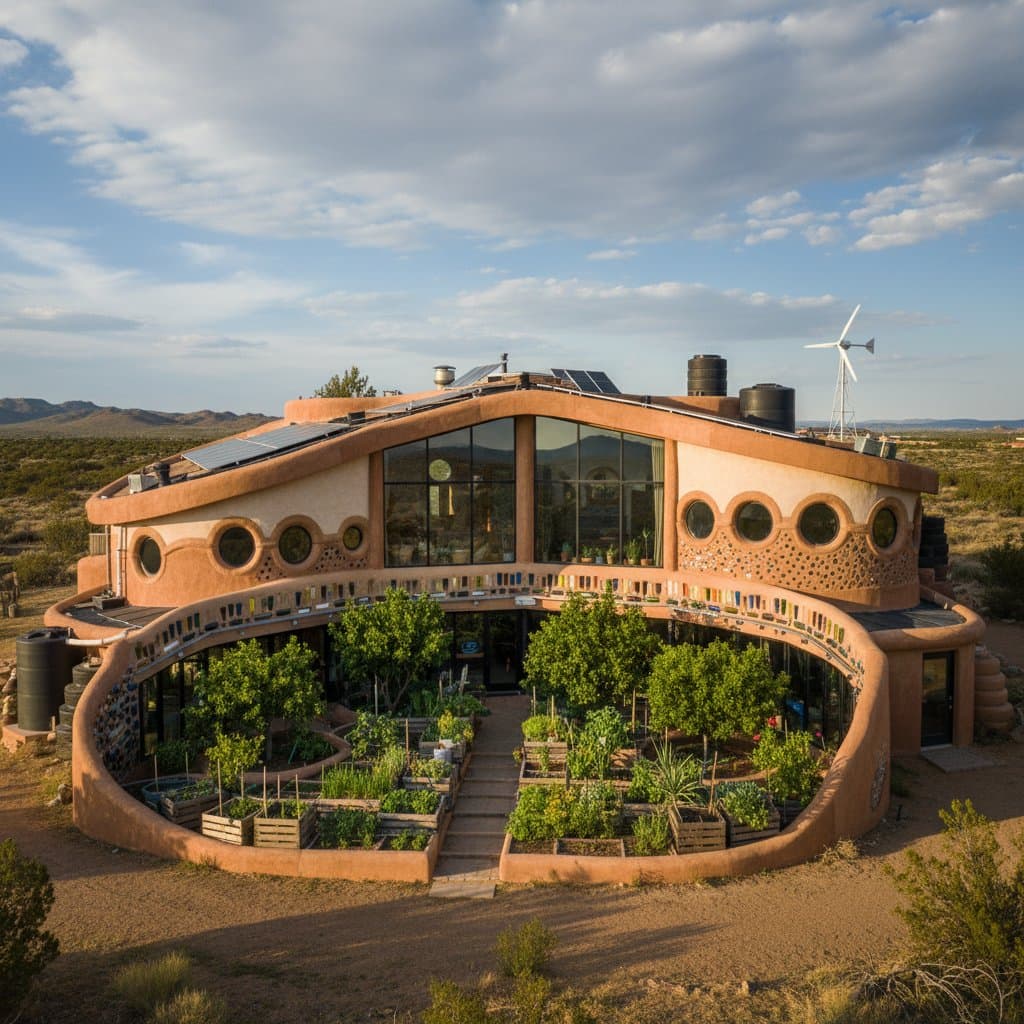
Introduction to Earthships and Their Core Materials
Earthships represent a revolutionary approach to sustainable architecture, designed to function entirely off the grid. Developed by architect Michael Reynolds, these homes utilize natural and recycled elements to create self-sufficient living spaces. Central to their design are discarded tires and glass bottles, materials chosen for their durability, availability, and thermal properties.
Tires serve as the primary building blocks for walls. Builders pack them with rammed earth, transforming waste into massive, load-bearing structures that provide excellent thermal mass. This mass absorbs heat during the day and releases it at night, maintaining stable indoor temperatures without reliance on fossil fuels. Bottles, meanwhile, fill interior walls or create translucent panels. Arranged in colorful patterns, they allow diffused light to enter while adding aesthetic appeal and structural integrity.
These choices align with the Earthship philosophy of reducing waste and harnessing the earth's resources. Tires, abundant from automotive discard, prevent landfill accumulation. Bottles, sourced from everyday recycling, contribute to a circular economy. Together, they enable homes that collect rainwater, generate solar power, and treat wastewater on-site.
The Building Process: Incorporating Tires and Bottles
Constructing an Earthship begins with site preparation and foundation work, typically a bermed structure that embeds the home partially into the earth for added insulation. The tire walls form the backbone, each tire requiring about 300 pounds of soil compaction. This labor-intensive step builds the curved, south-facing walls that maximize solar exposure.
Bottle walls follow, often used for non-load-bearing partitions or north-facing sections to minimize heat loss. Workers lay bottles necks-down in mortar, creating a brick-like effect that filters light beautifully. Roofing incorporates passive solar principles, with a sloped design to capture sunlight for interior greenhouses that grow food year-round.
Plumbing and electrical systems integrate seamlessly. Rainwater funnels into cisterns, greywater irrigates plants, and solar panels power the entire setup. The result is a home that operates independently, using no public utilities.
Labor and Cost Implications
Building an Earthship demands significant hands-on involvement. Hiring professionals increases expenses rapidly, often doubling the budget. Opting for self-construction cuts costs but necessitates substantial time and physical stamina.
Materials remain affordable: tires cost nothing beyond collection, and bottles require only sorting. Overall, a basic Earthship for two people might total $20,000 to $50,000, far below conventional homes. Expect to invest time, physical energy, and patience. The payoff arrives in a residence with minimal operating costs, often under $100 annually for maintenance.
Time and Effort Required
A complete Earthship project spans several months, from foundation to final touches. The tire-packing phase dominates early stages, a repetitive task that yields steady advancement with a small team of two to four people. Friends or family can assist, turning the build into a communal effort.
Subsequent phases mirror traditional construction: framing for roofs, installing plumbing for water systems, and wiring for solar integration. Each element adapts to off-grid needs, such as low-voltage lighting and efficient appliances. Progress feels rewarding as the structure takes shape, blending innovation with familiar techniques.
Legal and Practical Considerations
Local regulations pose potential hurdles before construction commences. Many building codes favor standard materials, potentially challenging tire or bottle approvals. Consult an architect or engineer experienced in Earthship designs to ensure compliance with safety standards.
Permits for rainwater harvesting, on-site sewage, or photovoltaic arrays may apply. Navigating these requirements delays timelines but secures legality and insurability. Non-compliance risks fines or demolition orders.
Site selection proves crucial. Earthships thrive in regions with abundant sunlight, optimizing solar gain and passive heating. Colder climates demand supplemental insulation or auxiliary heating sources. Assess soil stability and water access to support the design's self-sufficiency.
Daily Life in an Earthship
Residing in an Earthship shifts perceptions of home. Quiet abounds without humming appliances or distant traffic. Fresh air circulates through natural ventilation, and temperatures hold steady, typically between 65 and 75 degrees Fahrenheit year-round.
Resource awareness becomes routine. Monitor cistern levels after rain and solar output during peak hours. This mindfulness fosters a deeper connection to the environment, transforming chores into purposeful acts.
Cooking utilizes efficient stoves, cleaning recycles water through greywater systems, and gardening supplies fresh produce from interior planters. Compost from kitchen scraps enriches soil, closing the loop on waste.
Adapting to Off-Grid Routines
New residents face a brief adjustment period. Track energy consumption to avoid draining batteries, timing tasks like dishwashing for daylight. Laundry aligns with sunny forecasts to maximize solar recharge.
Regular upkeep includes cleaning water filters, inspecting solar batteries, and flushing plumbing lines. These responsibilities build quickly with practice, demanding consistency rather than complexity.
Freedom emerges as the greatest benefit. Power failures become irrelevant, and utility bills vanish. Control rests with the homeowner, empowering a lifestyle of independence and resilience.
Integrating Earthship Principles into Contemporary Living
Earthships extend beyond isolated retreats, suiting diverse demographics. Families incorporate them into suburban plots with grid-tied hybrids, retaining tire walls for insulation. Retirees favor compact versions for low-maintenance comfort, while communities build clusters for shared resources.
The model's adaptability encourages partial adoption. Install solar panels or rainwater barrels in existing homes to capture Earthship efficiencies. Recycled materials enhance any renovation, promoting sustainability without full commitment.
Core tenets—waste reduction, energy autonomy, and harmony with nature—resonate in today's context. As climate challenges intensify, these homes model practical responses, blending innovation with everyday needs.
Steps to Pursue Your Earthship Vision
Start by researching local examples through workshops or site visits. Sketch basic plans, factoring in your climate and budget. Connect with builders via online forums for guidance on tire sourcing and bottle preparation.
Secure land with southern exposure and test soil for stability. Gather materials incrementally, organizing tire collections and bottle cleanings. Engage professionals early for code navigation.
Commit to the build with a timeline, rallying support from your network. Monitor progress against goals, adjusting as lessons emerge. Embrace the process; your Earthship will embody self-reliance and environmental stewardship for generations.