
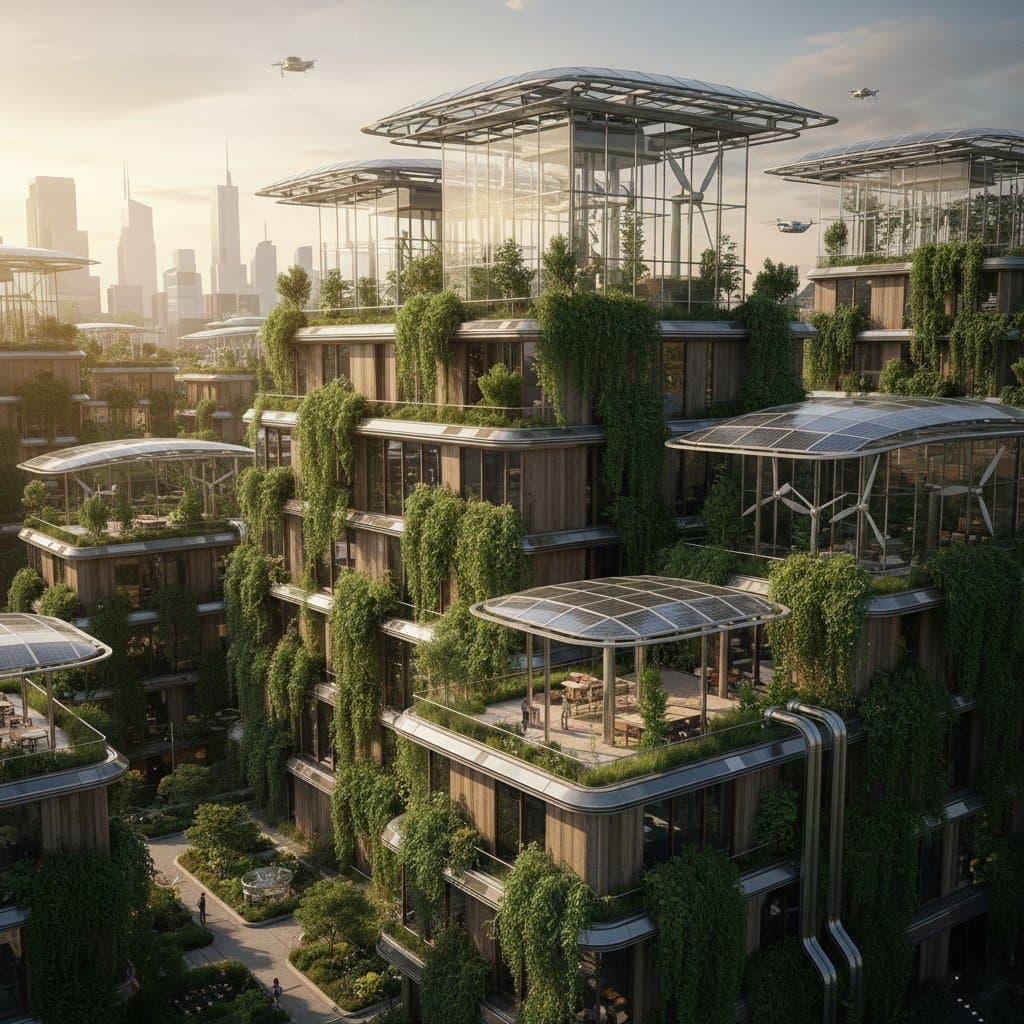
Solarpunk's Eco-Futurism Revolution Hits Architecture 2026
Imagine walking through a neighborhood where every rooftop supports thriving greenery, solar panels capture sunlight efficiently, and buildings integrate seamlessly with their surroundings. The air quality improves, noise levels decrease, and energy for homes derives directly from natural sources. This vision represents the emerging reality of solarpunk architecture, which redefines construction, habitation, and community sustainability.
Homeowners, architects, and urban planners embrace this movement for its fusion of ecological stewardship and human well-being. The outcome yields a design ethos that prioritizes aesthetics alongside durability. Solarpunk diverges from conventional approaches like towering glass structures or austere minimalism, favoring edifices that harmonize with the natural world.
What Solarpunk Means for Modern Architecture
Solarpunk architecture merges renewable energy sources, biophilic design elements, and collaborative urban planning. It pictures cityscapes energized by solar power, bolstered by on-site agriculture, and constructed from eco-conscious materials. The aim centers on fostering self-reliant residences and districts that remain practical and welcoming.
This paradigm shifts away from conventional building practices that emphasize expense over ecological consequences. Rather than expansive, resource-intensive projects, solarpunk advocates for dense, optimized environments that produce their own electricity and minimize refuse. Such strategies address escalating energy prices, climate variability, and heightened demand for green lifestyles.
For property owners, this involves selecting durable materials, efficient technologies, and layouts that diminish ongoing costs while enhancing daily living. Features like photovoltaic arrays, water reclamation setups, and vegetated rooftops transition from optional enhancements to essential building blocks in progressive dwellings.
Why Homeowners Are Paying Attention
Escalating utility expenses, erratic weather patterns, and broader recognition of environmental imperatives render solarpunk design pertinent to typical residents. Individuals seek methods to curb expenditures and safeguard assets against climatic shifts. Simultaneously, they desire environments that foster a bond with the outdoors.
A home influenced by solarpunk principles can slash energy outlays by 40 to 70 percent, contingent on geographic position and technological performance. Passive solar strategies, which leverage orientation and thermal properties to control indoor climates, substantially lower demands for heating and cooling. Conservation-oriented water solutions, including greywater reuse and precipitation capture, lessen dependence on public utilities and trim periodic payments.
Apart from financial gains, residents value the autonomy gained through self-generated electricity and partial self-sufficiency in food production. This lifestyle blends contemporary convenience with elemental rootedness.
The Foundation of Solarpunk Design
Grasping solarpunk architecture requires examining its foundational tenets, which inform projects from expansive complexes to individual residences.
1. Renewable Energy Integration
Photovoltaic panels, compact wind generators, and ground-source heat pumps form the backbone of this methodology. These elements deliver emission-free electricity from inexhaustible resources. Frequently, designs incorporate battery storage to enable off-grid functionality amid power disruptions.
Typical expenses for residential solar setups fall between three and five dollars per watt, varying by locale and mounting surface. Initial outlays for an average household might span 15,000 to 25,000 dollars, yet rebates and bill reductions typically recoup costs within seven to ten years.
2. Natural Ventilation and Lighting
Solarpunk prioritizes passive environmental controls over energy-intensive machinery. Thoughtful positioning of openings, adjustable roof vents, and airflow pathways diminish air conditioning requirements. High-level windows and light-reflecting finishes distribute natural illumination throughout spaces, thereby reducing lighting consumption.
3. Green Roofs and Living Walls
Green roofs consist of plant layers over sealed substrates, providing thermal regulation, atmospheric purification, and runoff mitigation. Installation fees range from 10 to 25 dollars per square foot, influenced by vegetation density and variety. Vertical gardens on exteriors or indoors incur marginally higher costs yet yield comparable ecological advantages.
4. Local and Recycled Materials
Procuring resources nearby curtails transport-related emissions and bolsters area economies. Salvaged timber, repurposed metals, and earth-based finishes align with visual and sustainability objectives. Professionals increasingly adopt alternatives like hemp-based concrete, fast-growing bamboo, and resilient cork for their renewability and longevity.
5. Community-Oriented Design
Solarpunk emphasizes collective assets, including shared plots for cultivation, pooled energy networks, and district-wide waste processing. This framework lowers individual expenses and fortifies social ties. Rather than standalone units, solarpunk enclaves operate as interconnected biological networks.
Practical Steps for Bringing Solarpunk Home
Implementing solarpunk elements demands no complete overhaul. Incremental adoption suits most properties. The following outline offers a phased approach for those embarking on this path.
Step 1: Assess Your Energy Use
Engage a certified auditor for a comprehensive evaluation. Fees generally range from 300 to 600 dollars, pinpointing inefficiencies in barriers, glazing, or climate controls. This insight directs targeted enhancements for optimal results.
Step 2: Improve Insulation and Sealing
Prior to advanced installations, eliminate leaks. Caulk perimeters of frames, enhance overhead barriers, and renew perimeter seals. Such measures can decrease consumption by up to 20 percent.
Step 3: Add Renewable Power
With efficiency established, determine appropriate system scale. Rooftop photovoltaics serve as an accessible entry point, given their availability and regulatory simplicity. Suitable sites may accommodate auxiliary wind devices or terrestrial arrays to augment supply.
Step 4: Capture and Reuse Water
Deploy cisterns or comprehensive harvesting arrays. A 1,000-gallon unit typically costs 1,500 to 3,000 dollars and supports non-potable applications like landscaping or lavatory use. Greywater diversion from fixtures adds expense but yields enduring efficiencies.
Step 5: Add Greenery
Vegetated coverings enhance thermal performance and aesthetics. For budget constraints, opt for modular planters, elevated plots, or supported climbers. Partial implementations still aid in climate moderation and erosion control.
Step 6: Upgrade Materials Over Time
During renovations, select sustainable options. Prioritize zero-emission coatings, recovered lumber surfaces, and botanical finishes. These choices elevate interior atmospheres and lessen planetary footprints.
Balancing Cost, Complexity, and Return
Solarpunk adaptations suit diverse financial scopes, though evaluating compromises ensures realistic expectations.
Entry-level modifications, encompassing efficient fixtures, barrier reinforcements, and modest arrays, span 5,000 to 10,000 dollars. They yield tangible reductions with minimal disruption.
Intermediate overhauls, integrating complete renewables, water recovery, and segmented vegetated surfaces, fall between 25,000 and 60,000 dollars. Expert oversight and approvals prove essential, alongside amplified benefits.
Full-scale integrations, encompassing energy, horticulture, and communal features, surpass 100,000 dollars. These suit novel constructions or expansive initiatives.
Investment recovery depends on site specifics. Arid, sun-rich zones accelerate solar returns, while precipitation-abundant areas maximize water features. Blending mid-tier elements often optimizes fiscal and ecological outcomes.
Safety and Compliance Considerations
Incorporating innovations necessitates vigilance toward regulations and hazards. Essential factors include:
-
Permits: Obtain approvals for energy additions, vegetated additions, and hydraulic alterations. Noncompliance risks penalties or coverage denials.
-
Structural Load: Added masses from coverings and arrays demand engineering assessments to confirm capacity.
-
Electrical Safety: Certified technicians must integrate systems to avert ignition or malfunctions.
-
Water Quality: Harvesting setups require adherence to purity norms to prevent health risks.
-
Fire Resistance: Vegetative integrations need compliant separators in mandated zones.
Proactive handling averts expensive remedies.
Regional Differences in Design
Solarpunk flexes to accommodate climatic and cultural variances. Adjustments ensure efficacy across locales.
-
Hot, dry regions: Emphasize shading, reflective coatings, and enclosed patios. Solar efficacy peaks here.
-
Cold climates: Stress robust barriers, multi-layered glazing, and heat-retaining substances like masonry.
-
Humid areas: Promote airflow and dehumidification. Select resilient flora with effective drainage.
-
Coastal zones: Employ durable alloys and raised foundations against inundation.
Regional specialists customize to align with norms and environments.
The Aesthetic of the Future
Solarpunk transcends utility, reshaping architectural visuals. It favors vibrant palettes, tactile surfaces, and fluid forms over monotonous sleekness. Structures showcase arcs, salvaged elements, and exposed conduits for energy and hydrology. This vitality infuses spaces with organic energy.
Interiors echo these ideals through abundant daylight, integrated foliage, and sustainable furnishings. Adaptable, repurposed pieces evolve with users. Each component embodies ecological commitment and inventive expression.
Building a Community Future
Solarpunk's communal emphasis drives collective advancement. Districts pilot localized grids sharing generation and reserves. Joint cultivation plots cut provisioning expenses and nurture bonds.
This synergy enhances feasibility. Distributed arrays or aqueducts distribute burdens affordably. Paired with artisan skills and group efforts, it cultivates stewardship transcending private bounds.
Advancing Toward Sustainable Living
To actualize solarpunk visions in residences or locales, formulate a structured strategy. Research thoroughly, engage seasoned contractors, and sequence improvements for dual gains in ease and economy. Incremental shifts, from illuminated pathways to fortified envelopes or elevated flora, propel properties into resilient horizons.