
-
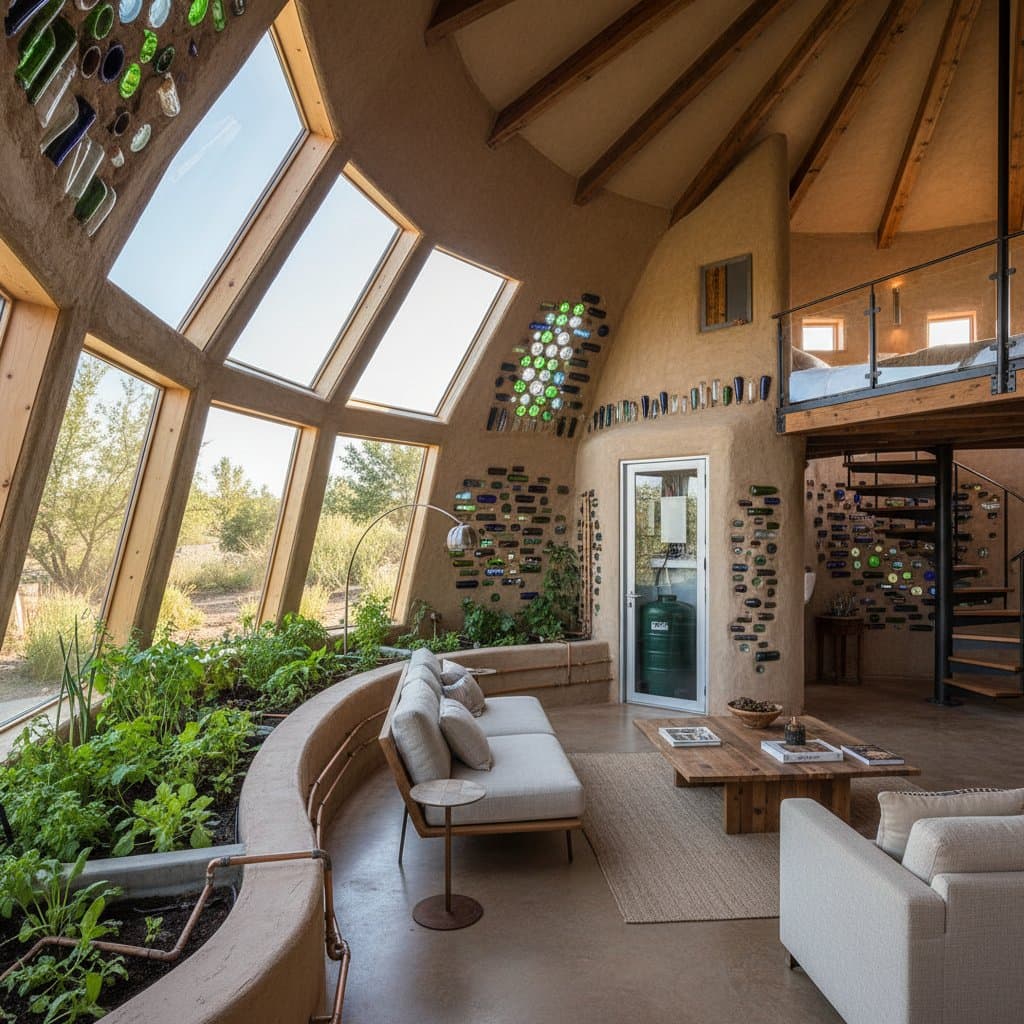
Energy Generation: Photovoltaic solar panels, supplemented occasionally by micro wind turbines, produce electrical power. Deep-cycle batteries retain surplus energy to support operations during periods of low sunlight or wind.
-
Water Management: Roof surfaces channel rainwater into cisterns, where filtration processes purify it for potable use. This resource cycles through the home, supporting personal hygiene before irrigating landscapes or interior greenery.
-
Thermal Regulation: Walls composed of compacted earth-filled tires store solar heat gained through south-facing glazing during daylight hours. At night, this stored warmth radiates inward, stabilizing temperatures without mechanical heating or cooling systems.
-
Waste Processing: Greywater from lavatories and bathing areas nourishes integrated planters that treat and reuse the effluent. Blackwater from sanitation facilities routes to exterior botanical cells, where plants and soil naturally purify it for safe dispersal.
-
Food Cultivation: Enclosed greenhouse sections within the structure enable year-round growth of produce, leveraging greywater and passive solar exposure to sustain hydroponic or soil-based gardens.
-
Structural and Comfort Features: Strategic window placement maximizes daylight ingress, while cross-ventilation pathways ensure air circulation. The overall design leverages material properties to create inviting interiors with low energy demands.
Construction Process and Practical Considerations
Erecting an Earthship requires substantial time, physical exertion, and technical knowledge. The foundational walls demand packing approximately 500 tires per standard module with moist soil, a process that fortifies the structure but tests endurance. Materials remain cost-effective, often sourced at no charge from waste streams, which offsets initial investments.
Professional assistance can streamline the build, with expenses varying by scale, site conditions, and aesthetic refinements. A compact model spanning 400 square feet might total under $50,000, comparable to modest conventional builds, whereas expansive versions exceed $200,000. Compliance with zoning regulations proves essential; some jurisdictions mandate engineering reviews or variances for unconventional designs.
Advantages and Challenges of Earthship Living
Evaluating both benefits and drawbacks informs realistic decision-making.
Advantages
- Drastically reduced or eliminated utility expenses post-construction
- Enhanced self-sufficiency and protection against grid failures
- Consistent indoor temperatures across seasons
- Incorporation of upcycled resources that lessen waste
- Deep integration with local ecosystems
Challenges
- Demanding manual labor, particularly during wall assembly
- Potential regulatory hurdles in conservative building districts
- Initial outlays for photovoltaic arrays and purification equipment
- Ongoing system upkeep requiring basic mechanical aptitude
The long-term gains in autonomy and ecological harmony frequently surpass these obstacles for committed builders.
Daily Experiences in an Earthship
Routine activities within an Earthship mirror those in standard homes, complete with powered appliances, plumbed fixtures, and regulated climates. The distinction lies in resource mindfulness: solar influx directly powers daily needs, and precipitation replenishes supplies. This connection cultivates habits of conservation, such as optimizing appliance use or timing irrigation.
Residents often report profound satisfaction from harmonizing with natural cycles. The home's self-regulating nature instills confidence in its reliability, even amid external disruptions like power outages or droughts.
Steps to Pursue an Earthship Project
To embark on this path, inspect existing installations through organized tours that demonstrate operational realities. Consult certified builders specializing in sustainable architecture to assess site suitability and material availability. Begin modestly, perhaps with an auxiliary structure like a workshop, to acquire hands-on expertise before scaling up.
Anticipate a learning curve involving off-grid technologies and construction techniques. Each phase, from tire compaction to system commissioning, advances toward a residence that embodies resilience and environmental stewardship. For those prioritizing self-reliance alongside modern comforts, Earthships present a compelling blueprint for future-proof living.