
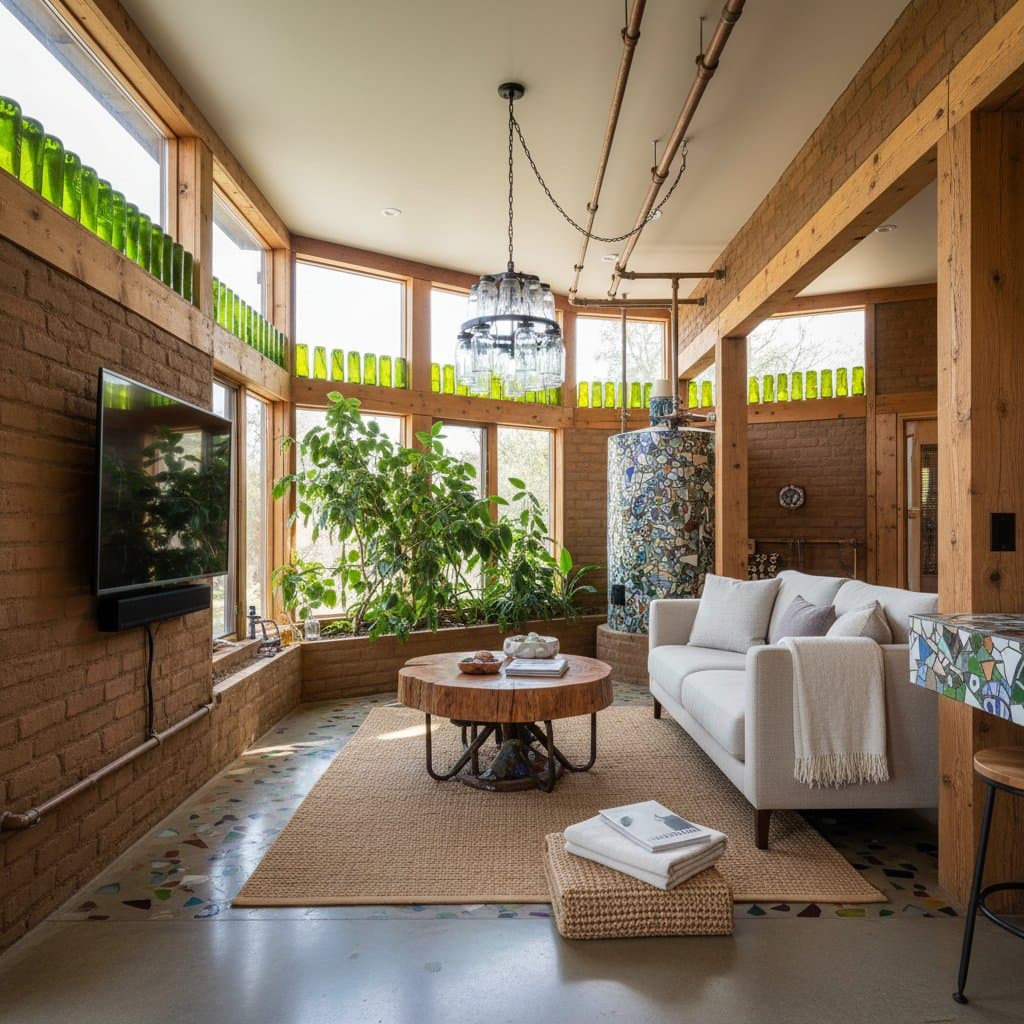
Earthship Homes: Sustainable Off-Grid Living Redefined
Monthly utility bills often prompt homeowners to seek alternatives that lower costs, conserve resources, and lessen environmental harm. Earthship homes address these concerns directly. These structures enable off-grid operation while delivering the amenities of conventional residences.
Imagine a dwelling that generates its own electricity, harvests water on-site, and maintains comfortable temperatures year-round without reliance on external heating or cooling systems. Earthships realize this vision through innovative design and engineering.
Key Features That Set Earthships Apart
Earthships qualify as sustainable dwellings constructed primarily from natural and upcycled materials. They generate their own energy, handle water conservation effectively, and minimize waste output. Visually distinctive, these homes feature curved walls formed from rammed earth packed into recycled tires or glass bottles embedded in mortar.
The true innovation lies in functionality. Earthships achieve self-sufficiency by harnessing passive solar heating, installing photovoltaic panels for power, capturing rainwater for domestic needs, and processing wastewater internally. This setup severs dependence on municipal services, eliminating recurring charges for electricity, water supply, and waste disposal.
Essential Systems in an Earthship
Multiple interconnected systems form the backbone of an Earthship, creating a fully enclosed resource cycle. A grasp of these components reveals the efficiency driving these homes.
-
Passive Thermal Regulation and Solar Gain
Thick walls constructed from earth-filled tires provide thermal mass, absorbing daytime heat and radiating it gradually through the night. Expansive south-oriented glazing captures solar rays to warm interiors naturally. In hotter regions, strategic overhangs and operable vents facilitate cooling. This approach sustains livable conditions across seasons without mechanical HVAC units. -
Renewable Energy Generation
Photovoltaic arrays, supplemented occasionally by micro wind turbines, produce electrical power. Deep-cycle batteries store excess energy for nighttime or low-light periods. Initial setups typically range from $10,000 to $20,000, scaled to household demands and local incentives. -
Water Harvesting and Recycling
Sloped roofs channel precipitation into collection channels, directing it to underground cisterns holding thousands of gallons. Multi-stage filtration purifies the water for potable use, bathing, and landscaping. Greywater from lavatories and baths percolates through botanical filters in interior planters, emerging clean enough for toilet flushing or further irrigation. -
On-Site Waste Processing
Composting toilets divert human waste into sealed units that decompose it aerobically, yielding safe compost after months of maturation. This method avoids traditional septic fields. Greywater systems, as noted, transform household effluents into fertilizer via plant roots, preventing contamination. -
Integrated Food Cultivation
Enclosed solariums or attached greenhouses leverage natural illumination and recycled moisture to cultivate edibles. Residents harvest leafy greens, root crops, and berries continuously, enhancing food security and reducing grocery reliance.
Constructing an Earthship: Process Overview
Erecting an Earthship demands careful preparation, physical effort, and adherence to protocols distinct from conventional construction. Enthusiasts often undertake much of the labor personally, though experts handle complex elements. The endeavor suits those who value participatory building.
Phases of Construction
-
Site Evaluation and Preparation
Select parcels with optimal solar access, typically south-facing slopes, and adequate space for rainwater basins. Review municipal regulations thoroughly; off-grid features may necessitate variances or engineered approvals in restrictive zones. -
Structural Foundations and Enclosure
Primary load-bearing walls emerge from stacking and pounding earth into used tires, each completed unit weighing 200 to 300 pounds. Supplementary partitions employ glass bottle bricks or aluminum can adobe for aesthetic and insulating value. -
Roof Assembly and Hydrological Infrastructure
Install a durable, angled roof membrane to maximize runoff capture. Integrate broad gutters and downspouts leading to sediment-settling forebay tanks, followed by purification units to ensure water quality. -
Electrical and Hydraulic Integration
Mount solar arrays on reinforced frames, wire them to charge controllers and inverters, and connect to battery banks. Plumbing routes demand precise gradients for gravity-fed distribution and greywater diversion. Engage certified professionals for compliance and safety. -
Interior Completion
Apply earthen plasters or lime-based finishes to walls, incorporating salvaged timber for flooring and cabinetry. Expose structural elements selectively to celebrate the raw, sustainable aesthetic.
Advantages and Challenges of Earthship Ownership
Earthships offer compelling benefits alongside notable hurdles. A balanced view informs whether this path aligns with individual aspirations.
Advantages:
- Minimal ongoing utility expenses post-installation
- Drastically lowered carbon emissions through resource autonomy
- Stable, energy-efficient indoor environments
- Freedom from grid vulnerabilities like outages or rate hikes
- Promotion of circular economy via material repurposing
Challenges:
- Substantial upfront investment in time and funds
- Navigating bureaucratic hurdles in permitting processes
- Ongoing vigilance for system upkeep, such as battery replacement every 5 to 10 years
- Non-traditional aesthetics that may complicate resale in conventional markets
Key Factors for Feasibility
Expenses fluctuate based on scale and execution. A modest owner-built unit begins at approximately $100,000, incorporating scavenged supplies to curb outlays. Elaborate, contractor-led projects with premium features may exceed $300,000.
Timeline varies similarly; DIY efforts span 6 to 18 months of intermittent labor, whereas turnkey builds complete in 3 to 6 months at elevated premiums. Climate compatibility proves crucial: arid, high-sun locales yield peak performance, yet modifications like enhanced R-value insulation or auxiliary heat sources adapt designs for temperate or humid areas.
Consult zoning ordinances early and connect with Earthship communities for insights. Online forums and regional networks provide blueprints, supplier recommendations, and troubleshooting advice.
Steps to Pursue Your Earthship
Interest in off-grid autonomy warrants initial exploration. Tour operational Earthships to assess daily livability firsthand. Enroll in hands-on seminars offered by certified builders, where participants ram tires or install panels under guidance.
Secure financing through eco-focused lenders or grants for sustainable projects. Assemble a team blending your skills with specialist input for seamless progress. Ultimately, an Earthship fosters resilience, stewardship, and harmony with the environment, transforming housing into a proactive ecological statement.