
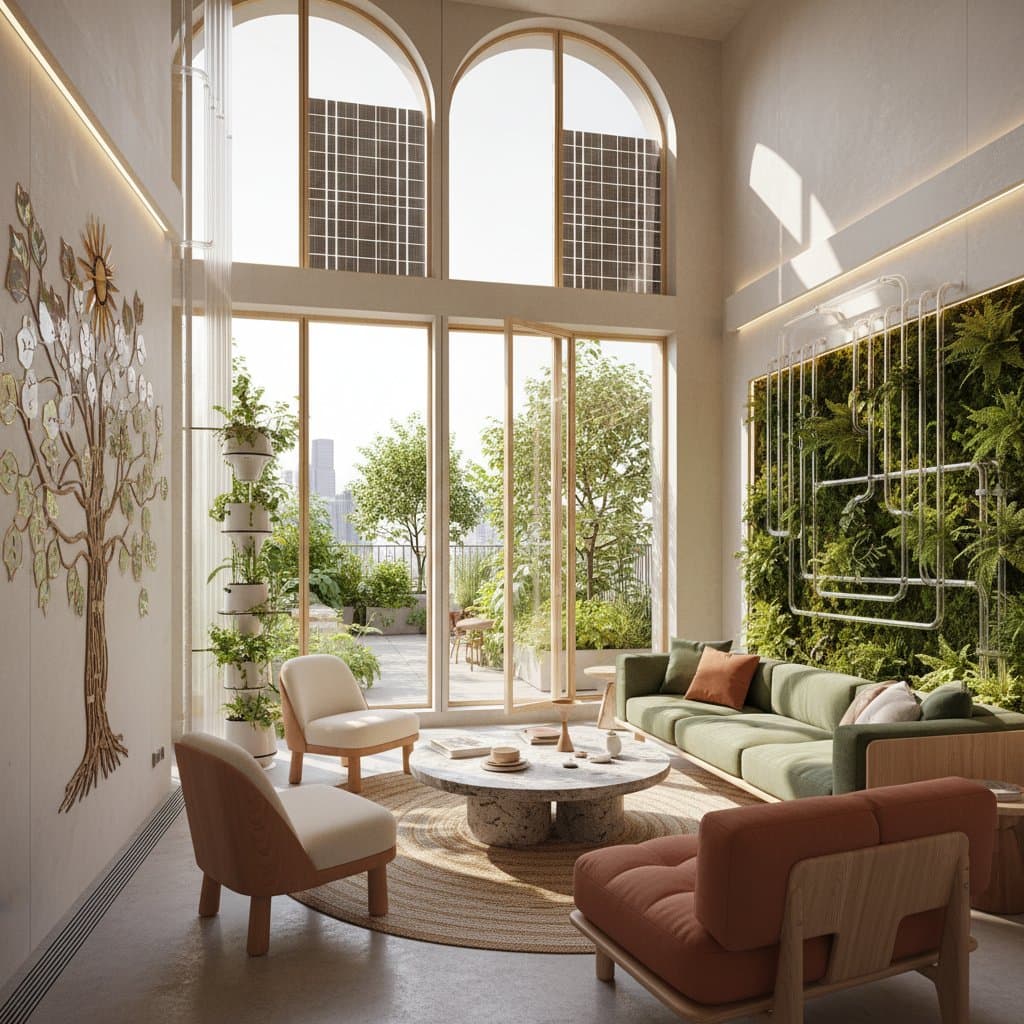
Solarpunk’s Green Utopias: Eco-Homes for 2026
Picture a serene neighborhood where residences illuminate gently in the evening, powered by integrated solar panels. Lush vegetable gardens flourish in front yards, green roofs thrive above, and rainwater collection systems capture every drop for reuse. This scene represents the solarpunk vision of residential design, where environmental sustainability integrates seamlessly with daily comfort.
Homeowners increasingly seek methods to adopt responsible living practices while preserving convenience. Escalating energy expenses and intensifying climate challenges elevate efficient habitation from preference to essential requirement. Solarpunk principles provide a framework for residences that generate their own electricity, minimize waste, and maintain an inviting atmosphere.
What Solarpunk Design Looks Like
Solarpunk residences merge renewable energy sources, natural building materials, and collaborative urban planning. The aesthetic emphasizes earthy tones, organic shapes, and interiors enriched with vegetation that dissolve divisions between interior and exterior spaces. This approach prioritizes coexistence with the natural world over control of it.
Key elements include:
- Energy independence achieved via rooftop solar arrays, small-scale wind turbines, or on-site battery storage units that store excess power for nighttime or cloudy days
- Water efficiency through systems for harvesting rainwater, recycling greywater from household uses, and installing fixtures that minimize flow rates
- Biophilic design incorporating extensive indoor plants, maximized natural daylight via large windows, and passive ventilation strategies to promote occupant well-being
- Recycled or local materials like salvaged wood beams, adobe-style earth blocks, or concrete alternatives with reduced carbon footprints
These features not only lower environmental impact but also enhance resilience against utility disruptions.
Steps Toward a Solarpunk Home
Transitioning to solarpunk design requires deliberate planning. Begin with a thorough evaluation of your property.
- Assess your site and energy needs. Analyze sunlight patterns throughout the year and review utility bills to determine baseline consumption. Consult a certified solar professional to calculate the optimal number of panels, typically 10 to 20 for an average household, to achieve net-zero energy.
- Prioritize insulation and natural ventilation. Upgrade to high-performance insulation materials, such as cellulose or sheep's wool, which can cut heating demands by up to 30 percent. Incorporate strategically placed windows and ceiling fans to facilitate airflow, reducing reliance on air conditioning.
- Integrate greenery. Install vertical gardens on exterior walls or hydroponic systems indoors to regulate temperatures and boost biodiversity. These elements can lower urban heat islands and provide fresh produce, yielding several pounds of vegetables annually from a modest setup.
- Use renewable materials. Opt for fast-growing bamboo for flooring, which regenerates quickly and sequesters carbon, or recycled steel for durable roofing that reflects heat. Natural lime-based plasters offer breathable walls that resist mold in humid climates.
- Plan for water reuse. Set up above-ground cisterns for immediate rainwater access or subsurface tanks for larger volumes. Greywater diversion systems, compliant with local regulations, can irrigate landscapes, conserving up to 50 percent of household water usage.
Each step builds upon the previous, creating a cohesive system that evolves with your needs.
Cost and Practical Considerations
Retrofitting an existing home with solarpunk elements typically costs between $20,000 and $60,000. This range accounts for solar installations starting at $15,000, water systems around $5,000, and material upgrades varying by scope. For new constructions fully aligned with these principles, expect rates from $200 per square foot, increasing with advanced features like automated energy management.
Regional factors influence pricing, including higher labor in urban areas and material sourcing in rural settings. Substantial returns materialize through energy bill reductions of 70 to 100 percent, often recouping investments in five to ten years. Government incentives, such as federal solar tax credits covering 30 percent of costs, accelerate payback periods.
Ongoing maintenance proves straightforward. Solar panels benefit from biannual cleaning to maintain efficiency, while greywater filters require quarterly inspections. Engage qualified electricians for wiring and plumbers for water integrations to ensure compliance and safety.
Building codes demand attention, particularly in seismic or flood-prone zones. Secure permits for structural changes early, and consider third-party certifications like LEED to validate your project's green credentials.
Living with a Solarpunk Mindset
Beyond technical installations, solarpunk fosters a holistic lifestyle centered on interconnection and foresight. Residents often form cooperatives to share resources, such as communal composting or tool libraries, amplifying individual efforts. Community gardens not only supply food but also strengthen social bonds, turning neighborhoods into supportive ecosystems.
This mindset extends to daily habits, like monitoring energy apps for optimization or hosting workshops on permaculture. Such practices cultivate resilience, preparing households for broader environmental shifts while enhancing quality of life through purposeful engagement.
Implementing Solarpunk Principles
Embark on your solarpunk journey with targeted upgrades, whether renovating or constructing anew. Install a modest solar array to test energy production, or introduce a simple greywater loop for immediate water savings. Gradually incorporate biophilic touches, like native plant borders, to harmonize your space with its surroundings.
These adaptations demonstrate that sustainability enhances rather than compromises comfort. Solarpunk homes deliver enduring value, safeguarding resources for future generations while providing immediate benefits in efficiency and aesthetics.