
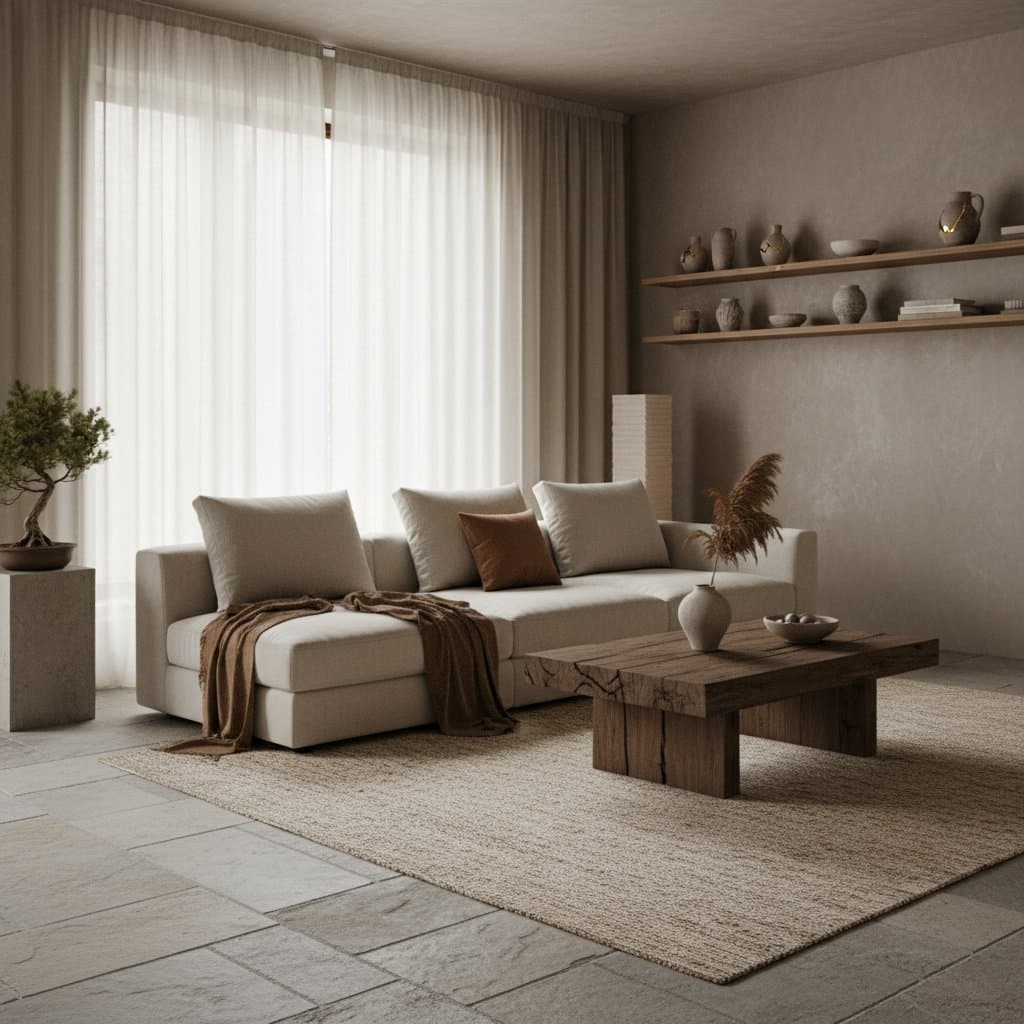
Wabi-Sabi's Enduring Appeal in 2026 Interior Design
Consider a hand-thrown ceramic bowl with subtle asymmetries or a wooden beam marked by years of use. These elements evoke a profound sense of serenity central to Wabi-Sabi, the Japanese aesthetic that values imperfection, transience, and genuineness. This philosophy rejects flawless symmetry in favor of the beauty found in simplicity, patina, and the organic.
Homeowners increasingly seek refuge from the precision of contemporary, high-shine environments. The relentless pace of digital life amplifies this desire for tangible authenticity. Wabi-Sabi restores equilibrium by encouraging spaces that nurture reflection and presence.
The Rising Demand for Wabi-Sabi Aesthetics
Contemporary dwellers yearn for residences that reflect genuine habitation rather than artificial staging. This evolution appears in material selections, furniture placements, and illumination strategies. Rather than concealing signs of use, Wabi-Sabi integrates them as narrative features.
A dining table bearing faint etchings from family gatherings or a plaster wall with natural undulations contributes to the overall character. Such details transcend aesthetics to foster emotional connections. This versatility accommodates diverse settings, from compact urban dwellings to expansive suburban houses or leased properties.
The emphasis lies in reinterpreting existing possessions through a lens of appreciation. Homeowners cultivate solace without pursuing fleeting fashions, focusing instead on enduring comfort.
Fundamental Principles of Wabi-Sabi Design
Wabi-Sabi embodies simplicity, integrity, and harmonious equilibrium with nature. It extends Japanese minimalism into a more intimate, evocative realm. Key tenets include:
- Organic Materials: Select timber, earthenware, flax fibers, rock, and comparable substances that develop character through time.
- Subdued Color Schemes: Employ grounded hues such as terracotta, silica, lichen, and haze.
- Artisanal Creations: Incorporate objects revealing craftsmanship, like irregular vessels or loom-woven cloths.
- Aged Finishes: Embrace surfaces that narrate history, including oxidized copper or sun-bleached textiles.
- Unadorned Shapes: Opt for functional furnishings and accents devoid of superfluous ornamentation.
These components yield environments that anchor inhabitants in the present. Subtle irregularities underscore life's fluidity, enhancing its inherent allure.
Incorporating Wabi-Sabi Elements into Your Residence
Significant transformations prove unnecessary; incremental adjustments suffice to instill tranquility and veracity. Proceed gradually, assessing each addition's impact.
Select Authentic Textures
Forego synthetic polymers or glossy varnishes where feasible. Choose untreated lumber, matte pottery, or interlaced plant fibers. Preserve minor fissures in walls or irregular plaster applications to introduce texture and intimacy.
Replace a factory-made glass jar with a potter's wheel-formed stoneware equivalent on a mantel. This single swap alters the ambiance, drawing attention to handmade imperfection amid surrounding items.
Adopt a Gentle Chromatic Range
Favor palettes derived from the earth, promoting visual repose. Blend warm neutrals like ochre or silt with temperate silvers or ivories. Harmony prevails over stark juxtapositions.
Introduce accents sparingly via organic sources, such as an indigo-dyed wool blanket or a sienna-hued woolen mat. These choices maintain cohesion while adding subtle vitality.
Declutter for Serenity
Wabi-Sabi prioritizes void and circulation. Eliminate excess from tabletops, retain solely essential or cherished objects. Vacant expanses permit illumination to enhance spatial perception.
In a compact kitchen, remove decorative knickknacks to reveal the wood grain of a counter. This adjustment expands the perceived area and instills quietude at no expense.
Blend Contemporary and Vintage Pieces
Combine a sleek upholstered bench with an antique oak sideboard or position a minimalist fixture atop a scarred pine bureau. This fusion prevents sterility while infusing narrative depth.
Explore estate sales, resale outlets, or inherited artifacts for distinctive finds. A mid-century brass lamp beside reclaimed barn wood shelves creates layered interest without overwhelming the composition.
Harness Ambient Illumination
Eschew intense ceiling fixtures in favor of diffused sources like sconces, beeswax tapers, or daylight. Such lighting accentuates the tactility of fibers and grains.
During daylight hours, draw back sheer panels to allow shifting sunbeams. This dynamic interplay reinforces the philosophy's nod to ephemerality.
Advantages and Drawbacks of Adopting Wabi-Sabi
Each design paradigm presents strengths alongside potential hurdles. Awareness of these informs thoughtful implementation.
Advantages:
- Fosters a soothing, restorative ambiance.
- Promotes ecological responsibility through restoration and reuse.
- Minimizes expenditure by honoring current holdings.
- Delivers individualized, perpetual elegance over ephemeral novelty.
Drawbacks:
- Risks perception as disrepair or incompleteness by observers.
- Demands trial to distinguish austerity from barrenness.
- Necessitates embracing flaws, which may initially unsettle.
Those willing to accommodate minor irregularities often discover profound fulfillment surpassing initial reservations.
Economical Strategies for Implementation
Wabi-Sabi flourishes on sincerity rather than opulence. Accessible methods yield substantial shifts:
- Restore Existing Items: Abrade aged cabinetry to expose inherent patterns.
- Mend Rather Than Discard: Stitch a rent in a canvas cushion or mend a fractured saucer.
- Source Pre-Owned Goods: Community consignment venues stock artisanal or patinated wares affordably.
- Integrate Plant-Based Accents: Introduce a sisal floor covering, linen drape, or cane screen for tactile comfort.
- Incorporate Natural Specimens: Arrange a felled limb in a vessel or cluster river rocks on a ledge to vitalize the setting.
These interventions can rejuvenate a room over a single weekend, leveraging resourcefulness.
Essential Aspects of Maintaining a Wabi-Sabi Environment
Prior to commitment, evaluate practical implications.
Time Investment: The approach demands deliberation; sourcing a bespoke textile or distressing a panel may span afternoons. This unhurried process enhances appreciation.
Financial Implications: Expenses vary with repurposing extent. Retaining possessions curtails outlays; acquiring limited-edition crafts incurs reasonable costs due to artisanal production.
Upkeep Requirements: Organic elements evolve attractively yet require attention. Nourish timber with linseed, smooth linens post-wash, permit alloys to develop verdigris. These evolutions embody the ethos, though readiness for gradual change proves key.
Regulatory or Expert Assistance: Structural alterations seldom necessitate approvals for stylistic tweaks. For surface refinishing, consult specialists to preserve material integrity without unintended harm.
Aligning Wabi-Sabi with Contemporary Restraint
Minimalism emphasizes utility and spareness, yet risks detachment. Wabi-Sabi infuses warmth and sentiment, softening edges while upholding discipline.
It liberates from rigidity, celebrating innate completeness amid flux. This synthesis suits urban rhythms, yielding havens that balance composure with individuality.
View it as restraint enriched with essence: sufficiency arises not from subtraction alone, but from mindful curation.
Cultivating Daily Appreciation for Imperfection
Embracing flaws reshapes domestic perception. Concerns over superficial blemishes fade, replaced by observations of light's caress on stucco or timber's evolving contours.
This philosophy extends beyond decor to influence outlook. A vessel with a hairline fracture continues to serve; a threadbare mat retains its coziness.
The practice encourages presence, affirming that authenticity in flux defines true beauty.
Sustaining Wabi-Sabi Harmony Over Time
To maintain this aesthetic, revisit spaces seasonally, adjusting for natural shifts like fading hues or emerging patinas. Integrate evolving personal artifacts to keep the environment dynamic yet rooted.
Such ongoing tending reinforces the philosophy's core: homes as living reflections of impermanent grace. Residents gain not just visual appeal, but a deeper sense of peace and connection.