
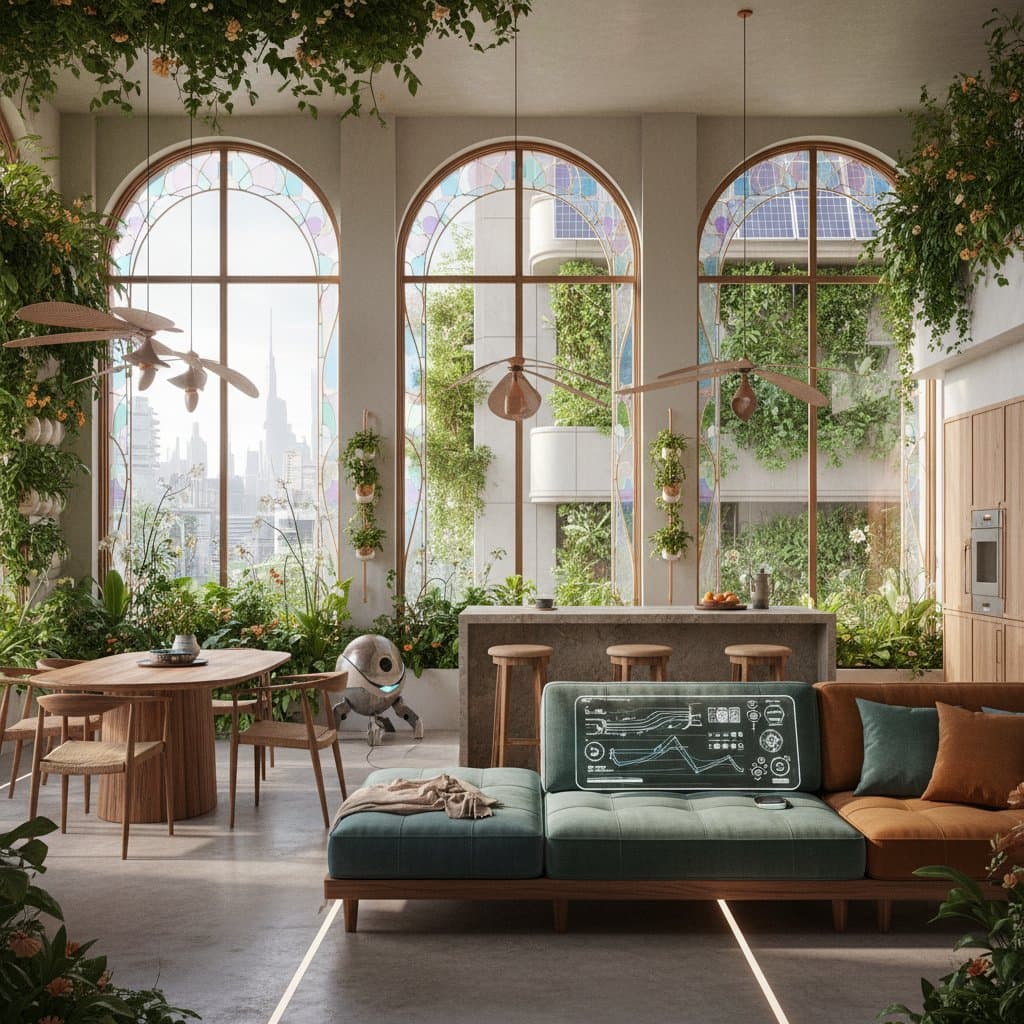
Optimistic Solarpunk: Eco-Conscious Designs for Future Homes
Many individuals examine their living spaces and desire a stronger connection to the natural world, while preserving elements of modernity and ease. This aspiration presents a balance between environmental responsibility and personal comfort. The solarpunk movement addresses this by promoting a design philosophy that combines sustainable practices with a positive vision for tomorrow, resulting in homes that prove both functional and motivational.
Defining Solarpunk
Solarpunk extends beyond mere installation of solar panels or adoption of high-tech devices. It represents a comprehensive worldview that envisions communities energized by renewable sources, enveloped in vegetation, and constructed with environmental stewardship at the forefront. The term incorporates a rebellious spirit against excessive consumption, advocating for innovative and collaborative efforts to construct superior alternatives.
In essence, solarpunk design emphasizes minimal ecological impact alongside the creation of environments that enhance well-being. It harmonizes technological advancements with organic materials, efficient infrastructure with artisanal craftsmanship. The ultimate aim involves residences that collaborate with the ecosystem rather than dominate it, fostering resilience against climate challenges.
Core Elements of Solarpunk Design
Solarpunk residences distinguish themselves through unique visual and operational characteristics. The following components form the foundation of this approach:
-
Renewable Energy Integration
Central to solarpunk homes are photovoltaic panels, compact wind generators, and energy storage units. These installations diminish dependence on traditional power networks and decrease ongoing utility expenses. For instance, a standard residential solar array, typically comprising 20 to 30 panels, incurs an initial investment of approximately $10,000 to $15,000; however, government incentives and reduced electricity payments often recoup costs within seven to ten years. -
Passive Solar and Natural Illumination Strategies
Expansive glazing, overhead light wells, and light-reflecting finishes optimize the influx of sunlight. Such features minimize reliance on electric illumination and impart a sense of spaciousness and tranquility to interiors. Strategic orientation of openings and airflow pathways further supports natural ventilation, potentially reducing cooling demands by up to 30 percent in temperate climates. -
Eco-Friendly Material Selection
Options such as bamboo or cork for flooring, counter surfaces from recycled glass aggregates, salvaged timber accents, and low-volatile organic compound paints prevail in these designs. These selections exhibit reduced carbon emissions during production and impart organic textures that elevate the sensory experience of the home. -
Biophilic Elements and Indoor Vegetation
Greenery occupies a pivotal role in solarpunk aesthetics. Features like vertical gardens, integrated herb cultivation areas, and modular planting systems not only enhance air filtration but also infuse vitality into enclosed spaces. In compact urban dwellings, selections such as spider plants or ferns can thrive under indirect light, contributing to psychological benefits like stress reduction. -
Intentional Smart Systems
Technology in solarpunk contexts serves efficiency without excess. Devices including programmable climate controls, low-flow plumbing, and sensor-based illumination adjust operations dynamically to user patterns, conserving resources while streamlining daily routines.
Implementing Solarpunk Principles in Your Residence
Comprehensive overhauls prove unnecessary to embrace solarpunk ideals. Incremental modifications yield significant transformations. Consider these structured approaches:
-
Enhance Energy Performance
Transition to light-emitting diode fixtures, apply weatherstripping to frames, and incorporate cellulose or fiberglass insulation. These interventions can lower consumption by 20 to 40 percent, depending on the home's baseline efficiency. -
Incorporate Botanical Features
Position potted flora or establish container-based outdoor plots. Opt for resilient varieties like snake plants, which require minimal watering, or culinary herbs such as basil, which double as functional elements. -
Prioritize Responsible Sourcing
During replacements or additions, seek certified sustainable woods, upcycled metals, or bio-based fabrics. Acquiring pre-owned items through local marketplaces further curtails landfill contributions. -
Maximize Daylight Utilization
Reposition furnishings to capture southern exposures in the northern hemisphere, and select sheer fabrics for window treatments. This practice not only conserves energy but also regulates circadian rhythms for improved rest. -
Deploy Targeted Automation
Evaluate devices for verifiable resource savings, such as motion-activated faucets that prevent drips or apps that monitor usage patterns. Ensure compatibility to avoid redundant purchases.
Advantages and Challenges of Solarpunk Living
Every design paradigm presents strengths alongside potential obstacles. Solarpunk exemplifies this duality.
Advantages:
- Substantial reductions in operational costs for utilities over time
- Improved indoor environmental quality promoting physical and mental health
- Distinctive aesthetic that reflects individual values and anticipates societal shifts
- Meaningful decrease in personal carbon emissions
Challenges:
- Elevated initial expenditures for renewable installations or specialty materials
- Potential difficulties in procuring certain items from regional suppliers
- Necessity for meticulous integration to maintain both innovation and minimalism
Despite these hurdles, enduring rewards frequently surpass initial investments. Homeowners often report seamless upkeep post-installation, with enhanced satisfaction derived from aligned living principles.
Essential Planning Factors
For ambitious projects such as photovoltaic arrays or vegetative roofing, consult municipal regulations and secure necessary approvals early. Numerous regions provide financial supports, including grants up to $5,000 for qualifying upgrades; research eligibility through local energy offices. Establish a feasible financial plan, recognizing that targeted enhancements might range from $1,000 for basic retrofits to $20,000 for comprehensive systems, inclusive of professional installation.
Renters can adopt adaptable solutions like portable photovoltaic lanterns, self-contained hydroponic units, or adhesive thermal barriers for glazing. These methods infuse solarpunk ethos without altering lease terms, allowing flexibility upon relocation.
Embracing the Solarpunk Lifestyle
As these features integrate, inhabitants frequently observe a profound shift toward serenity and ecological attunement. Organic surfaces, diffused illumination, and flourishing botanicals animate the environment, encouraging deliberate habits.
Expertise in architecture or ecology remains optional; incremental decisions—from selecting a salvaged bench to installing a rainwater collector—accumulate impact. Solarpunk flourishes through inventive expression and forward-looking resolve.
Advancing Your Solarpunk Journey
Initiate with accessible endeavors, whether a modest photovoltaic charger or a countertop propagation station. Each advancement cultivates a trajectory toward reduced ecological strain and amplified hope. Solarpunk prioritizes iterative growth over immediate flawlessness, inviting continuous refinement.