
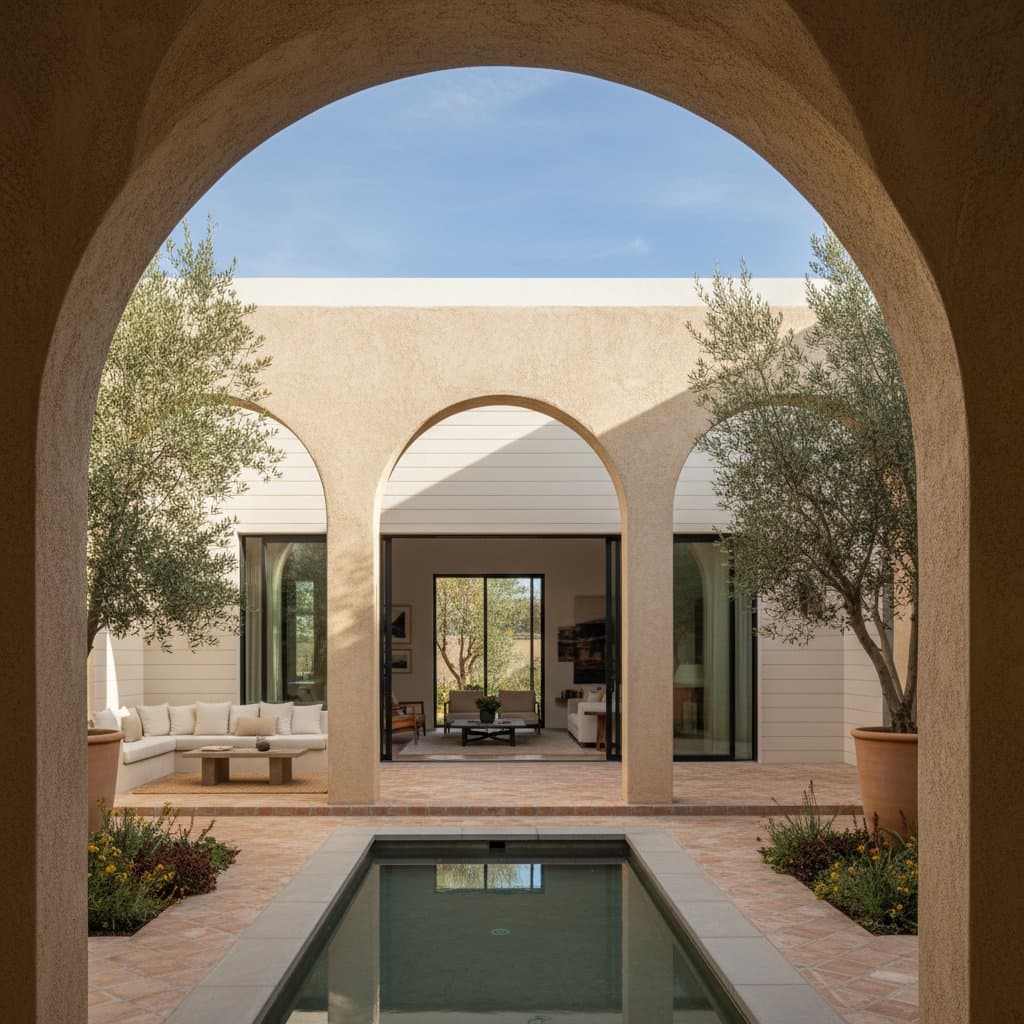
The Neo-Mediterranean Revival: Rediscovering Arched Courtyards
Homeowners increasingly incorporate arched doorways, terracotta details, and open courtyards into their designs. This trend signals the resurgence of the Neo-Mediterranean Revival style. The movement combines the allure of historic Mediterranean villas with the functionality that contemporary residents demand. The result is a welcoming environment ideal for those who value seamless connections between interior and exterior spaces.
Current preferences lean away from rigid, monochromatic interiors toward designs that reflect individuality and harmony with the natural world. The Neo-Mediterranean Revival addresses these desires effectively. It fosters tranquility and seclusion while ensuring spaces remain bright and ventilated.
For individuals considering renovations or new constructions, this style provides an optimal balance of refinement and usability. The following sections outline its principles and implementation strategies.
The Appeal of Arched Courtyards in Contemporary Design
Arched courtyards serve as the cornerstone of the Neo-Mediterranean Revival. These features link interior rooms with exterior areas, offering both seclusion and ease. Many residences today lack dedicated outdoor sanctuaries, yet a well-designed courtyard resolves this gap.
Consider these benefits of incorporating an arched courtyard:
- Enhanced interior illumination without compromising seclusion
- Better airflow that lowers reliance on mechanical cooling systems
- A serene venue suitable for meals, relaxation, or gatherings
- Increased property value through improved aesthetics and functionality
The arch's curved form imparts an inviting atmosphere and directs visual flow throughout the area. Arches delineate zones, such as seating nooks, dining spots, or planted sections, using open structures rather than barriers.
To integrate an arched courtyard, evaluate your property's layout first. Position it to capture prevailing breezes and sunlight, ideally adjacent to living or kitchen areas. Select arch heights between eight and ten feet to maintain proportionality with surrounding architecture. Frame arches with materials like reclaimed wood or plaster for authenticity.
Essential Elements: Crafting Authentic Neo-Mediterranean Ambiance
Neo-Mediterranean aesthetics emphasize tactile warmth and understated sophistication. Achieving this requires attention to specific components.
Palette Selection
Opt for grounded tones including beige, off-white, and soft taupe as foundations. Introduce richer hues like burnt sienna, sage green, or ochre for depth. Incorporate vibrant accents through hand-painted tiles or intricate mosaic inlays around water features or pathways.
Illumination Strategies
Prioritize diffused, amber-toned lighting to evoke sunset glows. Install wrought-iron sconces along archways or pendant lanterns suspended from pergolas. Integrate low-voltage path lights embedded in flooring to accentuate contours without overwhelming the scene. Steer clear of cool-toned fluorescents, which diminish the organic vibe.
Furnishings and Accents
Select furnishings that blend rustic charm with durability. Wrought-iron benches paired with cushioned seating in neutral linens create comfortable focal points. Adorn with earthenware vessels for succulents or herbs, alongside handwoven rugs in geometric patterns. For vertical interest, install trellises supporting climbing vines like bougainvillea.
Material Choices
Choose enduring, regionally inspired substances. Apply lime-based stucco for walls to allow breathability in humid climates. Pair with saltillo tiles for floors, which provide slip resistance and patina over time. Incorporate limestone or travertine pavers for borders, ensuring they align with local sourcing to minimize environmental impact.
Key Planning Factors for Successful Implementation
Prior to initiating any courtyard project, review municipal regulations. Arches and enclosures often necessitate structural permits, particularly if altering load-bearing elements. Homeowners' associations may impose guidelines on style, scale, or vegetation; obtain approvals in advance to avoid delays.
Financial planning plays a crucial role. A modest courtyard enhancement, involving paving and basic arches, typically aligns with mid-range bathroom upgrades, around $15,000 to $25,000. Comprehensive transformations, including custom masonry and landscaping, may approach $50,000 or higher, comparable to kitchen overhauls. Allocate funds by prioritizing structural integrity first, followed by aesthetic finishes.
Timeline management is essential. Design phases, including sketches and material sourcing, require two to four weeks. Permitting adds another one to two months, while construction spans four to eight weeks depending on scope. Account for seasonal constraints, as rain can hinder plaster applications or tile setting.
Engage professionals experienced in Mediterranean architecture for complex tasks. Architects can model airflow using software, while contractors ensure compliance with seismic standards in prone areas. Consult landscape specialists to select drought-tolerant species that thrive in your zone, reducing long-term maintenance.
Bringing Neo-Mediterranean Courtyards to Life
An arched courtyard in the Neo-Mediterranean style transcends fleeting fashion. It establishes a restorative home environment attuned to natural rhythms.
Through meticulous planning, resilient material selection, and expert execution, such spaces recapture the enduring grace of Mediterranean heritage. This design philosophy promotes leisurely, harmonious lifestyles centered on illumination, freshness, and interpersonal bonds.