
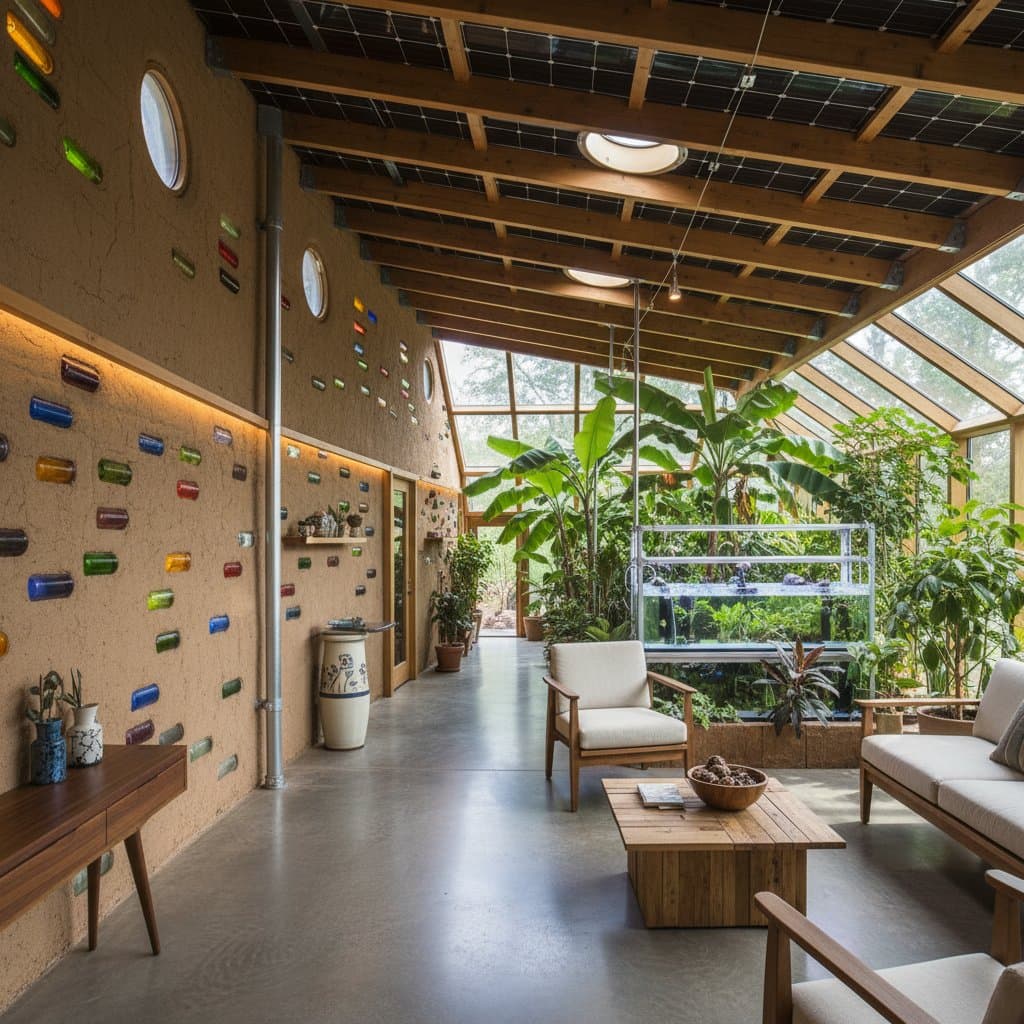
Unlock Radical Sustainability with Earthship Homes
Many homeowners examine their monthly utility bills and seek alternatives for comfortable living without such expenses. The concept of off-grid existence once appeared extreme, yet Earthship homes render it practical and attractive. These structures challenge conventional approaches to construction, energy consumption, and waste management. They integrate seamlessly with the natural environment, fostering self-sufficiency and notable comfort.
Individuals who envision generating their own electricity, harvesting water, and cultivating food within their residence may find Earthship homes ideal. This approach transcends mere eco-friendly trends; it establishes a comprehensive framework for elevated sustainability.
What Makes an Earthship Different
An Earthship represents a sustainable dwelling that incorporates recycled materials, passive heating and cooling, and renewable energy sources to function independently of municipal utilities. The architecture emphasizes six principal systems: energy production, water harvesting, sewage processing, food cultivation, thermal regulation, and material sourcing.
View an Earthship as a compact, autonomous ecosystem. It delivers essentials for comfortable habitation while minimizing ecological impact. Walls typically consist of earth-rammed tires, providing thermal mass for temperature stability. Roofs capture rainwater, and solar panels or wind turbines generate electricity. Such configurations enable numerous owners to reside entirely off-grid.
Why People Choose Earthship Living
Individuals select Earthship homes for multiple compelling reasons:
- Energy independence: Elimination of dependence on utility providers and volatile energy rates.
- Sustainability: Systems align with natural processes, curtailing waste and emissions.
- Long-term affordability: Initial expenses may prove substantial, yet operational costs remain minimal.
- Resilience: Structures endure severe weather conditions and suit isolated locations.
Nevertheless, constructing and inhabiting an Earthship demands adaptation, particularly for those accustomed to standard residences. Prior to initiation, comprehension of the requirements proves essential.
How an Earthship Works
Every Earthship centers on six fundamental systems. Grasping these elements illuminates the home's capacity to operate without external services.
1. Power Generation
Earthships harness renewable sources like solar or wind energy. Solar photovoltaic panels prevail due to their straightforward installation and upkeep. A battery storage array preserves surplus energy, ensuring functionality for lighting and appliances during overcast periods. Expenses for a full solar array vary from several thousand dollars for modest dwellings to tens of thousands for expansive ones, yielding enduring energy cost reductions.
2. Water Collection
Roofs direct rainwater into cisterns for storage, bypassing municipal supplies. Subsequent filtration purifies the water for domestic purposes. Location-specific factors may necessitate supplementary reservoirs or groundwater access. Installation costs approximate a few thousand dollars, yet deliver autonomy and reliability amid water scarcity.
3. Heating and Cooling
Thick walls, formed from earth-packed tires and coated with adobe or plaster, establish thermal mass for consistent indoor climates. In arid regions, the design maintains coolness; in temperate zones, it retains solar warmth. Supplementary heating may assist during severe winters, though passive mechanisms handle primary regulation.
4. Waste Management
Greywater from lavatories and bathing facilities irrigates interior vegetation, while blackwater from sanitation undergoes contained processing, frequently via exterior planters or septic configurations. This method diverts waste from communal infrastructure and repurposes it productively. Precise engineering averts contamination risks, ensuring efficacy and safety.
5. Food Production
Integrated greenhouses leverage greywater and passive solar illumination for year-round cultivation of vegetables, herbs, and dwarf fruit trees. Such features diminish reliance on external food sources and supply fresh yields. Acquisition of elementary hydroponic or soil-based gardening techniques enhances outcomes.
6. Building Materials
Recycled components define Earthship construction: tires serve as foundational blocks, alongside glass bottles and aluminum cans for infill. This practice curtails landfill contributions and yields distinctive aesthetic elements. Resulting edifices exhibit durability, fire resistance, and longevity spanning decades.
The Building Process
Prospective builders benefit from outlining the procedural stages. The endeavor demands time, diligence, and strategic foresight.
- Research and design: Engage a certified Earthship architect to tailor dimensions, configurations, and integrations to regional climate and personal needs.
- Site selection: Identify parcels with optimal solar exposure and drainage characteristics. Verify compliance with zoning laws for off-grid developments.
- Foundation and structure: Erect tire-based walls, a labor-demanding phase; consider professional crews or participatory seminars for skill development.
- Systems installation: Integrate photovoltaic arrays, cisterns, and treatment units with precision to ensure interdependent performance.
- Finishing and interiors: Apply earthen plasters, salvaged timber, and artisanal elements to sustain affordability and ecological integrity.
Completion timelines extend from months to years, influenced by scale and environmental variables. Phased construction allows incremental advancements, commencing with core functionalities.
Pros and Cons to Consider
Evaluate advantages and drawbacks with pragmatism prior to commitment.
Pros
- Minimal utility expenditures post-construction
- Diminished ecological imprint
- Stable indoor environments via low-energy methods
- Opportunities for innovative architectural expression
- Sustained economic benefits
Cons
- Elevated preliminary outlays
- Demanding manual labor in assembly
- Scarcity of specialized builders in certain locales
- Potential regulatory hurdles with approvals
- Necessity for behavioral shifts in resource oversight
For those prioritizing autonomy and environmental stewardship, merits generally surpass obstacles. Expert consultation facilitates informed progression.
Practical Considerations
Cost
Basic Earthships approximate costs of conventional modest homes, with customized variants incurring higher fees. Post-occupancy savings manifest through absent bills and reduced upkeep, often recouping investments progressively.
Permits and Regulations
Off-grid and alternative-material builds encounter novelty in various jurisdictions. Consult municipal codes diligently; specialized approvals may apply to unconventional systems. Collaboration with seasoned designers streamlines bureaucratic navigation.
Maintenance
Low-maintenance profiles characterize Earthships, yet routine attentions persist: periodic solar panel cleansing, filter renewals, and hydrological inspections. Wall coatings may require reapplication in moist environments.
Comfort and Lifestyle
Adaptation to Earthship residency heightens resource mindfulness. This awareness invigorates some inhabitants while constraining others initially. Long-term residents report enhanced purposeful living.
Steps to Build Your Earthship
To pursue an Earthship, initiate modestly. Arrange visits to established sites; communal tours and instructional sessions illuminate operational realities and routines.
Experiment with scalable implementations in existing spaces, such as barrel-based rainwater systems or modular solar integrations. These trials build proficiency for comprehensive projects.
Earthship principles advance sustainable habitation through innovative engineering, material reuse, and energy autonomy. Such homes nurture personal fulfillment alongside planetary preservation.