
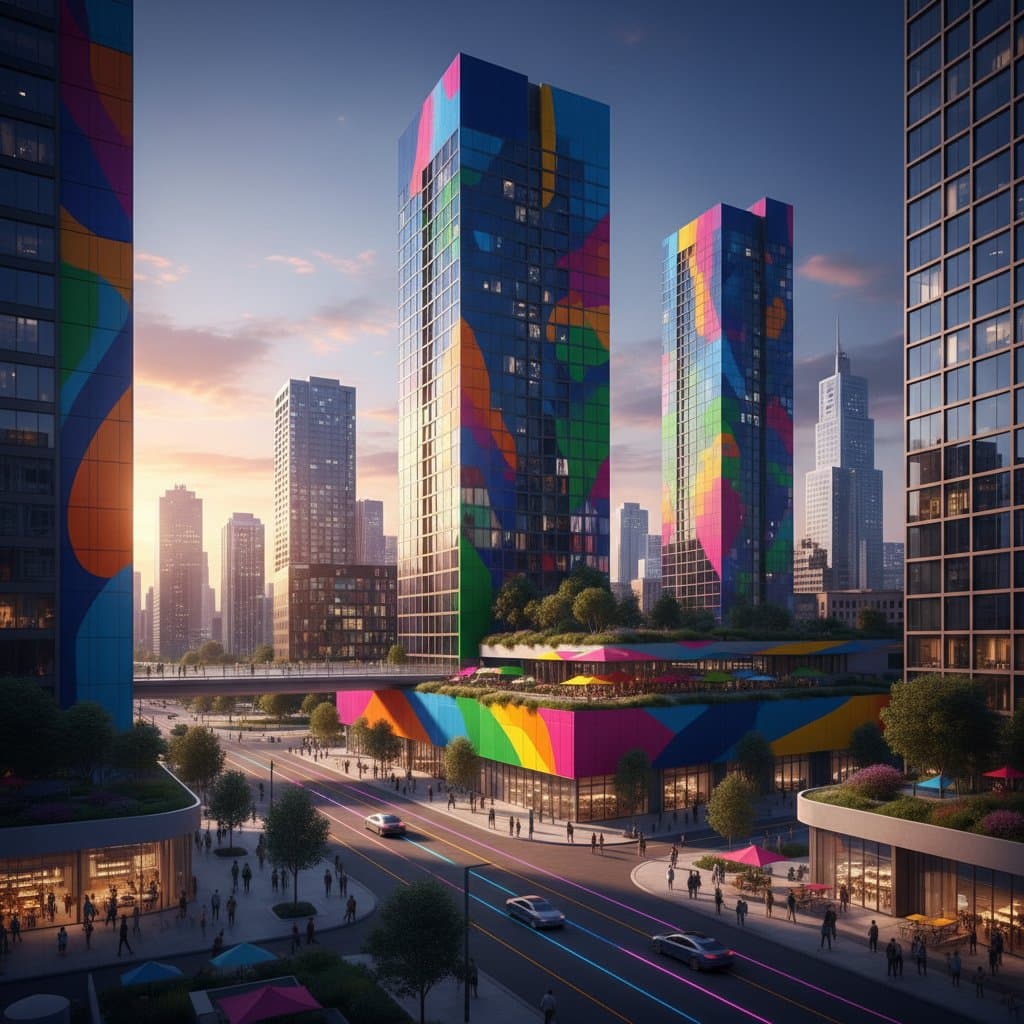
Bold Colors Reshaping Urban Architecture Trends
Walk through a revitalized downtown or emerging neighborhood, and the change becomes evident. Brighter walls, sharper edges, and structures radiating energy replace the subdued tones of past designs. Urban areas move beyond beige, gray, and white palettes as bold colors redefine experiences of space, light, and community.
This evolution extends beyond visuals. It guides material selections, design choices, and emotional responses to surroundings. Developers and residents find that strategic hues shape perceptions, draw interest, and forge unique identities unattainable with conventional schemes.
The Opportunity in Color Integration
Urban buildings historically depended on neutral elements like concrete, brick, and glass. These created functional yet monotonous blocks. To draw residents and enterprises, cities now prioritize inviting, standout designs.
Color provides a cost-effective solution for distinction. A vivid red balcony, teal accent wall, or façade-spanning mural alters a structure's impact without structural changes. Professionals see this as a means to update skylines, foster local pride, and reflect cultural essence.
Impacts of Bold Colors on Urban Design
Hues exert tangible influences on perception. Warm options like orange and yellow energize and welcome. Cooler variants such as blue and green soothe high-density settings.
In crowded cities, color counters uniformity and elevates well-being. It delineates areas in complexes, directs movement, and highlights elements like entrances or retail fronts.
Technical Considerations for Color Application
Selecting hues demands attention to light interaction, material synergy, and longevity.
Key factors include:
-
Material Compatibility
Surfaces like concrete, metal, and fiber cement need specific primers. Experts select systems for enduring adhesion. -
UV Stability
Exposure fades pigments; UV-resistant coatings preserve vibrancy. Costs range from $4 to $7 per square foot for robust options. -
Maintenance Needs
Intense shades reveal grime quickly. Urban sites may require quarterly washes, adding $1 to $2 per square foot yearly. -
Climate Adaptation
Darker tones absorb heat, elevating cooling expenses. Reflective or pale choices suit hot climates. -
Regulatory Compliance
Historic zones impose limits; verify with authorities prior to finalizing schemes.
Strategies for Color in Contemporary Projects
Designers employ innovative techniques surpassing basic coatings:
- Accent Panels: Bright metal or composites interrupt expansive surfaces tastefully.
- Gradient Applications: Shade transitions add motion and dimension.
- Textured Integrations: Pigmented plasters or concretes enhance depth and resilience.
- Illuminated Enhancements: LEDs amplify hues nocturnally for striking effects.
These suit residences, businesses, or hybrids, scaling to any project size.
Achieving Balance in Bold Applications
Effective designs avoid excess, harmonizing vibrancy with subtlety. Limit to one or two accents atop neutrals to emphasize forms.
Consider orange trim warming gray minimalism or blue rails contrasting pale stone. Proportion prevents overload or dilution.
Apply the 60-30-10 principle:
- 60 percent neutral foundation
- 30 percent supportive hue
- 10 percent vivid highlight
This framework sustains equilibrium and innovation.
Financial Aspects of Color Implementation
Enhancements vary in expense but often yield value through appeal.
- Paint Systems: Installed professional coatings cost $3 to $6 per square foot; premium elastomeric types reach $8.
- Cladding Options: Custom panels range $15 to $25 per square foot by specification.
- Lighting Additions: Basic setups start at $2,000, expanding for broader coverage.
- Artistic Features: Murals or prints fall between $10 and $20 per square foot.
Initial outlays boost marketability and returns.
Engaging Professional Expertise
Larger endeavors benefit from specialist collaboration on materials and conditions.
Seek input from:
- Color Consultants for tailored palettes and assessments.
- Manufacturers for testing and data.
- Contractors for estimates and prep guidance.
Such involvement raises budgets by 10 to 15 percent yet minimizes failures like fading.
Regional Variations in Color Preferences
Local climates and traditions shape selections. Coastal zones lean toward airy lights; inland areas favor bold depths.
- Southern Climates: Terracotta, coral, and mustard complement sun and stucco.
- Northern Settings: Slate blue, forest green, and charcoal match skies and industry.
- Arid Environments: Reds and yellows align with terrain, curbing reflection.
These alignments integrate designs seamlessly.
Ensuring Safety and Longevity
For elements like rails, prioritize compliant coatings meeting fire and grip standards.
Opt for low-VOC exteriors; avoid unstable additives. Powder coatings resist urban abrasion.
Regular checks detect early flaws, prolonging freshness.
Psychological Benefits of Color
Hues affect emotions profoundly. Vivid settings uplift moods and interactions. Residences see greater cohesion; commercials gain visibility and visits.
Public initiatives leverage color to activate spaces like paths and stations.
Aligning Color with Sustainability
Pair aesthetics with eco-practices. Reflective finishes cut heat; tints optimize energy.
Eco-pigments from recycled sources cost 10 percent more but enhance performance.
Integrated with efficient lights or solar, these create responsible, eye-catching builds.
Preserving Color Investments
Post-completion care sustains appeal:
- Annual reviews for degradation or damage.
- Gentle cleaning to avoid harm.
- Prompt minor repairs.
- Scheduled recoats per guidelines.
Budget for commercial upkeep to uphold value and image.
Advancing Urban Vitality Through Color
Color empowers accessible transformation in architecture. It enables expression, identity, and elevation of daily spaces.
Evaluate context, light, and goals. Partner with versed experts. Select resilient products.
Purposeful application revitalizes cities, fostering alive, connected, human-scale environments.