
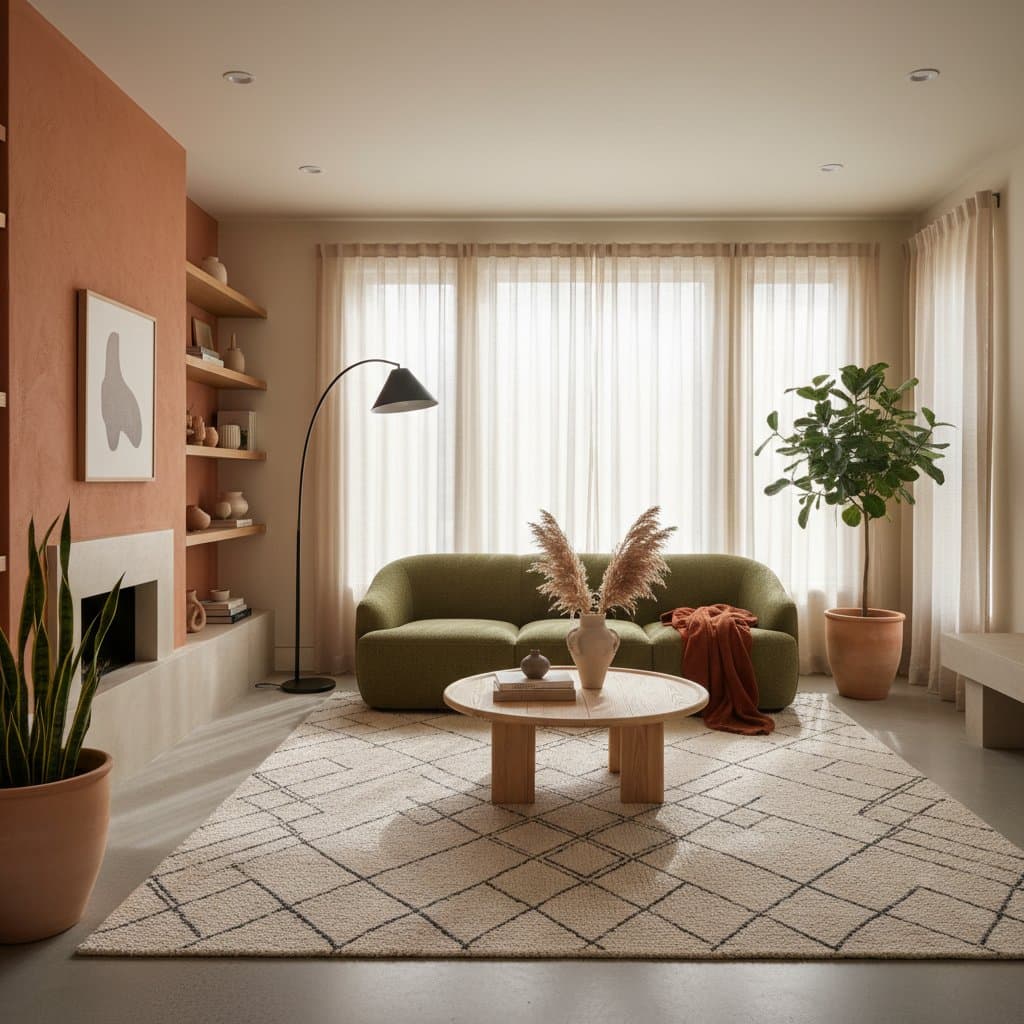
Earthy Tones: Defining Warm Minimalism in 2026
Imagine entering a remodeled living room where serenity envelops you immediately. Muted terracotta walls complement warm oak floors and natural fabrics, creating a space that remains simple yet welcoming. This essence captures warm minimalism at its core, with earthy tones providing the foundational warmth.
Homeowners increasingly abandon stark white interiors and glossy surfaces in favor of designs that prioritize comfort and a genuine link to nature. Earthy tones deliver that inviting quality while preserving the uncluttered aesthetic central to minimalism.
Reasons Earthy Tones Dominate
Traditional minimalism relied on cool neutrals, precise lines, and polished finishes, which often resulted in tidy but distant spaces. Warm minimalism evolves this by integrating natural elements and subdued colors to enhance simplicity with personality.
Earthy tones encompass shades like terracotta, clay, sand, taupe, olive, and soft ochre, each drawing inspiration from soil, wood, and stone. These hues produce balanced, restorative environments that align with organic principles. This style resonates with contemporary residents seeking tranquility alongside distinctive character, and it complements sustainable choices that gain prominence in home design.
Principles of Warm Minimalism
Warm minimalism emphasizes utility and restraint while incorporating depth through texture and color. Rather than bare white walls, envision layered soft neutrals paired with tangible surfaces. Chrome gives way to brushed brass or patinated bronze, and glossy marble yields to honed limestone or quartz with subtle veining.
Key design elements include:
- Natural Materials: Prioritize wood, clay, linen, wool, rattan, and stone for their inherent warmth and enduring quality.
- Subdued Palette: Select warm neutrals and earth-derived colors, building depth through tonal variations rather than stark contrasts.
- Streamlined Functionality: Choose furniture that maintains clean lines while offering comfort, ensuring each item fulfills a specific role.
- Layered Illumination: Incorporate diffused sources like sconces, floor lamps, and warm-toned LEDs to soften the atmosphere.
- Varied Textures: Blend smooth and rough finishes to evoke a sense of habitation without overwhelming the senses.
Incorporating Earthy Tones Practically
Transitioning to warm minimalism requires no complete overhaul; the approach allows for incremental changes. Target a single room or element, such as updating paint or adding a rug, to build momentum.
Initial Steps:
- Apply terracotta or clay to an accent wall for subtle impact.
- Exchange crisp white linens for beige or oatmeal alternatives.
- Select wooden pieces showcasing natural grain and a matte sheen.
- Transition hardware to bronze or aged brass for a gentler reflection.
Comprehensive Room Updates:
- Opt for walls in sandy beige or gentle taupe to establish a neutral base.
- Install a jute or wool rug to anchor the floor.
- Combine oak frames with linen cushions or clay accents against stone counters.
- Curate decor sparingly, favoring artisanal pottery, woven vessels, or preserved botanicals.
Achieving Balance in Warmth and Restraint
Earthy tones risk overwhelming a space if applied without care, potentially evoking rusticity over refinement. Success lies in moderation, upholding minimalism's reliance on openness and precision. Layer elements thoughtfully to infuse comfort minus excess.
- Restrict to three or four primary tones, echoing them across surfaces.
- Emphasize textural interplay, such as plaster alongside fabrics and timber.
- Optimize illumination; warm shades absorb light, so employ indirect sources to preserve luminosity.
Budgeting for Warm Minimalist Design
Expenses fluctuate based on scope and selections, yet planning aids realistic expectations. Consider these estimates:
- Wall Treatments: Standard paint costs $2 to $6 per square foot; textured clay or lime washes range from $8 to $15.
- Flooring Options: Solid wood installation averages $5 to $12 per square foot, with engineered variants at $4 to $8.
- Furnishings and Accents: Allocate $1,000 to $5,000 per room for durable, natural items; blend purchases with secondhand pieces to economize.
- Lighting Enhancements: Individual warm LED units span $100 to $500, varying by style and installation.
Simple projects like repainting or refreshing fabrics often stay below $500. Extensive renovations involving floors or custom elements typically fall between $10,000 and $25,000 per room, scaled to dimensions and specifications.
Maintenance and Safety Essentials
Natural materials demand attentive upkeep to retain appeal. Dust wooden surfaces routinely and apply oil periodically to protect finishes. Seal unsealed stone or clay in high-moisture zones like kitchens to prevent stains, following product recommendations for applications.
Engage certified professionals for electrical modifications or installations. Consult experts for structural alterations, particularly in damp areas, to ensure longevity. Quality execution sustains the refined aesthetic of warm minimalism.
Adapting Earthy Tones to Regional Contexts
Local climates and resources shape earthy applications. Desert regions suit pale sands and clays for airy resonance. Coastal settings harmonize with driftwood hues and seagrass weaves. Colder zones benefit from richer espresso timbers and oxidized metals to counter subdued light.
Adhere to regional codes, as some finishes may not comply with indoor standards. Select low-VOC paints and sealants to safeguard air quality indoors.
Seasonal Versatility of Warm Minimalism
Earthy palettes excel in flexibility across seasons. Summer pairings with lightweight linens, breezy drapes, and dried arrangements maintain freshness. Winter accents like woolen layers, ambient candles, and enhanced glow transform the same scheme into a haven.
Sustain vitality through:
- Seasonal textile rotations.
- Spring and summer introductions of live foliage.
- Adjustable lighting to align with daylight shifts.
Psychological Impact of Earthy Spaces
Research in color theory explains the soothing nature of these tones. Terracotta and taupe promote steadiness and rootedness, while softened greens and browns encourage equilibrium and repose. Warm minimalism attracts those pursuing serenity over stimulation, fostering environments for deliberate, unhurried routines.
Authenticity trumps flawlessness; subtle imperfections in texture or shade impart a relatable, inhabited quality. This genuineness ensures the style's relevance over time.
Integrating Earthy Tones with Contemporary Styles
Warm minimalism integrates seamlessly with diverse aesthetics while retaining its principles. Consider these fusions:
- Industrial Modern: Ally clay surfaces with dark steel and salvaged lumber.
- Scandinavian Influence: Unite pale oak with creamy beige fabrics.
- Mediterranean Vibes: Combine terracotta bases with lime-washed walls and rough-hewn beams.
Each adaptation upholds simplicity, thermal comfort, and organic foundations, yielding unified yet individualized homes.
Enduring Advantages of Warm Minimalist Interiors
This philosophy extends value past aesthetics. Natural components develop character through patina, resisting obsolescence. Timeless neutrals outlast fleeting vibrancy, minimizing updates.
By valuing durability over abundance, owners curb waste and simplify care. Such spaces enhance marketability, appealing to buyers with their inherent poise and readiness. Targeted enhancements like tonal shifts or timber details boost worth affordably.
Steps to Implement Warm Minimalism
Approach earthy integration deliberately. Assess existing elements, eliminate distractions, and retain items evoking ease and truth. Incorporate natural substances where feasible, drawing hues from your surroundings.
Warm minimalism transcends trends; it cultivates practical, resonant havens. From a lone terracotta vessel to sweeping changes, each choice advances equilibrium in your living areas.