
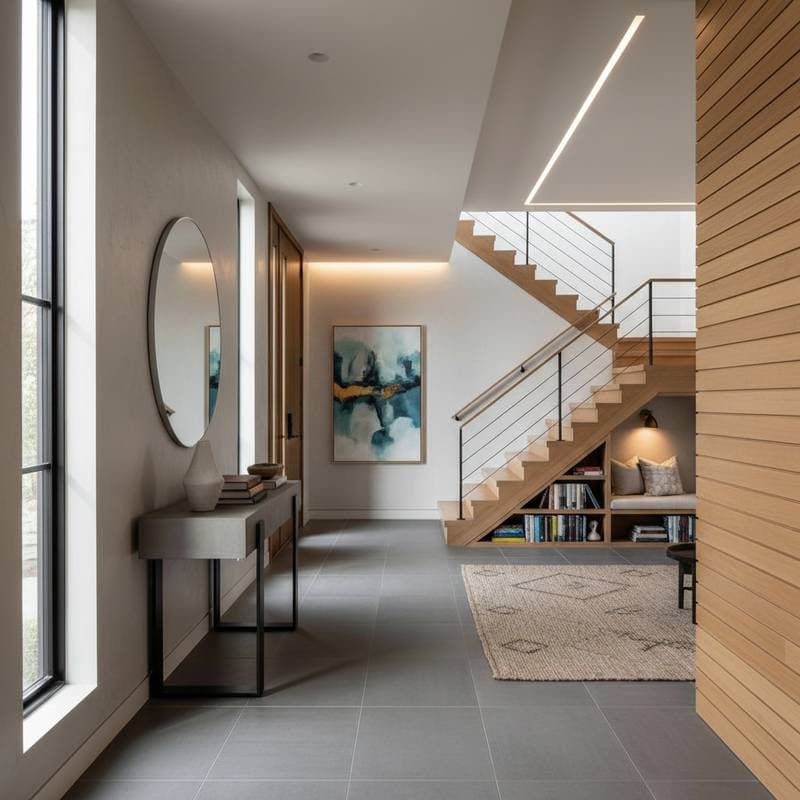
The Hidden Power of Liminal Spaces in Your Home
You step through the front door after a demanding day and pause in the entryway. A subtle shift in mood occurs during that quiet interval between the outside world and your personal sanctuary. Designers recognize this as the essence of a liminal space, those transitional zones that link rooms, atmospheres, and intentions, often without drawing attention.
Consider a hallway bathed in soft light that guides you from a vibrant kitchen to a serene bedroom. Or envision a staircase with gentle curves that encourage ascent. These areas extend beyond mere passage; they mold your daily experience, direct energy movement, and affect emotional responses throughout the home.
Defining Liminal Spaces
A liminal space functions as a threshold between distinct environments, such as a foyer, a landing, or a covered porch. These zones facilitate pauses and adjustments, allowing senses to adapt from one setting to another. Architecturally, they provide utility; emotionally, they foster transformation.
Their influence stems from the way they regulate pace and sentiment. An effective design might encourage a slower step, deliver a moment of tranquility, or ignite interest in the space ahead. Without explicit instruction, these areas direct movement and create seamless progression between experiences.
The Missed Potential in Transitional Areas
Homeowners typically allocate renovation funds to high-traffic zones like kitchens, living rooms, or patios. This approach holds merit, but neglecting transitional elements can result in a disjointed living environment. Narrow hallways, unwelcoming mudrooms, or confined stairwells disrupt the harmony of an otherwise appealing residence.
Re envisioning these spaces fosters cohesion and purpose. Transform a hallway into an art gallery displaying personal collections or family portraits. Convert a landing into a compact reading area with a built-in shelf. Even a laundry room gains retreat-like qualities through layered lighting and organic materials like reclaimed wood or linen curtains.
Strategies to Activate Liminal Spaces
-
Establish Purpose and Emotional Tone
Identify the desired sensation during passage. Aim for calm in an entryway with diffused lighting and neutral tones, or invigoration in a stairwell via bold accents and natural light. This intentionality sets the stage for each transition. -
Manipulate Light and Shadow Dynamics
Transitional zones benefit from nuanced illumination. Install wall-mounted sconces for even glow, incorporate skylights to capture daylight, or use frosted glass panels to soften incoming rays. Adjustable evening lights can signal shifts from productivity to relaxation, aligning with circadian rhythms. -
Incorporate Texture and Materials for Guidance
Variations in surfaces cue environmental changes, such as transitioning from sleek porcelain tiles in a mudroom to plush wool rugs in a hallway. Subtle paint shifts or natural elements like river stone accents or oak paneling provide continuity while marking boundaries between public and private domains. -
Blend Storage with Seamless Functionality
Prioritize practicality alongside aesthetics. Integrate under-bench cubbies for seasonal items, wall-hung hooks for accessories, or shallow cabinets that preserve openness. Designated spots for essentials like coats or mail reduce visual clutter and promote a sense of order. -
Curate Views and Pathways
Direct attention through strategic framing. Position a large window at a corridor's end to reveal a garden vista, or hang a focal artwork on a landing wall. These elements build anticipation, turning movement into an engaging journey of discovery.
Practical and Budgetary Guidance
Enhancements to liminal areas require modest outlays. Basic refreshes, including fresh paint, fixture swaps, and organizational tools, often cost under five hundred dollars. Larger projects, like custom shelving or layout adjustments, might range from two thousand to ten thousand dollars, depending on scope and materials.
Consult local regulations prior to structural modifications in walls, stairs, or entrances. Engage certified experts for electrical or load-bearing alterations to ensure safety. Frequent use in these zones demands rigorous adherence to codes.
For initial guidance, share project details on Doric South at no charge. Vetted regional contractors, familiar with local weather patterns, sourcing options, and building styles, can evaluate enhancements that maximize comfort and longevity.
Impacts on Everyday Routines
Attention to these spaces reveals their role in shaping habits. A thoughtfully illuminated hallway eases morning preparations by reducing visual strain. An organized mudroom streamlines arrivals, maintaining tidiness and warmth.
Transitional extensions, such as a screened porch or sunlit atrium, blur indoor-outdoor boundaries without full exposure to elements. The understated strength of liminal design lies in its integration; it supports restful evenings, focused work periods, and meaningful interactions without overt presence.
Refining and Experiencing Your Spaces
Following updates, observe shifts in behavior. Notice if a revamped entry bench simplifies departures or if a window nook encourages brief reflections. These observations highlight design's role in enhancing lived experiences.
A residence transcends isolated rooms; it forms a narrative of interconnected moments. Liminal spaces weave this narrative, elevating passages into opportunities for serenity, exploration, and attachment. Nurture these thresholds to cultivate a unified home that resonates from entry to repose.