
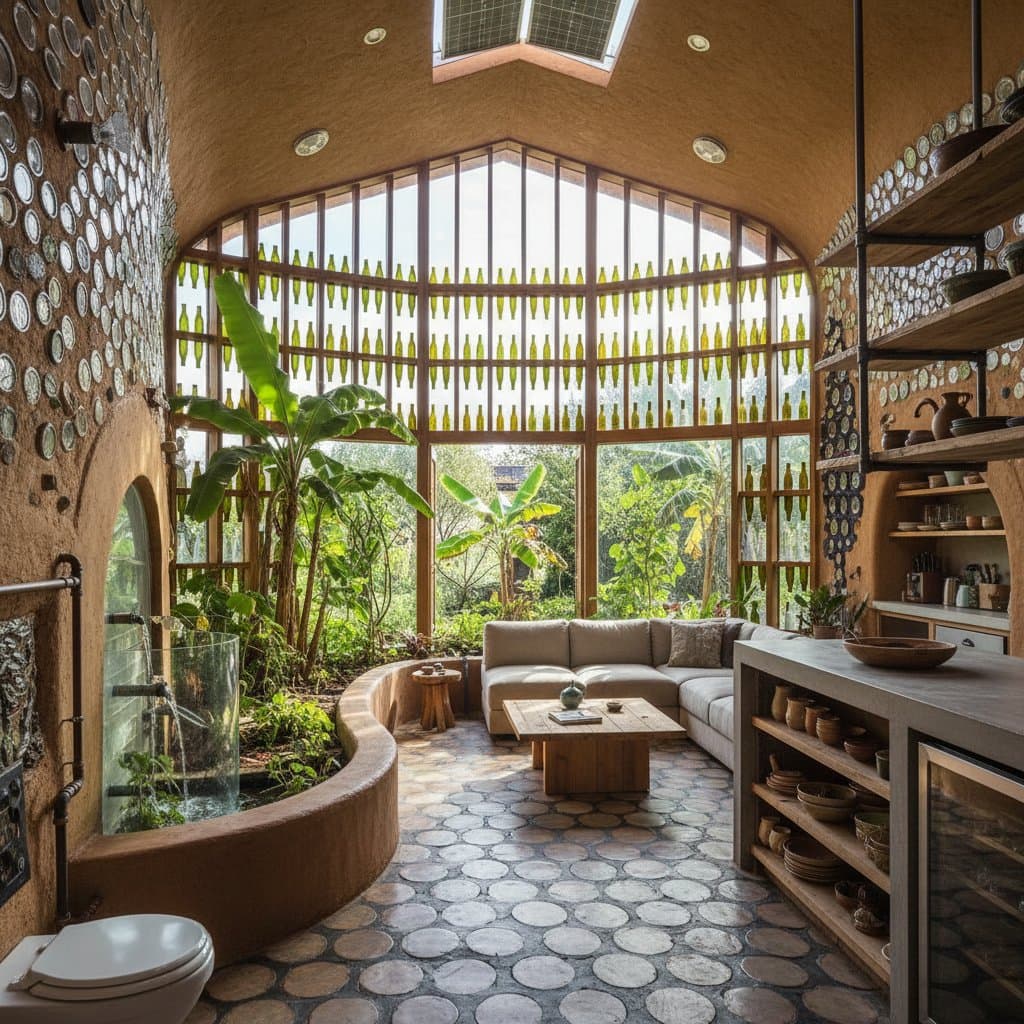
Earthships: Off-Grid Living from Recycled Waste
Imagine residing in a dwelling that generates its own electricity, harvests rainwater, and maintains comfortable temperatures year-round without grid connections. Earthships realize this vision through construction from common waste materials such as tires, bottles, and cans. These structures exist today as viable, comfortable residences that blend practicality with environmental responsibility.
For individuals frustrated with escalating utility expenses or seeking deeper harmony with the natural world, Earthships present a compelling option. These homes deliver unparalleled autonomy and ecological benefits unmatched by conventional housing alternatives.
What Makes an Earthship Different
An Earthship transcends typical eco-friendly residences by operating completely independent of public utilities. The core principle involves constructing with repurposed materials, leveraging natural climate control, and producing energy and water on-site. View it as an integrated ecosystem that addresses most requirements of standard homes.
Key elements distinguish Earthships:
- Thermal mass walls constructed by packing earth into recycled tires to stabilize indoor temperatures.
- Passive solar design that captures sunlight for natural heating.
- Rainwater harvesting systems providing water for household use, consumption, and landscaping.
- Interior greenhouses that cultivate produce and enhance air quality.
- Solar photovoltaic panels and wind turbines for electricity generation.
- Composting toilets or enclosed sewage processing to handle waste locally.
The design appears intricate initially, yet the underlying philosophy remains straightforward: the residence functions as a closed-loop system maximizing reuse and recycling.
Why People Choose Earthships
Individuals select Earthships for primary motivations including off-grid independence and diminished ecological harm. Long-term financial advantages appeal to others after initial construction. The satisfaction of repurposing landfill-bound materials adds considerable allure.
Advantages:
- Virtually eliminated utility expenses after system installation.
- Utilization of inexpensive or no-cost materials such as tires and bottles.
- Capability for self-reliance in isolated locations.
- Robust thermal performance ensuring consistent indoor climates.
- Reduced overall environmental impact.
Disadvantages:
- Extensive labor required during construction, particularly for self-builders.
- Challenges in securing construction permits in certain jurisdictions.
- Substantial upfront investments for solar arrays and water infrastructure.
- Necessity for routine upkeep of components like filtration units and photovoltaic systems.
Those who value manual labor and skill acquisition find the drawbacks surmountable. Individuals preferring low-maintenance conventional homes may view Earthships as overly involved.
How an Earthship Works Day to Day
Consider an Earthship a self-regulating habitat. Its substantial walls store solar heat absorbed during daylight hours and release it gradually overnight, eliminating reliance on mechanical heating or cooling. Rainwater channels from the roof into cisterns for storage, followed by filtration for potable and domestic applications. Greywater from lavatories and bathing areas routes through interior planters for phytoremediation before reuse in toilets or exterior irrigation.
Photovoltaic arrays supply electricity for illumination, devices, and daily operations. Supplementary wind turbines enhance energy production in select installations. Beyond aesthetics, the interior greenhouse purifies atmosphere, boosts moisture levels, and yields edible plants like herbs and vegetables. External resources remain minimal, limited perhaps to occasional grocery purchases or propane for stovetops.
Building Your Own Earthship
Prospective builders should first evaluate regional climate patterns and regulatory frameworks. Certain locales embrace innovative construction, while others impose rigid standards on non-traditional components. Thorough investigation prevents expensive setbacks.
Planning and Construction Steps:
- Acquire suitable land with optimal solar access and adequate area for water storage and energy installations.
- Review local codes by consulting building authorities regarding approvals and oversight protocols.
- Develop the floor plan using established Earthship blueprints or custom designs, typically featuring a south-facing conservatory and habitable spaces adjacent to tire-based barriers.
- Source materials including discarded tires, glass containers, aluminum beverage cans, and salvaged lumber, often available gratis or cheaply.
- Erect foundation and walls by ramming earth into tires with a sledgehammer, a methodical process yielding resilient structures.
- Apply insulation and finishes over walls with protective layers and earthen or lime-based coatings.
- Integrate utilities encompassing rainwater conduits, solar equipment, and greywater loops; engage certified experts for wiring and piping as required.
- Complete interiors with flooring, glazing, and appurtenances, favoring reclaimed timber or polished concrete for understated appeal.
Project duration hinges on workforce scale and personal involvement. A modest group anticipates months of consistent labor. Professional assistance accelerates timelines at increased expense.
Cost Breakdown
Expenses for Earthships fluctuate based on site and approach, yet patterns emerge. Self-directed builds minimize material outlays through time investment. Contractor involvement elevates initial costs while reducing physical demands.
- Land acquisition: Varies by region; rural parcels generally prove economical.
- Building materials: Recycled elements keep expenditures modest, often below several thousand dollars.
- Utility systems: Photovoltaics, storage batteries, and purification units span thousands to tens of thousands according to capacity and specifications.
- Regulatory and expert fees: Budget for evaluations, licensed electricians, and plumbers where mandated.
Completed Earthships frequently undercut comparable conventional dwellings in total cost, with ongoing savings from negligible operational expenses.
Living in an Earthship
Transitioning to Earthship residency demands adaptation to monitoring water consumption, energy reserves, and atmospheric balance. These elements represent mindful engagement rather than burdens. Residents attune closely to the habitat's dynamics.
The experience proves fulfilling for many. Year-round indoor cultivation provides fresh sustenance, while inherent thermal stability ensures comfort. Silence prevails without motorized backups or urban clamor, fostering serenity aligned with natural rhythms.
In climates prone to severe winters or intense precipitation, supplemental measures like enhanced insulation or auxiliary power enhance reliability without compromising autonomy.
Maintenance and Long-Term Care
Earthships demand periodic attention akin to any residence. Inspect photovoltaic surfaces for debris, service filtration media, and examine roofing integrity. Familiarity simplifies these procedures, with most fixes achievable using everyday implements.
Monitor cisterns and greywater conduits for unobstructed operation. Tend to greenhouse plantings through trimming and nutrient replenishment. Such routines sustain systemic equilibrium.
The advantage lies in full oversight: no external providers or unforeseen charges. Proficiency in home mechanics integrates into everyday life, empowering self-sufficiency.
Embracing Earthship Autonomy
For committed sustainable enthusiasts prepared for active participation, constructing an Earthship ranks among life's most gratifying endeavors. Initiate modestly by incorporating isolated off-grid features like rainwater barrels or photovoltaic setups prior to full-scale commitment.
Earthship living prioritizes harmony with environmental processes over sacrificed amenities. Step inside on a chilly dawn to encounter residual warmth from yesterday's sun; this tangible efficiency affirms the ingenuity of repurposed resources and elegant engineering in crafting enduring, harmonious shelters.