
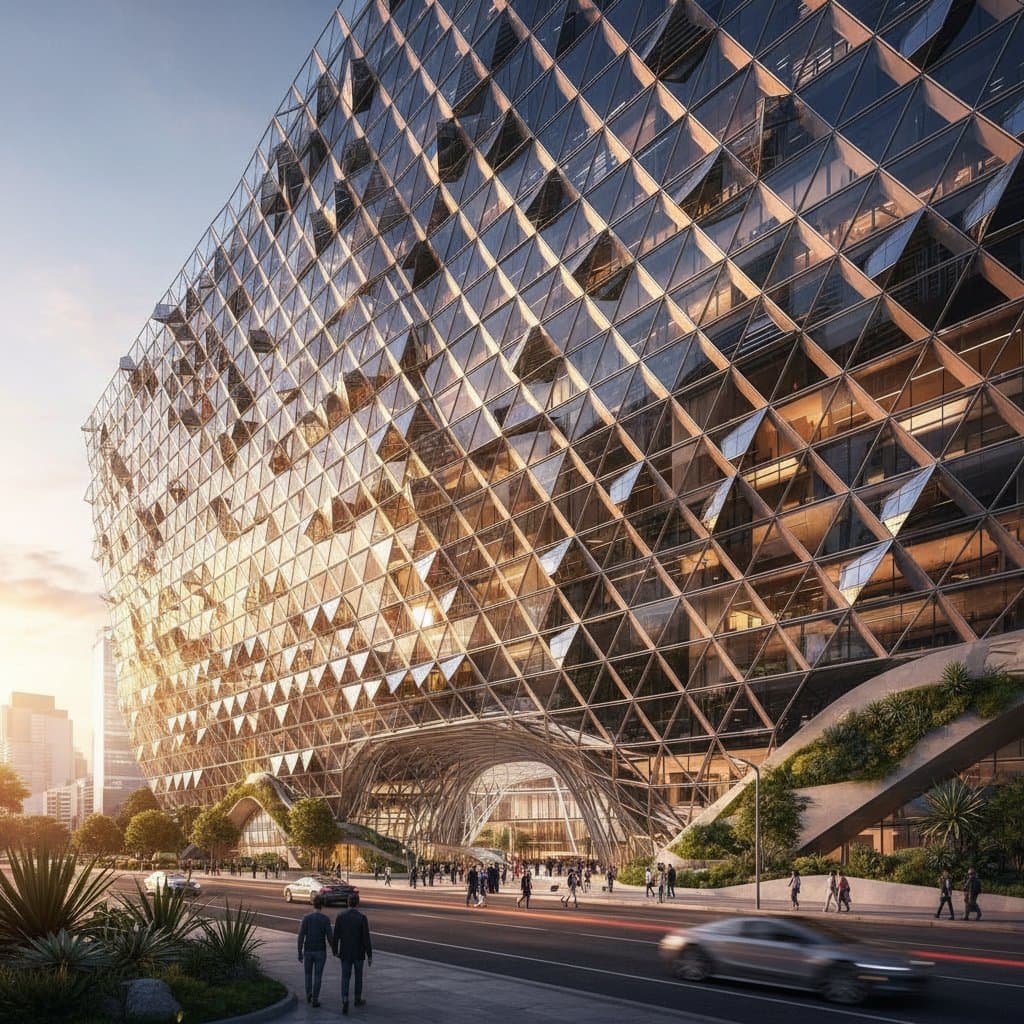
Parametric Facades: The Future of Algorithmic Design
Imagine approaching a building where the exterior surface adjusts in response to shifting sunlight, modulating panels to manage temperature and glare. The facade appears animated, interacting seamlessly with its surroundings. This scenario represents parametric design in action, an emerging methodology that alters the perspectives of architects and builders on building envelopes.
Parametric facades exemplify the integration of algorithmic design into contemporary architecture. These systems blend data analysis, mathematical modeling, and advanced materials to produce responsive surfaces that adapt to environmental factors. For property owners, developers, and design professionals, this approach enables the creation of intelligent, efficient, and visually compelling structures.
Understanding Parametric Design
Parametric design relies on algorithms to generate and refine forms according to specified parameters. Designers input objectives, such as minimizing heat infiltration or enhancing natural illumination, and specialized software produces viable configurations. Parameters encompass elements like solar positioning, wind velocity, occupant preferences, or budgetary constraints.
Consider a facade composed of numerous panels, each varying in dimension and angle based on solar data. Rather than manual adjustments, the designer establishes governing rules, allowing the algorithm to automate variations. This method accelerates workflows, enhances accuracy, and supports intricate designs unattainable through conventional techniques.
The Significance of Parametric Facades
Parametric facades extend beyond aesthetic appeal to deliver tangible performance gains. Structures demand substantial energy for climate control and illumination. Responsive facades mitigate these requirements by dynamically aligning with external conditions, thereby sustaining internal environments with reduced reliance on mechanical systems.
Primary Benefits
- Energy efficiency: Surfaces adjust to block excessive solar heat during warmer months and retain thermal energy in cooler periods.
- Occupant comfort: Variable shading refines indoor lighting levels and eliminates harsh reflections.
- **Material ** Algorithms determine precise material allocations to reduce waste and excess usage.
- Design versatility: Professionals explore innovative geometries while upholding functionality and feasibility.
These attributes position parametric facades as valuable solutions for commercial developments and residential applications alike. They foster innovation alongside adherence to environmental standards and regulatory mandates.
The Design and Implementation Process
Developing a parametric facade entails multiple phases, combining computational tools with practical construction knowledge.
- Objective definition: The project team outlines performance criteria, including energy benchmarks, visual permeability, or sound insulation targets.
- Variable identification: Relevant factors receive selection, such as ambient temperature, light intensity, or user density.
- Model development: Software platforms like Grasshopper or Dynamo facilitate the construction of interactive digital prototypes responsive to inputs.
- Performance evaluation: Simulations across diverse scenarios confirm alignment with established goals.
- Component production: Model outputs direct precision manufacturing via tools including CNC routers or laser systems for bespoke elements.
- Assembly and tuning: On-site integration occurs, followed by fine-tuning to verify operational integrity.
Although intricate, this sequence optimizes production and ensures alignment between conceptual intent and physical execution. It effectively connects virtual modeling with tangible construction.
Essential Factors for Developers and Property Managers
Parametric facades typically involve elevated initial expenses. Costs vary from approximately 80 to 200 dollars per square foot, influenced by material selections and mechanical integrations like automated louvers or sensor-equipped elements. Long-term reductions in energy consumption and upkeep expenses often recoup these outlays.
Project timelines extend during the modeling and validation stages compared to standard facades, owing to iterative refinements. Fabrication and assembly proceed efficiently, benefiting from pre-engineered, modular parts.
Routine evaluations prove necessary, particularly for components with actuators or monitoring devices. Designs must incorporate provisions for accessible maintenance. Building authorities frequently demand supplementary submissions to affirm structural integrity and efficiency compliance; engage certified architects or engineers versed in parametric methodologies from the outset.
For non-experts, these installations require collaboration with specialized firms. Errors in sensor alignment or system synchronization risk suboptimal efficiency or operational disruptions.
Static Versus Dynamic Facade Approaches
Full-motion facades suit not every application. Parametric principles apply equally to fixed configurations that leverage optimized shapes and orientations for performance.
- Static systems: These options feature reduced expenses and simplified upkeep, fitting modest-scale structures.
- Dynamic systems: Greater investment and technical demands characterize them, best suited to expansive or energy-intensive endeavors.
Selection hinges on financial resources, regional climate patterns, and performance aspirations.
Integrating Parametric Solutions into Projects
Parametric facades signal a progression toward intelligent, information-guided building practices. They unite architectural vision, structural engineering, and digital computation to elevate both form and utility. Developers gain enduring economic advantages and distinctive visual identities through such implementations. Designers access expanded capabilities via contemporary fabrication and responsive technologies.
During initial planning for construction or refurbishment, consult architectural experts on parametric integrations. Early incorporation maximizes system efficacy. Opting for adaptive or optimized static designs alike yields enhanced livability, resource conservation, and overall project worth.