
Earthships: Off-Grid Homes Built from Recycled Materials
Picture a residence that maintains its own temperature, gathers rainwater for all needs, and cultivates fresh produce within its walls. For individuals weary of escalating utility expenses and ecological footprints, such a concept may seem idealistic. Nevertheless, numerous individuals have constructed or inhabited these innovative dwellings known as Earthships, which embody a pioneering method for independent, eco-friendly habitation.
Defining an Earthship
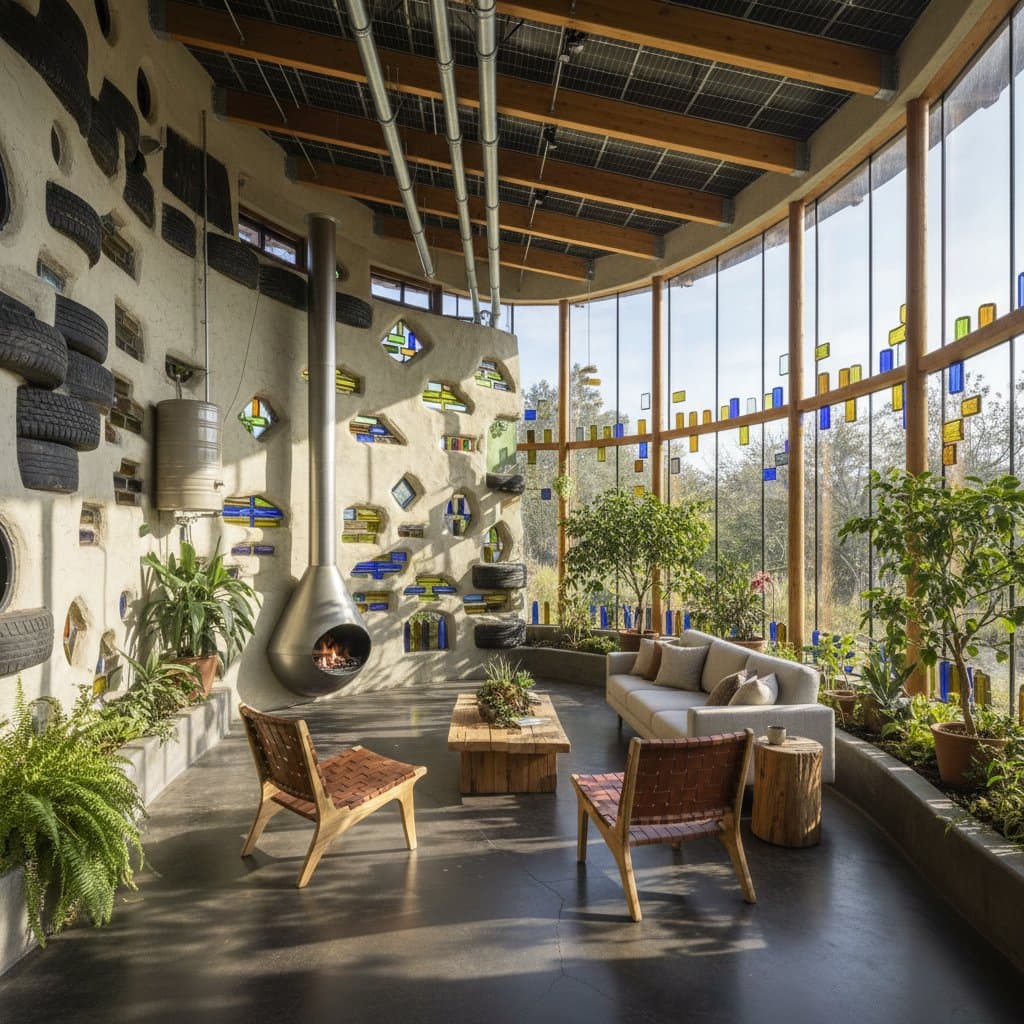
An Earthship constitutes a fully autonomous dwelling primarily assembled from repurposed and organic resources. Its foundational walls consist of densely packed earth within discarded tires, interspersed with glass bottles and aluminum cans. These components prove economical and plentiful while delivering superior thermal mass to stabilize internal climates without reliance on artificial climate control.
Central tenets guide every Earthship: incorporation of passive solar architecture, thermal mass for consistent temperatures, collection of rainwater, treatment of wastewater on-site, and production of renewable energy. These elements collectively enable residents to thrive with limited external resources.
Motivations for Adopting Earthships
Individuals select Earthships primarily for energy autonomy and ecological stewardship. Solar arrays, energy storage units, and inherent design features permit complete disconnection from public grids. Moreover, the utilization of reclaimed materials and biological processes substantially curtails waste generation and greenhouse gas outputs.
Beyond practicality, an Earthship lifestyle fosters independence, ingenuity, and environmental attunement. Some view it as liberation from conventional dependencies, while others address escalating energy prices and planetary health through tangible action.
Operational Mechanics of Earthships
An Earthship functions through interconnected mechanisms, each contributing to overall comfort and viability.
-
Thermal Mass and Insulation
Walls formed from earth-filled tires capture solar heat by day and radiate it gradually overnight, preserving stable interiors. Supplementary insulation, derived from recycled foam or substances like straw bales, minimizes thermal escape. -
Passive Solar Heating and Cooling
Structures orient southward in northern latitudes to optimize solar gain via expansive glazing. Strategic roof apertures and adjustable skylights facilitate convective cooling during warmer periods. -
Water Harvesting and Conservation
Roofing channels precipitation into subterranean cisterns, where multi-stage filtration renders it potable for domestic purposes. Post-use, greywater routes through vegetative filters for non-potable reuse in landscaping or cultivation. -
Renewable Energy Integration
Photovoltaic panels, augmented occasionally by micro-turbines, generate electrical power. Deep-cycle batteries retain surplus for nocturnal or inclement conditions. Energy-efficient fixtures and appliances, such as LED illuminants, optimize consumption. -
Wastewater Processing
Greywater from lavatories and baths nourishes integrated planters, while blackwater directs to sealed anaerobic digesters or wetland simulations. These approaches mitigate contamination and repatriate nutrients to earth. -
Integrated Food Cultivation
Enclosed solarium extensions support year-round production of edibles, from leafy greens to dwarf orchards. Benefiting from stable microclimates and recycled effluents, these areas yield substantial harvests.
Pathways to Ownership: Construction or Acquisition
Erecting an Earthship demands meticulous preparation, physical exertion, and familiarity with regulatory frameworks. Prospective owners typically pursue either self-directed builds or engagements with specialized contractors.
- Self-Directed Construction: This approach slashes expenses, with outlays ranging from $150 to $250 per square foot based on sourcing and geography. The tire compaction stage proves labor-intensive; participants often enlist community aid or enroll in instructional seminars to master protocols.
- Contractor-Led Builds: Engaging experts elevates costs to $225 to $400 per square foot, guaranteeing adherence to codes and integration of sophisticated elements like optimized photovoltaics or refined filtration.
Regulatory hurdles arise, as many municipalities lack precedents for Earthship methodologies. Jurisdictions may mandate engineering certifications for rammed-earth assemblies or limit alternative sanitation. Early dialogue with authorities proves essential.
Financial Analysis: Initial Investments and Long-Term Gains
Initial expenditures for Earthships often exceed those of standard constructions, yet operational economies offset this disparity. Absence of utility charges, low upkeep, and efficient resource management yield near-zero recurring costs. Owners frequently recover premiums within a decade via foregone bills.
Sourcing influences budgets: tires accrue no acquisition fees, though logistics incur charges. Bottles and cans demand minimal funds but require preparation. Photovoltaic setups represent major investments, typically $15,000 to $30,000 scaled to capacity and storage.
Durability and Safety Protocols
Well-executed Earthships exhibit exceptional longevity. Compacted tire matrices resist combustion, decay, and infestation, while inherent mass shields against climatic variances. Efficacy hinges on precise execution.
Essential safeguards encompass:
- Utilization of safety equipment during earth ramming or material handling.
- Reinforcement and professional vetting of structural integrity.
- Ventilation enhancements in sanitation zones to avert humidity and scents.
- Engineering consultations for seismic assessments in vulnerable locales.
Adapting Earthships to Diverse Environments
Originating in parched zones, Earthship blueprints flex to varied terrains via targeted modifications. Temperate regions incorporate augmented insulation, multi-glazed fenestration, and auxiliary heat sources. Humid settings emphasize airflow and vapor retarders to deter fungal growth.
Hydrological contexts shape configurations: arid sites prioritize expansive collectors and voluminous reservoirs, whereas saturated areas focus on runoff diversion. Success lies in harmonizing site-specific dynamics with inherent principles.
Everyday Realities of Earthship Residency
Inhabitants experience a distinctive ambiance: consistent ventilation, minimal thermal swings, and abundant daylight. Visible infrastructure heightens resource mindfulness, infusing routines with purpose. Water usage, illumination, and meal preparation evoke stewardship.
Upkeep remains straightforward. Periodic solar maintenance, filter renewals, and garden tending suffice; the design otherwise sustains itself autonomously.
Steps Toward Implementation
Aspiring sustainable dwellers find Earthship development both demanding and fulfilling. Initiate with foundational education via literature, seminars, or visits to established enclaves.
For those daunted by comprehensive builds, incorporate elements incrementally: retrofit solar orientation, deploy rainwater systems, or adopt greywater loops. Earthships transcend mere architecture; they embody resilient, accountable living paradigms.