
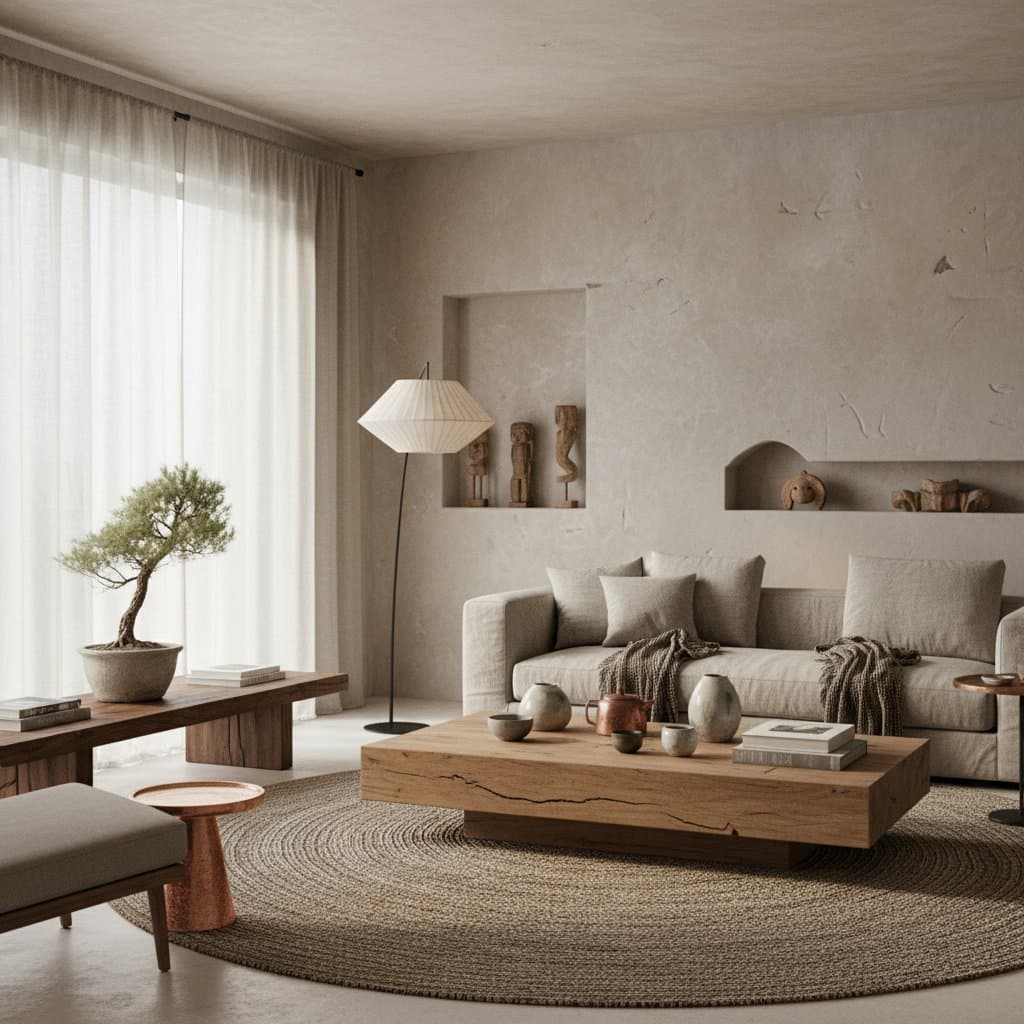
Wabi-Sabi Homes: Beauty in Imperfection
Imagine entering a space that radiates calm and grounded beauty, where no element appears flawless. Walls display subtle textures, wood floors bear faint scratches, and ceramics on the table show slight irregularities. This quiet allure defines wabi-sabi design, a philosophy that honors imperfection, impermanence, and authenticity amid a culture fixated on pristine surfaces and rigid symmetry.
Seeing Beauty Differently
Wabi-sabi homes encourage a slower pace, allowing appreciation for life in its raw form. Consider a kitchen table etched with gentle grooves from countless family gatherings or linen curtains swaying softly in the wind. These elements narrate personal histories, illustrating that genuine beauty emerges from lived experience rather than idealized perfection. The philosophy bridges design and emotion, fostering environments that feel inviting, authentic, and intimately connected to daily rhythms.
Homeowners gravitate toward this style for its accessibility. Extensive budgets or major overhauls prove unnecessary. Instead, emphasize existing features, enhancing them through deliberate additions that align with personal habits and the home's natural flow.
How to Bring Wabi-Sabi Into Your Home
Transform any space into a wabi-sabi sanctuary through deliberate, straightforward actions.
-
Choose Natural Materials
Select wood, clay, linen, stone, and wool, which develop patina and character with age. Opt for a reclaimed oak dining table that showcases natural knots or a stone countertop revealing intricate veining. These choices introduce organic depth and tactile appeal to everyday surfaces. -
Embrace Imperfection
Integrate items like a slightly chipped ceramic mug, an uneven plaster wall, or a hand-thrown vase. Rather than concealing these traits, position them prominently to celebrate life's organic flow. Such details infuse the space with narrative and vitality, turning potential flaws into focal points of charm. -
Simplify Your Space
Wabi-sabi flourishes in restraint and equilibrium. Declutter surfaces, display only cherished objects, and allow empty areas to breathe. For instance, place a lone wildflower arrangement on an otherwise bare wooden shelf; this minimal arrangement conveys serenity and intention more effectively than ornate collections. -
Play With Light and Shadow
Invite diffused natural light through gauzy fabrics or unshuttered panes. Observe how afternoon rays dance across rough-hewn walls, casting dynamic patterns that enhance intimacy. Layer ambient sources, such as beeswax candles, to extend this play into evenings, creating a sense of quiet animation. -
Incorporate Local Touches
Source ceramics from regional potters, furniture from sustainably harvested nearby timber, or woven textiles from community weavers. These selections root the home in its surroundings, fostering a connection to cultural heritage and environmental context. Hunt for markets or workshops to discover pieces that carry the essence of place.
Practical Considerations
This design approach accommodates diverse financial scopes. While comprehensive updates, such as applying natural lime plaster to walls or commissioning bespoke joinery, demand investment, modest alterations yield similar results. Restore an aged wooden cabinet with eco-friendly oils instead of discarding it, or replace polyester drapes with breathable cotton blends. Prioritize curation over consumption to build layers of meaning gradually.
Address functionality alongside aesthetics. Treat salvaged woods with sealants to prevent moisture damage, verify that textured finishes resist wear in high-traffic zones, and adhere to regional regulations for any modifications. Engage certified specialists for complex installations to ensure longevity and compliance.
Living With Imperfect Beauty
A wabi-sabi interior remains dynamic, adapting to seasonal cycles and personal growth. Timber tones deepen with exposure, fibers mellow through use, and the overall ambiance matures alongside inhabitants. This evolution underscores the philosophy's essence: recognizing elegance in erosion, usage, and transient joys.
Daily interactions reveal new nuances, from sunlight highlighting a vase's asymmetry to evening shadows softening a rug's frayed edges. Over months, the space becomes a mirror of experiences, promoting mindfulness and contentment. Embrace this process as an ongoing dialogue between home and life.
Making It Happen
Initiate with modest introductions, such as positioning a artisan-crafted wooden tray on a console or applying a subtle clay wash to an accent wall. Pause to assess the shift in atmosphere; often, a single element alters perception profoundly. Gradually curate toward depth over abundance, selecting items that resonate personally.
Wabi-sabi transcends trends, cultivating an enduring haven that encapsulates stories in every texture and form. As the environment settles, it nurtures balance and presence, inviting reflection on what truly matters within one's sanctuary.