
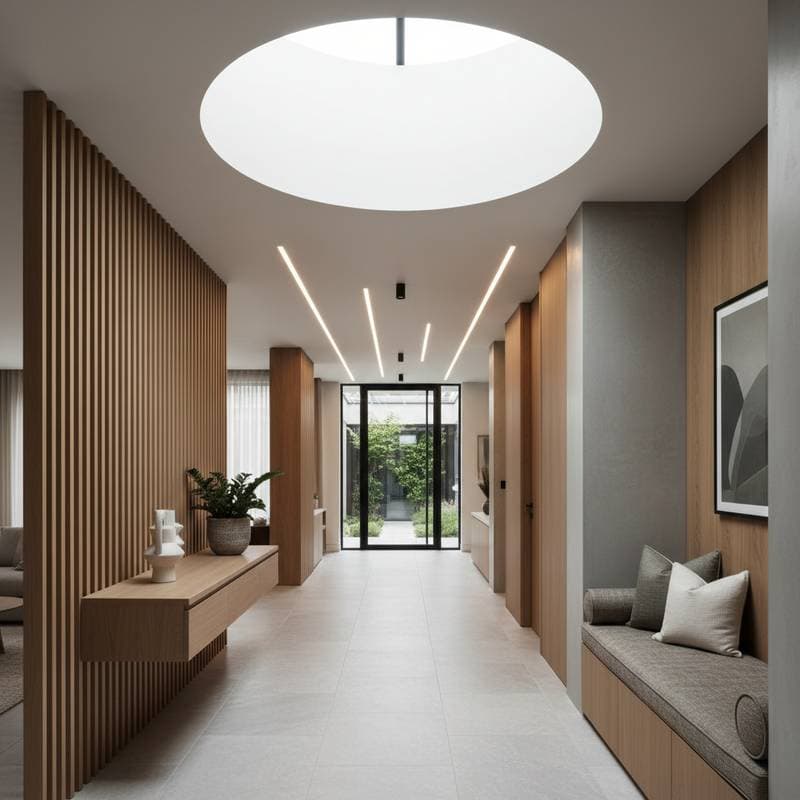
Understanding Liminal Spaces in Home Design
Consider the moment you step from a bustling kitchen into a quiet hallway. The shift in atmosphere occurs in an instant, yet it influences your sense of calm or anticipation. These thresholds, known as liminal spaces, serve as more than mere connectors; they shape the emotional rhythm of your home.
Homes feature various liminal areas, including entryways that welcome you inside, corridors linking living zones, stair landings that bridge levels, mudrooms for practical transitions, and patios blending indoor and outdoor realms. Homeowners often overlook these zones, treating them as functional necessities. However, intentional design elevates them into elements that promote tranquility and cohesion.
Liminal space design emphasizes these thresholds as vital components of the living environment. This approach avoids the need for expansive additions. Instead, it refines existing structures to deliver fluid movement and heightened sensory engagement.
Integrating Liminal Design with Transitional Styles
Transitional design traditionally merges classic and modern elements through neutral palettes, streamlined forms, and harmonious proportions. It creates versatile interiors that adapt to evolving needs. Liminal design builds on this foundation by prioritizing the journey between spaces, transforming passive passages into dynamic experiences.
In a transitional setting, pair sleek metal accents with warm wood tones for subtle elegance. Liminal principles extend this by addressing sensory progression. For instance, introduce layered lighting that evolves from bright task illumination in active areas to softer ambient glows in restful zones.
Flooring variations provide another layer of guidance. Transition from smooth stone in entryways to plush carpet in bedrooms, signaling a change in activity. Architectural details, such as curved archways or built-in benches, encourage brief pauses that enhance spatial awareness.
This integration results in homes where unity arises from thoughtful progression rather than uniform aesthetics. Each movement feels guided, contributing to a narrative of comfort and purpose.
Key Practical Steps for Implementation
Homeowners can enhance liminal spaces without undertaking extensive renovations. Focus on targeted updates that align with budget, timeline, and lifestyle. Begin by evaluating current transitions for opportunities in lighting, materials, and layout.
Budgeting for Updates
Allocate funds based on project scope to maximize impact.
- Install basic overhead fixtures or wall sconces for $150 to $400 each, including labor for simple swaps.
- Incorporate transition strips or edge detailing on floors at $8 to $25 per linear foot, depending on material durability.
- Build custom arches or half-walls starting at $1,000, scaling to $3,000 for intricate carpentry and finishes.
- Apply specialty paints or wallpapers in passages for $3 to $6 per square foot, factoring in preparation and multiple coats.
Select durable, low-maintenance options to ensure long-term value. Consult local suppliers for cost-effective alternatives that match your aesthetic.
Ensuring Safety and Regulatory Adherence
Prioritize compliance to protect occupants and avoid costly corrections. Review municipal guidelines before any alterations. For electrical enhancements, hire certified professionals to handle wiring and installations.
In multi-level homes, verify that stair railings maintain 34 to 38 inches in height with spindles no more than 4 inches apart. Avoid obstructing emergency exits in corridors. Even cosmetic changes, like adding rugs, require non-slip backing to prevent hazards.
Document all modifications for future reference, especially during property sales.
Managing Project Timelines
Efficient planning minimizes inconvenience. Cosmetic refreshes, such as painting and lighting adjustments, typically conclude within 2 to 4 days.
More involved tasks, including framing or flooring, extend to 7 to 14 days. Coordinate schedules with contractors to overlap phases, like prepping surfaces while awaiting material delivery. Factor in drying times for adhesives or paints to prevent delays.
Evaluating Long-Term Benefits
Investments in liminal spaces yield intangible yet significant returns. Enhanced flow makes homes appear more spacious and inviting, appealing to potential buyers. Agents report that properties with refined transitions command higher interest due to their intuitive layout.
Over time, these designs reduce daily stress by creating predictable, soothing pathways. Track improvements through before-and-after assessments to appreciate the subtle shifts in usability.
Applying Changes in Your Space
Tour your home methodically, pausing at each threshold to gauge its effectiveness. Note areas where light fades abruptly or floors clash in texture. Identify one zone for initial focus, such as an underlit entryway needing sconces and a console table.
For a mudroom, introduce cubbies and rubberized mats to define its role without overwhelming the space. In larger projects, collaborate with architects on sightlines that draw the eye smoothly from room to room. Specify materials that echo throughout, like consistent trim colors, to unify the design.
Iterate based on usage patterns. Test adjustments seasonally, as natural light variations highlight different strengths.
Experiencing the Impact of Refined Thresholds
As liminal designs take shape, daily routines gain new depth. Natural illumination filters through strategic openings, casting patterns that evolve with the day. Textural shifts underfoot provide subtle reassurance of changing contexts.
These enhancements foster mindfulness in movement, turning ordinary commutes between rooms into opportunities for reflection. Homes evolve into sanctuaries where every transition reinforces a sense of belonging and ease.