
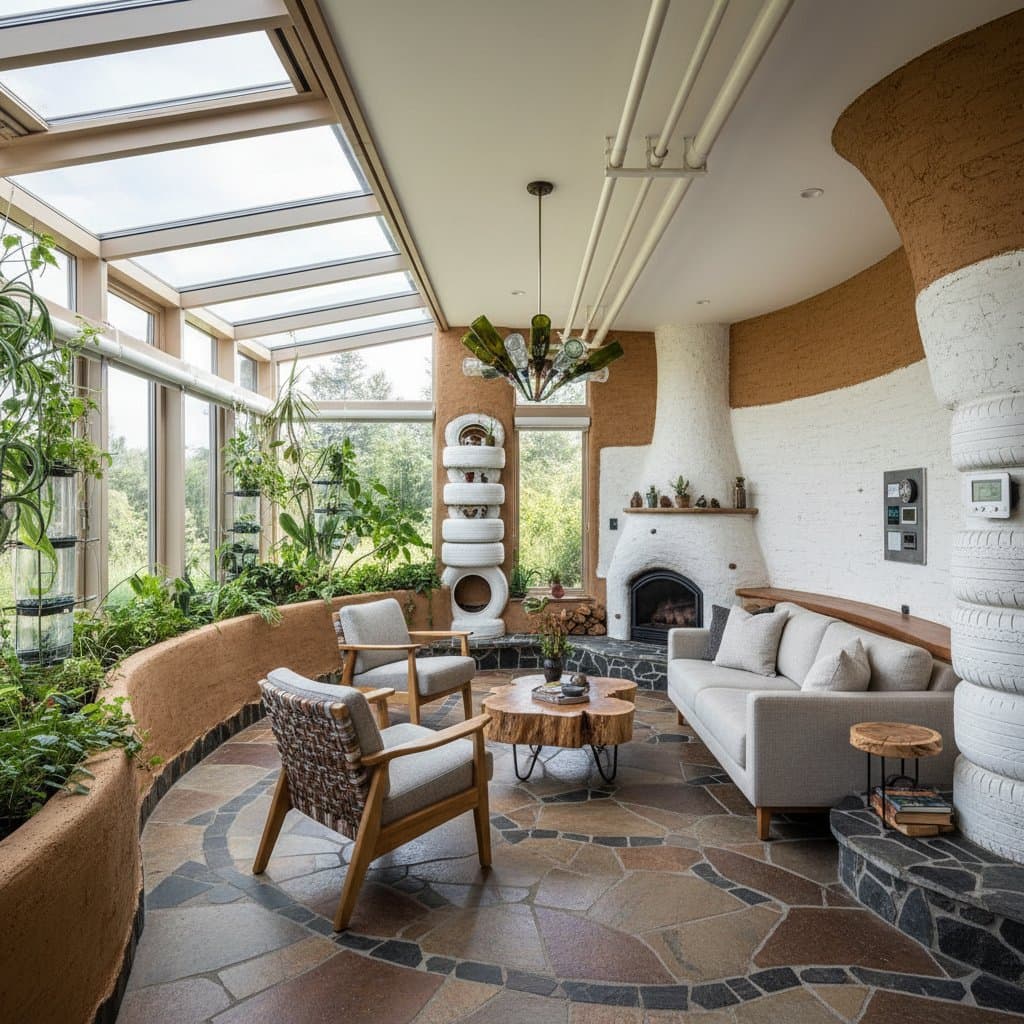
Earthships: Sustainable Homes Built for Year-Round Comfort
Interest in sustainable housing has surged as individuals seek ways to minimize environmental impact and utility costs. Earthships represent an innovative solution, utilizing recycled tires packed with earth to form robust walls that provide exceptional thermal regulation. These structures challenge conventional notions of homebuilding while delivering proven efficiency and resilience.
Homeowners drawn to Earthships value the opportunity to achieve energy independence and reduce waste. The design integrates passive solar principles with off-grid utilities, resulting in homes that function as self-sustaining units. Although construction demands significant effort, the resulting benefits in comfort and cost savings justify the investment for committed builders.
Defining Features of Earthships
Earthships qualify as passive solar homes constructed mainly from natural and recycled elements. The hallmark component consists of earth-filled tires stacked to create thick walls, which serve as thermal mass to stabilize indoor temperatures without reliance on mechanical systems.
Additional elements enhance functionality and sustainability:
- Recycled glass bottles and aluminum cans embedded in walls for insulation and aesthetic appeal
- Photovoltaic panels coupled with battery banks to generate and store electricity
- Roof-integrated cisterns for capturing and storing rainwater
- Greywater treatment systems that repurpose household wastewater for plant irrigation
- Built-in planters or greenhouses for cultivating fresh produce indoors
These features interconnect to form a closed-loop system, reducing dependence on external resources and fostering ecological harmony.
Motivations for Choosing Earthships
Individuals often explore Earthships to address rising energy expenses or to lessen their carbon footprint. Deeper investigation reveals advantages that extend beyond initial goals.
- Energy Efficiency: Thermal mass combined with solar orientation eliminates nearly all heating and cooling expenses.
- Autonomy: Self-reliant power and water provisions free residents from grid vulnerabilities.
- Durability: Structures withstand harsh weather, performing reliably in diverse environments from arid zones to snowy highlands.
- Resource Conservation: Utilization of discarded tires and bottles diverts substantial waste from disposal sites.
- Endurance: Earthen walls demand little maintenance and resist fire, insects, and decay.
Such attributes position Earthships as viable options for those prioritizing enduring stability alongside environmental stewardship.
Step-by-Step Construction Overview
Erecting an Earthship requires intensive labor, yet the methodology follows a logical sequence. Understanding the phases equips prospective builders with essential knowledge.
Site Preparation and Layout
Select a location offering optimal southern exposure in the northern hemisphere to maximize solar benefits. Embed the structure partially into the earth for enhanced insulation, ensuring the site features adequate drainage and stable soil to avoid erosion or settling issues.
Erecting Foundations and Tire Walls
Fill discarded passenger tires with rammed earth using pneumatic tampers or sledgehammers to form solid, interlocking units. Stack these units in running bond patterns, similar to bricklaying, with each completed tire weighing approximately 300 pounds. Apply protective adobe or earthen plaster coatings to the exterior and interior surfaces for weatherproofing and refinement.
Safety measures prove crucial during this phase; participants should employ heavy-duty gloves, reinforced footwear, and ergonomic supports to mitigate strain and injury risks.
Roofing and Thermal Barriers
Install a sturdy post-and-beam roof framework topped with rigid insulation panels to minimize thermal bridging. Incorporate sloped roofing with integrated channels to direct rainwater toward underground storage tanks, maintaining seamless waterproofing throughout.
Glazing and Solar Optimization
Position expansive, tilted south-facing windows to capture winter sunlight while overhangs block summer rays. Select low-emissivity glass to retain heat, and incorporate heat-absorbing floors made from concrete or flagstone to distribute warmth evenly.
Integrating Support Systems
Earthships eschew traditional utilities in favor of bespoke installations:
- Electricity: Arrays of solar photovoltaic panels feed deep-cycle batteries, powering essentials like appliances and illumination through inverters.
- Water Management: Collected rainwater undergoes sedimentation and ultraviolet filtration before distribution for potable and non-potable uses.
- Waste Handling: Greywater from lavatories and baths nourishes interior vegetation, with blackwater directed to composting toilets or septic adaptations.
- Climate Control: Strategic vents and the inherent mass of walls regulate humidity and temperature, often maintaining 65 to 75 degrees Fahrenheit indoors.
Precise engineering ensures these components operate interdependently for optimal performance.
Financial Analysis and Projections
Promoters highlight Earthships as economical alternatives, though expenses vary by scale, site, and execution. Current estimates reflect labor and material realities.
- Owner-Built Models: Approximately 150 to 200 dollars per square foot, factoring in self-performed tasks.
- Contractor-Led Projects: 250 to 350 dollars per square foot, inclusive of specialized expertise and premium finishes.
Standard conventional homes range from 200 to 400 dollars per square foot regionally, suggesting Earthships compete favorably when lifetime operational costs enter the equation. Utility independence yields annual savings exceeding thousands of dollars.
Influencing Variables
- Workforce Expenses: Manual tire compaction extends timelines; professional assistance elevates outlays.
- Geographic Factors: Isolated sites incur higher transport fees for tires, earth, and equipment.
- Regulatory Hurdles: Unfamiliarity with tire-based methods may necessitate engineering certifications, prolonging approvals.
- Technical Components: Investments in photovoltaics, filtration units, and cisterns constitute 30 to 40 percent of totals.
Allocate an additional 10 to 15 percent buffer for unforeseen adjustments to maintain fiscal discipline.
Navigating Regulations and Adaptations
Verify compliance with local ordinances prior to commencement, as tire walls may encounter scrutiny in conservative jurisdictions. Rural settings typically afford greater flexibility than urban ones.
Essential documentation includes:
- Engineering assessments validating structural integrity for rammed-earth equivalents
- Permits for photovoltaic arrays, water harvesting, and sanitation setups
- Approvals for resource extraction or storage in water-scarce areas
Tailor designs to local conditions; incorporate enhanced vapor retarders in humid tropics or supplemental insulation in subarctic zones to ensure viability.
Owner-Built Versus Expert Assistance
Prospective builders weigh self-construction against professional involvement based on resources and objectives.
Self-Directed Builds
Advantages:
- Reduced payroll through personal effort
- Customized features reflecting individual preferences
- Profound accomplishment from hands-on creation
Disadvantages:
- Intense physical demands over extended periods
- Challenges in mastering interconnected technologies
- Potential for delays due to inexperience
Preparatory immersion, such as attending construction seminars or assisting on established sites, equips novices for success.
Engaging Specialists
Advantages:
- Accelerated timelines through skilled labor
- Assurance of code adherence and system efficacy
- Expertise in navigating bureaucratic processes
**Disadvantages:**n
- Elevated initial expenditures
- Diminished direct oversight of progress
A blended strategy often optimizes outcomes: perform foundational labor while delegating critical installations to certified technicians.
Addressing Durability and Safety
Earthships exhibit remarkable robustness, yet vigilance in key areas sustains performance.
- Earth Compaction: Uniform density prevents differential settlement and fissures.
- Moisture Management: Impermeable barriers and grading avert water intrusion and biological growth.
- Flammability Protections: Exterior stucco coatings enhance resistance, complemented by code-compliant interior treatments.
- Air Circulation: Balanced intake and exhaust systems mitigate moisture buildup and ensure healthful environments.
Routine professional evaluations reinforce compliance and longevity, irrespective of off-grid status.
Daily Realities of Earthship Residency
Inhabitants adapt seamlessly to Earthship routines, with systems promoting mindful resource use. Daily life emphasizes harmony with natural cycles.
Temperatures remain consistent at 65 to 75 degrees Fahrenheit passively. Solar illumination via efficient LEDs supports productivity. Water protocols involve routine filter maintenance, while upkeep focuses on minor plaster repairs and battery monitoring.
Residents frequently report enhanced tranquility and a deepened bond with their locale, underscoring the design's holistic appeal.
Assessing Enduring Worth
Earthships may diverge from mainstream property norms, yet they accrue value through sustainability premiums in receptive markets. Primary gains manifest in operational efficiencies.
- Power Expenses: Effectively eliminated
- Hydration Costs: Negligible
- Upkeep Demands: Substantially reduced via resilient compositions
Generational durability minimizes replacement needs, offsetting any resale variability with compounded savings.
Steps to Realize Your Earthship Vision
Embarking on an Earthship project begins with informed exploration. Tour operational examples, consult residents, and analyze system synergies to build confidence.
Subsequently:
- Examine applicable regulations and secure preliminary consultations.
- Collaborate with architects versed in earthen and alternative builds.
- Develop a detailed financial plan encompassing buffers.
- Initiate modestly, such as with an auxiliary structure, to test concepts.
Earthships exemplify how innovative engineering harmonizes human needs with ecological principles, fostering resilient habitats that endure.