
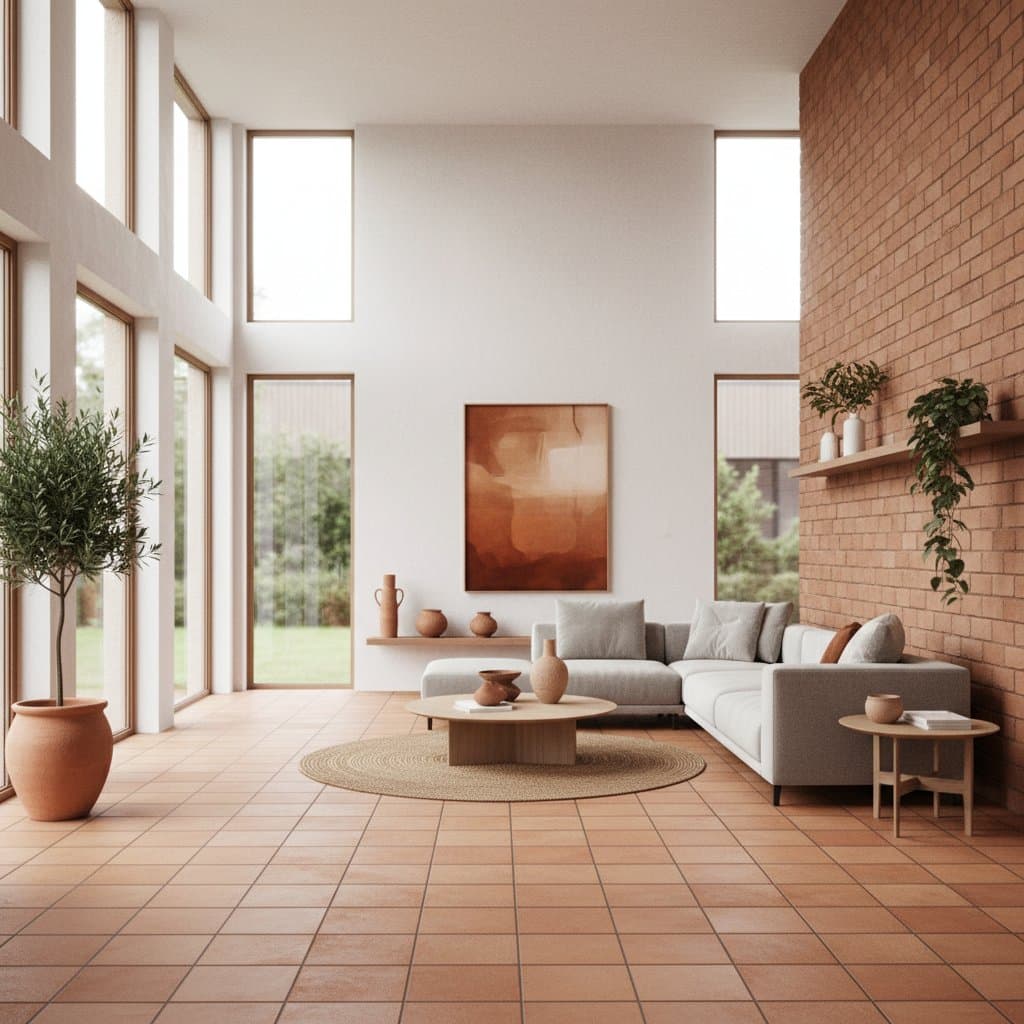
Terracotta Renaissance Brings Warmth to Modern Homes
You may have noticed more designers and homeowners turning to rich, earthy finishes lately. Cool grays and stark whites are giving way to something warmer, more inviting, and far more timeless. If you have been craving a home that feels grounded yet modern, terracotta might be the answer you are looking for.
A Return to Natural Warmth
For a while, minimalism leaned toward cold tones and sleek surfaces. The result was clean but sometimes sterile. Terracotta, with its reddish-brown hue and organic texture, brings a balance that feels human and warm.
It pairs beautifully with the clean lines of modern architecture, creating spaces that feel both contemporary and comfortable. The renewed interest in terracotta is not a passing trend. It reflects a shift toward authenticity in design.
Homeowners want materials that age gracefully and show character over time. Terracotta fits that mindset perfectly, whether used for floors, walls, or exterior cladding.
Why Terracotta Works So Well Today
Terracotta, which means baked earth, is made from natural clay that is molded and fired. Its appeal lies in its simplicity. It feels handcrafted even when mass-produced, and it works seamlessly with wood, stone, and metal.
Beyond looks, it also offers practical benefits that make it well-suited for modern living. Key advantages include thermal regulation. Terracotta absorbs and releases heat slowly, helping to stabilize indoor temperatures. In warm climates, it keeps interiors cooler, while in cooler regions it retains warmth.
Durability stands out as another strength. Properly installed terracotta can last for decades. Exterior tiles and bricks resist fading and cracking when maintained correctly. Low maintenance follows once sealed, as terracotta surfaces are easy to clean and do not require constant refinishing.
Sustainability adds further value. Clay is abundant and recyclable, making terracotta one of the most eco-friendly building materials available.
Where to Use Terracotta in Modern Homes
You can introduce terracotta in small or large ways depending on your style, budget, and renovation goals. It is flexible enough to suit everything from rustic to minimalist designs.
-
Flooring
Terracotta tile flooring adds texture and warmth, especially in open-plan kitchens, sunrooms, and entryways. Expect to pay between $6 and $12 per square foot for quality tiles, plus installation costs. Sealing is essential to prevent staining, and periodic resealing will keep the finish looking rich. -
Feature Walls
A terracotta accent wall can soften a sharp modern interior. Use large-format tiles or thin brick slips for a subtle industrial touch. This option typically costs $10 to $18 per square foot installed. It works well behind fireplaces or in living areas where you want a focal point without overwhelming the space. -
Exterior Cladding
Architects are increasingly using terracotta panels on building facades. These systems combine traditional clay with modern mounting hardware for a sleek, ventilated exterior. While the cost is higher, ranging from $35 to $50 per square foot, the visual and thermal benefits make it a solid long-term investment. -
Decorative Elements
If you prefer a lighter approach, try terracotta planters, pendant lights, or handmade tiles for backsplashes. These smaller accents add warmth without major renovation work.
Blending Terracotta with Modern Minimalism
The beauty of terracotta lies in how easily it complements minimalist design. The goal is to keep the palette restrained so the clay tones stand out. Pair terracotta tiles with matte black fixtures, pale oak cabinetry, or soft white walls. The combination feels fresh but timeless.
To maintain a modern look, focus on form and proportion. Choose clean-edged tiles rather than heavily textured ones. Keep grout lines narrow and consistent. When used thoughtfully, terracotta brings depth and interest without cluttering the design.
Cost, Installation, and Maintenance Tips
Installation requires care even though terracotta is straightforward to install. Tiles are porous, so they must be sealed before grouting. For large surfaces, professional installation is recommended to avoid uneven color variation or cracking. Labor can add $4 to $7 per square foot depending on region and complexity.
Maintenance involves regular sweeping and gentle cleaning with pH-neutral solutions to preserve the finish. Avoid harsh acids or bleach. For floors, reseal every few years depending on foot traffic. Exterior installations may need inspection after severe weather to check for chips or loose sections.
Regional differences matter. Terracotta performs best in mild to warm climates. In freezing regions, frost-resistant versions should be used outdoors to prevent cracking. Always verify that the product is rated for your local weather conditions.
Safety and Structural Considerations
Terracotta is heavy, so proper support is critical. When used as cladding or roofing, ensure that structural framing can handle the additional load. Professional assessment is worth the cost to prevent future issues. For flooring, verify that the subfloor is level and moisture-free before installation to avoid long-term damage.
If you are sealing or cutting terracotta tiles yourself, use protective eyewear and a dust mask. Clay dust can irritate eyes and lungs. Always follow manufacturer instructions for sealants and adhesives.
Return on Investment and Long-Term Value
Terracotta adds both financial and aesthetic value. Homes with authentic natural materials often appraise higher and sell faster. Beyond resale, the comfort and ambiance it provides are lasting benefits. Unlike synthetic finishes that date quickly, terracotta grows more beautiful with time as it develops a natural patina.
The upfront cost may be higher than ceramic or vinyl alternatives, but its lifespan and timeless appeal justify the expense. You are investing in durability and warmth that will not fade with changing design trends.
Planning Your Terracotta Project
If you are planning a remodel, start small with terracotta accents to see how the material feels in your space. A kitchen backsplash or entryway floor is a good first step. For larger projects, consult a contractor familiar with clay materials. They can advise on thickness, sealing products, and structural requirements.
Terracotta has come back into focus because it meets both emotional and practical needs. It makes modern homes feel more grounded, more personal, and more in tune with nature. With careful planning and professional installation, it can transform your home into a space that feels warm every single day.