
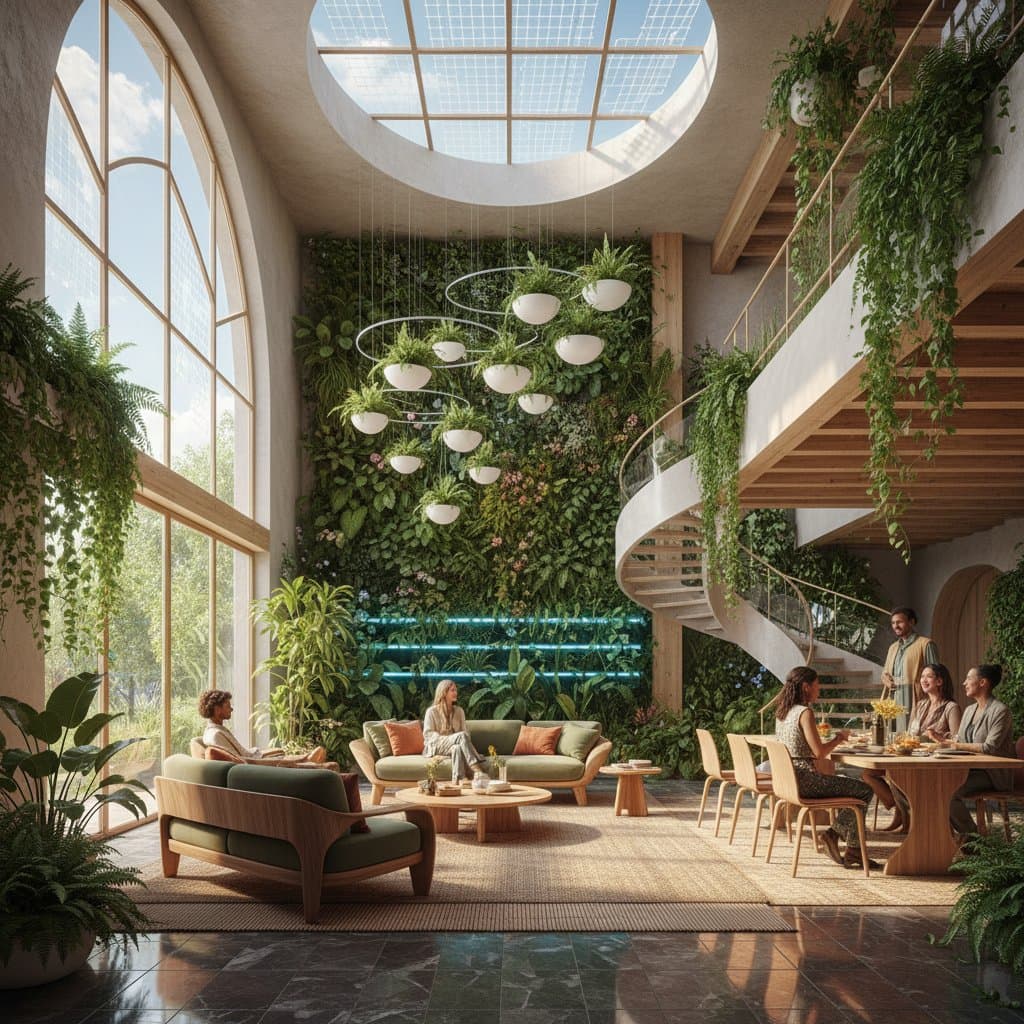
Solarpunk Homes Blend Eco Design with Futuristic Optimism
A solarpunk home combines natural light, air purifying plants, and renewable power sources. The result feels calm yet forward thinking. This approach merges sustainability with optimism to produce spaces that support daily comfort while reducing environmental impact.
Homeowners often seek ways to lower energy use without sacrificing personal style. Solarpunk principles address this need through targeted choices in materials, systems, and layout. Small updates can introduce these ideas without requiring complete reconstruction.
Defining Solarpunk Homes
Solarpunk homes integrate technology and natural systems. They rely on renewable energy, reclaimed materials, and efficient designs that cut waste. Exteriors commonly feature solar arrays, rooftop gardens, and rainwater collection. Interiors use wood, natural textiles, and abundant daylight to create inviting rooms.
The style avoids stark minimalism. Instead it favors layered greenery, organic forms, and recycled elements that reflect local conditions.
Benefits for Homeowners
Several practical advantages attract people to this approach.
- Reduced monthly utility expenses through solar power and passive climate control.
- Improved indoor air quality from plants and low chemical materials.
- Greater daily connection to natural rhythms via light and vegetation.
- Room for individual creativity through color and custom details.
- Stronger long term property resilience as energy standards tighten.
These outcomes support both personal well being and broader ecological goals.
Steps to Incorporate Solarpunk Design
Begin with priorities such as energy reduction or indoor planting. The following sequence provides a clear path.
Prioritize Energy Systems
Install solar panels or a solar water heater where roof access and local incentives allow. Smaller systems start at a few thousand dollars. Improve insulation and switch to LED fixtures when panels are not feasible. Energy efficient appliances further align with the same goals.
Integrate Indoor Plants
Add low maintenance species such as pothos or peace lilies to improve air quality. Construct a simple vertical garden from reclaimed wood or shelving. These additions regulate humidity and introduce living texture.
Select Sustainable Materials
Choose reclaimed timber, bamboo, cork, or recycled glass for surfaces and furnishings. Apply lime based paints and natural fiber textiles. These options reduce chemical exposure and support healthier indoor environments.
Plan for Shared Resources
Establish a small community garden or tool sharing arrangement. Apartment residents can begin with balcony planters and neighbor exchanges. Such steps lower waste and build local connections.
Maximize Natural Light
Position windows and skylights to capture daylight, especially on south facing walls. Use light wall colors and sheer window coverings. At night, rely on warm LED or solar lamps to maintain efficiency.
Achieving the Green Maximalist Aesthetic
Solarpunk interiors celebrate abundance rather than restraint. Combine bright natural tones with varied textures and patterns. Display handmade or upcycled objects alongside living plants. Balance prevents clutter while highlighting sustainability.
Weighing Advantages and Drawbacks
Higher initial costs for renewable systems represent the main trade off. Ongoing garden maintenance and possible permit requirements also require attention. Many owners find that long term savings and improved living conditions justify the investment.
Key Planning Factors
Assess budget, available time, and local climate before major changes. Start with low cost updates such as paint or plants, then reinvest utility savings. Verify building codes for electrical or water work and consult licensed professionals. Select native plants and local materials to match regional conditions.
Embracing the Solarpunk Lifestyle
Daily habits reinforce the design. Grow herbs indoors, repair items instead of replacing them, and support nearby makers. These actions reduce consumption and strengthen community ties.
Moving from Vision to Reality
Select one starting action, such as adding plants or sealing drafts. Consistent small steps accumulate into a home that operates efficiently and feels personally meaningful. The approach works in both urban apartments and rural settings, offering a practical route toward sustainable daily life.