
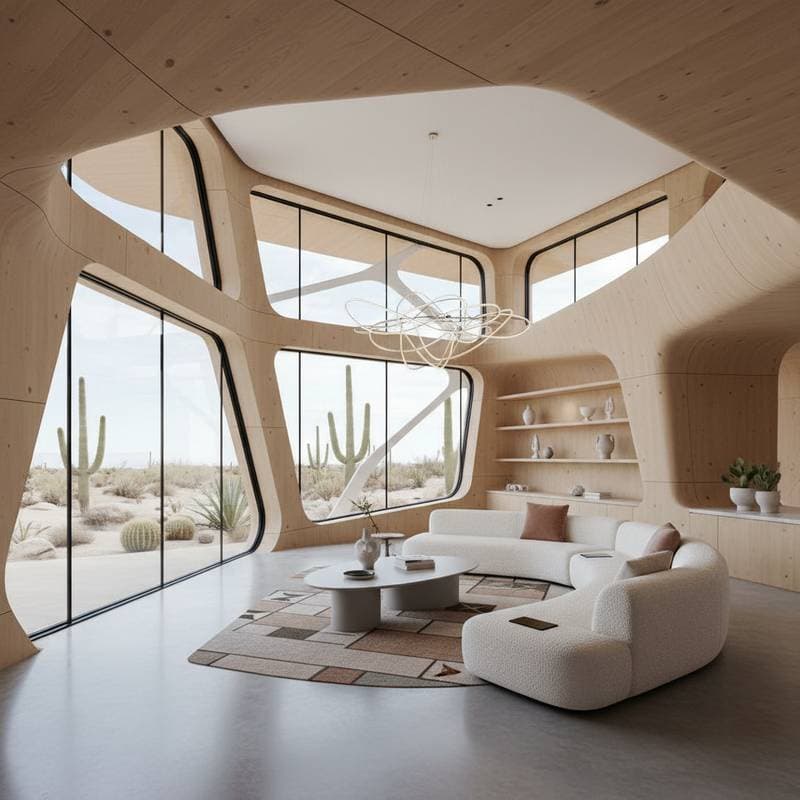
Why Parametric Architecture Defines Modern Dream Homes
Picture standing in front of a home that seems to respond to its surroundings. The roof curves to shade the sun exactly where it needs to. The windows adjust their angles to catch the breeze. Every shape and surface feels intentional. That is the promise of parametric architecture, a design approach that reshapes what a modern dream home can be.
The Opportunity for Smarter, More Personal Design
Homeowners today want spaces that do more than look good. You want your home to fit your lifestyle, climate, and aesthetic preferences with precision. Traditional design methods rely on fixed dimensions and standard materials. Parametric architecture, by contrast, uses data and computation to create forms that adapt to specific needs. It turns the design process into a responsive system rather than a static drawing.
How Parametric Design Works
At its core, parametric architecture uses algorithms to define relationships between different design elements. A designer sets parameters such as light direction, site slope, or material limits. Software then generates possible shapes that satisfy those conditions. It is not random creativity. It is controlled flexibility.
For example, if you live in a hot region, the program can optimize window placement for shade and cross-ventilation. In a colder climate, it might recommend compact forms that conserve heat. The result is a home that performs better because it is literally designed around its environment.
Why It Appeals to Modern Homeowners
- Customization without chaos: Parametric tools let architects test hundreds of variations quickly. You can fine-tune every surface or proportion without restarting the design.
- Better environmental performance: Shapes are not just artistic. They are calculated to reduce energy use, manage water runoff, or improve daylighting. A well-optimized roof curve can cut cooling costs by up to 20 percent in some climates.
- Unique visual identity: No two parametric homes look alike. Each one reflects the specific inputs of its location and owner, giving you a distinctive, one-of-a-kind structure.
Practical Considerations for Homeowners
Cost range: A standard architectural design might cost 8 to 12 percent of total construction expenses. Parametric design can raise that to 10 to 15 percent due to specialized modeling and software time. Yet the long-term savings in energy and material efficiency often offset the higher upfront fee.
Timeline: Expect design development to take longer than traditional drafting. Computational modeling requires iterations and testing. Once finalized, though, construction moves efficiently because the plans are precise.
Permits and compliance: Parametric forms must still meet local building codes. Curved roofs or nonstandard window geometries may require structural engineering reviews. Always confirm that your architect coordinates with local authorities early in the process.
Professional help: While some visualization tools exist for homeowners, true parametric modeling requires professional software skill. Hire an architect experienced in computational design. They can guide you through each stage, from concept to construction documentation.
Balancing Art, Technology, and Function
The beauty of parametric architecture is that it merges creativity with logic. Every sweep of a wall or twist of a staircase has purpose. The software handles complex geometry, but the human designer ensures it feels livable and warm. Successful projects balance both sides, producing homes that are efficient yet emotionally engaging.
Living with Parametric Design
Once built, a parametric home often feels intuitive. Light moves naturally through the rooms. Air circulation feels balanced. Outdoor and indoor spaces connect smoothly. Maintenance costs can also drop because materials are used more intelligently and exposed surfaces are planned for durability.
Next Steps for Your Project
If you are exploring a custom home, start by discussing parametric design with your architect. Ask how data-driven modeling could improve comfort, efficiency, and aesthetics. Review a few concept models before committing. The process may look high-tech, but at its heart it is about giving you a home that fits better, functions smarter, and feels entirely your own.