
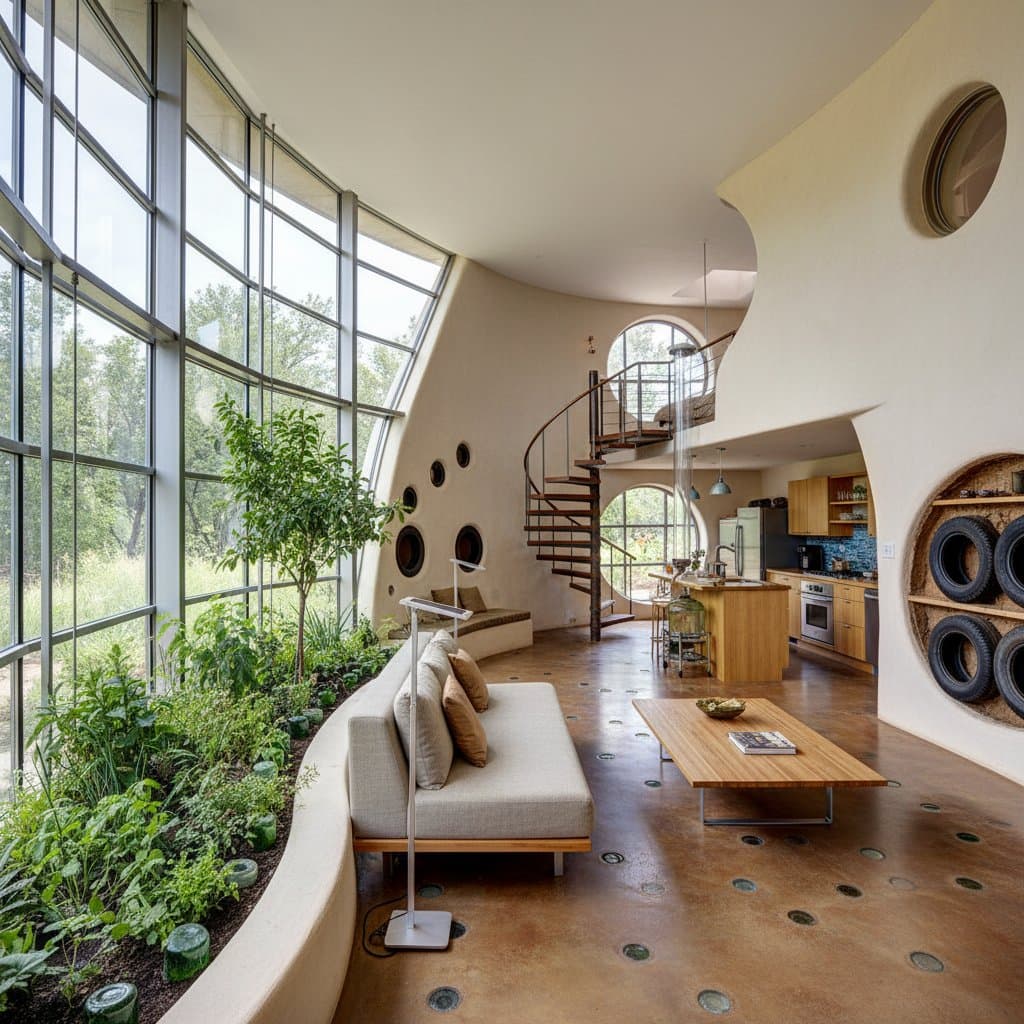
Earthship Revival: Tire-Based Homes Transform Off-Grid Living
Homeowners increasingly seek structures that harmonize with the environment while providing modern comfort. Earthships, constructed primarily from recycled tires packed with earth, represent a shift from experimental designs to practical off-grid residences. These homes integrate sustainable systems that promote self-sufficiency and reduce environmental impact.
The Rising Popularity of Self-Sufficient Homes
Off-grid living appeals to those desiring independence from traditional utilities. Earthships achieve this through innovative features that capture natural resources on-site. Residents benefit from lower long-term costs and enhanced resilience against energy fluctuations.
The design originated in the 1970s, pioneered by architect Michael Reynolds, who envisioned homes built from waste materials. Today, advancements in construction techniques make Earthships viable in diverse locations. Their popularity grows as awareness of climate challenges increases, drawing interest from urban escapees and rural enthusiasts alike.
Core Principles of Earthship Construction
Earthships rely on passive systems to maintain livability without reliance on external power sources. Builders stack tires filled with compacted earth to form walls that provide thermal mass. This material choice leverages abundant waste while ensuring durability.
Key components include:
-
Thermal Mass Walls: These structures store solar heat during daylight hours and release it gradually overnight. In cold climates, they prevent heat loss; in warmer areas, they block excess warmth.
-
Passive Solar Orientation: Large windows face the equator to maximize sunlight exposure. Overhangs control summer shading, optimizing energy efficiency throughout the year.
-
Water Management Systems: Sloped roofs channel rainwater into cisterns. Filtration processes purify the water for potable use, with graywater recycled for landscaping and blackwater treated via septic alternatives.
-
Integrated Food Production: South-facing greenhouses within the home allow year-round vegetable cultivation. This setup not only supplies fresh produce but also humidifies the air and aids temperature regulation.
Additional elements, such as solar panels and wind turbines, can supplement energy needs, though many Earthships function primarily on passive principles.
Utilizing Recycled Materials Effectively
Sourcing materials locally minimizes transportation emissions and costs. Tires, often discarded in landfills, form the structural core due to their strength and availability. Once rammed with earth, they create walls up to two feet thick, resistant to earthquakes and extreme weather.
Builders incorporate glass bottles into non-load-bearing walls for aesthetic and functional purposes. These elements diffuse light, reducing the need for artificial illumination. Reclaimed wood and metal scraps serve for framing and roofing, further enhancing sustainability.
Adaptation to regional conditions proves essential. In arid zones, enhanced water storage becomes priority; in humid areas, ventilation strategies prevent moisture buildup. Experienced builders assess site-specific factors like soil type and wind patterns to customize designs.
Financial and Regulatory Aspects
Initial construction costs for an Earthship range from $150,000 for a basic 800-square-foot model to $500,000 for larger, customized versions. These figures compare favorably to conventional homes when factoring in lifetime savings on utilities, which can exceed $2,000 annually.
Planning involves several steps. Conduct soil tests to evaluate stability and drainage. Secure building permits early, as alternative constructions may require variance approvals. Engage structural engineers to certify compliance with local seismic and wind load standards.
Zoning laws vary significantly. Some progressive areas, like parts of New Mexico and Colorado, offer incentives for green building. In restrictive jurisdictions, modular prefabrication can streamline approvals. Budget for ongoing expenses like insurance, which may initially cost more due to unconventional methods.
Steps to Build Your Earthship
Begin with research into certified Earthship academies or workshops for hands-on training. Sketch initial designs using software tailored to sustainable architecture. Consult local experts to refine plans based on site analysis.
Assemble a team of professionals skilled in rammed-earth techniques and off-grid systems. Source tires through community drives or recycling centers, aiming for 500 to 1,000 units per standard home. Track progress with detailed timelines to manage the 6- to 12-month build phase.
Post your project on platforms like Doric South to connect with vetted contractors. This network facilitates access to suppliers and advisors focused on eco-friendly projects. With thorough preparation, your Earthship can embody sustainable innovation while delivering enduring comfort.
Embracing Sustainable Independence
Earthships challenge conventional housing by proving that resilience and beauty coexist. Owners report profound satisfaction from living in harmony with natural cycles. As adoption spreads, these homes inspire broader shifts toward eco-conscious communities, fostering a legacy of environmental stewardship.