
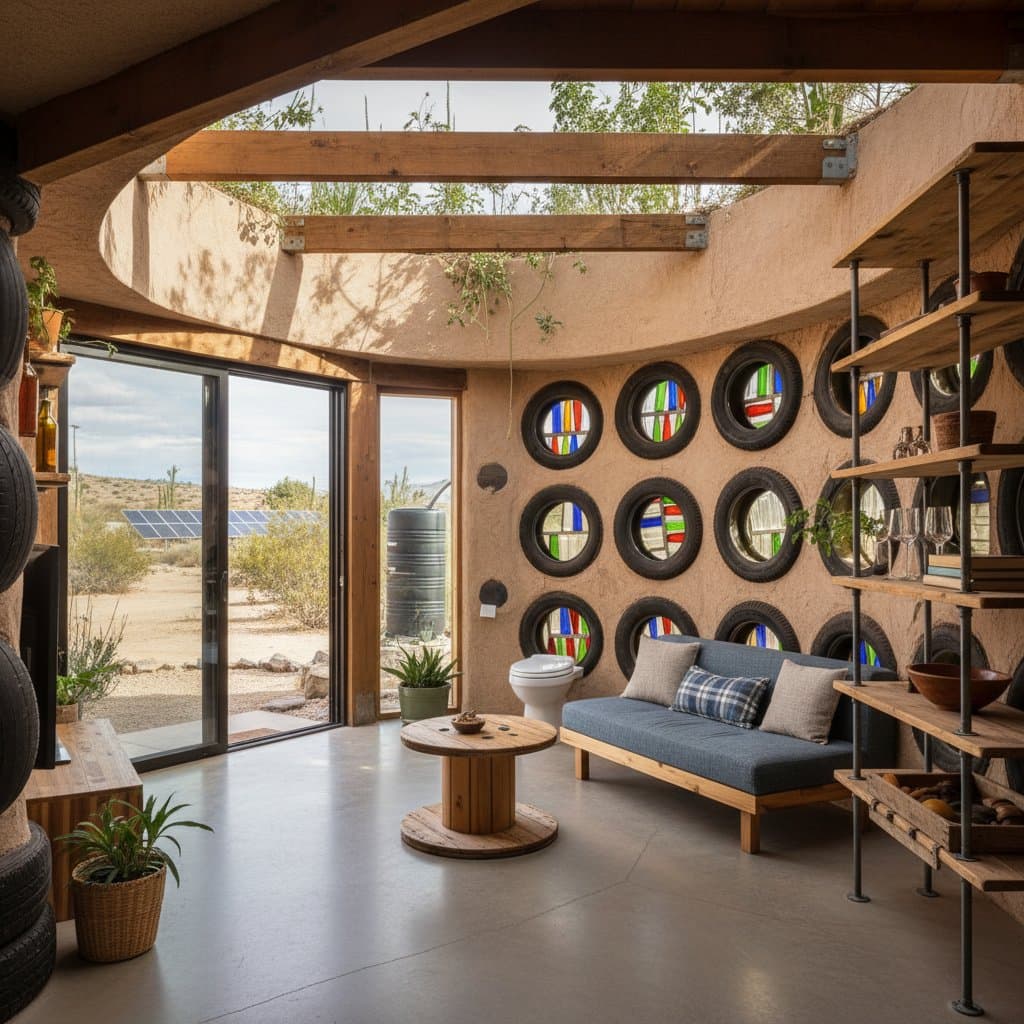
Sustainable Homes Made from Waste for Off-Grid Life
Have you ever looked at a pile of old tires, glass bottles, or scrap metal and wondered if it could become something useful? Many people now turn such waste into comfortable homes that operate without public utilities. These sustainable homes built from recycled materials make off-grid living practical and affordable.
Living off-grid begins with a simple approach. Use materials that already exist. Waste items remain widely available at low or no cost. They form durable structures that require minimal upkeep over decades.
The Opportunity in Waste
Communities generate tires, bottles, cans, and construction debris that often reach landfills. These items resist breakdown yet serve as strong building blocks when reused. Reclamation reduces landfill volume and lowers material expenses.
A sustainable home from waste supports independence. Owners generate power, collect water, and produce food on site. Recycled materials combined with off-grid systems create a resilient setup.
What You Can Build
Earthship designs rank among the most established options. Builders pack discarded tires with earth, incorporate glass bottles and cans, and apply natural plasters. The resulting thermal mass maintains steady indoor temperatures without mechanical heating or cooling.
Additional approaches include the following:
- Container homes assembled from retired shipping containers
- Cob cottages formed from clay, sand, and straw
- Rammed earth walls that incorporate soil and recycled aggregates
- Hybrid builds that combine reclaimed wood or metal with modern elements
Match each method to site conditions, available labor, and budget.
Why People Choose Waste-Based Homes
Common motivations include the points below.
- Affordability. Reclaimed materials often cut construction costs by half or more. Tires and bottles can be obtained free through direct collection.
- Energy independence. Solar arrays, rainwater systems, and composting setups allow full disconnection from utilities.
- Durability. Properly constructed tire or earth walls endure for generations with routine care.
- Environmental benefit. Reuse decreases landfill pressure and demand for virgin resources.
- Personal satisfaction. Hands-on construction fosters ownership and connection to the finished space.
Getting Started: The Basics
Begin with a documented plan. Off-grid builds require integrated design for year-round performance. Follow these steps.
- Research local building codes and permit requirements for unconventional materials.
- Select a proven design such as an Earthship and adapt it to your land.
- Source materials from tire shops, recycling centers, and construction sites. Clean and inspect every item.
- Prepare the site by clearing vegetation, leveling soil, and planning drainage.
- Construct the foundation and walls first. Pack tires with compacted earth or set containers on concrete pads.
- Integrate solar, water storage, and waste systems during the early phases.
- Apply clay or lime plaster as a final wall finish for breathability and appearance.
Cost and Effort
Material expenses range from a few thousand dollars to several tens of thousands depending on scale and included systems. Free or secondhand items reduce outlays significantly. Self-builders typically invest several months of part-time labor. Professional assistance accelerates progress at added cost. Solar and water equipment require upfront payment yet lower ongoing expenses. Natural finishes need periodic touch-ups, and solar components benefit from twice-yearly inspection.
Pros and Cons to Consider
Pros
- Low long-term operating costs
- Smaller environmental footprint
- Independence from energy and water grids
- Customizable layouts
Cons
- High initial labor demand
- Potential permit restrictions
- Limited conventional financing options
- Need to master off-grid system maintenance
Start with a modest structure to gain experience before expansion.
Building Safely and Responsibly
Structural integrity remains essential. Pack tires tightly and stack them according to engineering guidelines. Reserve bottle or can infill for non-load-bearing sections. Wear protective equipment during cutting and handling. Design composting toilets and greywater systems to prevent contamination. Workshops offered by established Earthship communities provide practical training on safe methods.
Living Off-Grid with Comfort
A finished waste-based home supports modern amenities. Solar power runs lights, refrigeration, and appliances. Rainwater supplies daily water needs. Thick walls and proper ventilation maintain stable indoor conditions. Indoor planters fed by greywater allow herb and vegetable cultivation within the living space.
Building for the Long Term
Routine care preserves performance. Reapply plaster to seal cracks. Clear drainage paths after storms. Inspect roofs and solar arrays on a regular schedule. These habits sustain efficiency for decades.
Taking the First Steps
Collect materials and draft a site-specific layout. The process reveals how achievable a waste-based home can be. Such structures now represent a tested path to independence rather than an experiment.