
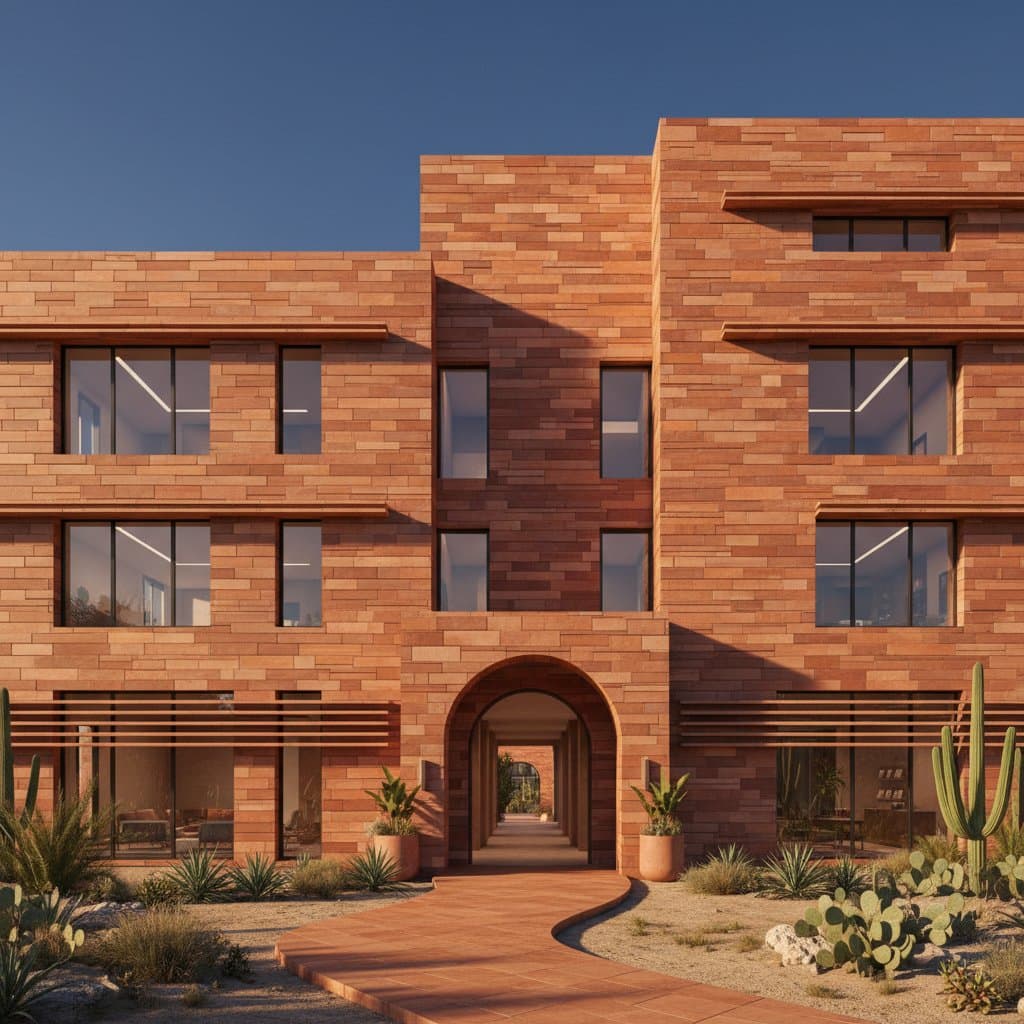
Reviving Terracotta: The Earthy Return to Architecture
Buildings increasingly feature warm clay hues and textured surfaces. These elements stem from terracotta, an ancient material now reentering modern design. Home renovations, commercial developments, and outdoor projects alike benefit from terracotta's aesthetic and functional qualities.
Reasons for Terracotta's Resurgence
Concrete, glass, and steel long defined modern aesthetics with their sleek strength, yet they often convey a sense of coldness. Terracotta introduces warmth, inherent coloration, and tactile depth absent in many current spaces. Applications span tiles, cladding systems, roofing components, and ornamental details, enhancing structural character and livability.
Terracotta aligns with prevailing priorities in natural materials, ethical sourcing, and enduring functionality. Homeowners and architects rediscover clay's adaptability and resilience when properly formed and kiln-fired.
Defining Terracotta's Composition
The term terracotta translates to baked earth. Manufacturers shape natural clay and subject it to intense heat, yielding a sturdy, porous substance. Glazing imparts a glossy finish, while an unglazed surface evokes rusticity. Traditional shades include reds, oranges, and browns; advanced techniques now produce creams, grays, and charcoals.
Terracotta's structure permits vapor transmission, aiding temperature and moisture control for enhanced indoor comfort. It resists fire and demands minimal upkeep post-installation.
Applications Across Projects
Terracotta extends beyond roofing to diverse implementations. Contemporary variants suit multiple project areas:
- Exterior facades: Panels or tiles deliver warm, textured exteriors. Secure them via concealed fasteners or exposed seams to match design intent.
- Roofing systems: Curved tiles endure while preserving classic profiles.
- Flooring and patios: Unglazed options infuse organic appeal indoors or out.
- Decorative accents: Screens, planters, and moldings provide nuanced visual enhancement.
- Interior partitions: Slender cladding introduces natural tones without structural burden.
Evaluate costs and maintenance for each to align with project budget and effort.
Financial and Installation Considerations
Terracotta demands a higher initial outlay than some alternatives, yet it provides sustained value. Basic tiles cost several dollars per square foot; bespoke panels command premiums. Installation expenses vary by complexity and expertise required. A modest patio or feature wall might total hundreds in materials, while extensive cladding escalates to thousands.
Weight necessitates cautious handling to prevent fractures. Professionals typically manage facades and roofs. Post-installation, occasional mild soap cleansing suffices for upkeep over decades.
Advantages and Limitations of Terracotta
Prospective users should balance terracotta's strengths against potential challenges.
Advantages
- Derived from natural, non-toxic sources
- Withstands weather and wear effectively
- Cools interiors in hot regions through thermal properties
- Imparts distinctive coloration and surface variation
- Supports recycling and repurposing
- Harmonizes with modern and classic motifs
Limitations
- Exceeds weight of numerous contemporary options
- Risks moisture uptake without adequate sealing
- Demands precise installation techniques
- Surpasses initial expense of fabricated substitutes
- Faces supply constraints in select locales
Such factors suit terracotta to those prioritizing authenticity and longevity over immediate economy.
Integrating Terracotta Effectively
To incorporate terracotta for a grounded aesthetic, proceed methodically, whether scaling modestly or ambitiously.
- Select desired aesthetics: Opt for rustic reds or sleek mattes. Gather physical samples to inform choices.
- Assess structural capacity: Terracotta's mass requires verification. Engage engineers or contractors for substantial wall applications.
- Specify appropriate variants: Choose frost-proof or glazed pieces for exteriors to mitigate absorption. Unglazed suits interiors for subtle texture.
- Engage skilled labor: Seek installers with proven terracotta experience.
- Apply protective measures: Use permeable sealants as needed to guard against stains and erosion.
Sustainability Profile
Terracotta appeals to eco-conscious selections due to its clay origins and reduced ecological impact relative to synthetics. Kiln operations consume energy, though contemporary facilities optimize efficiency. Its longevity minimizes replacement demands and waste.
Terracotta enhances energy-efficient architectures via thermal mass, moderating temperatures to cut heating and cooling reliance. Pair it with insulation and airflow strategies for optimal performance sans synthetic dependencies.
Terracotta Versus Alternatives
When evaluating facade or flooring choices, consider these contrasts.
- Against concrete: Terracotta warms visually and tonally; concrete proves more affordable but prone to cracking and fading.
- Against natural stone: Stone rivals in appeal but burdens with greater weight and price; terracotta approximates earthiness economically.
- Against metal panels: Metal yields industrial crispness, terracotta organic softness. Metal heats rapidly in sunlight, terracotta stays temperate.
- Against synthetic claddings: Imitations like fiber cement or vinyl approximate hues but lack terracotta's tactile authenticity and may degrade sooner.
Selections hinge on values; terracotta excels where natural essence and permanence matter.
Engaging Experts
DIY suits minor tasks like entry tilings or planter features, provided tools and care align. Larger scopes, particularly facades or roofs, warrant professionals for safety and precision. Experts secure anchors, incorporate expansion gaps, and direct drainage.
Exterior wall projects may require permits; review local codes prior to procurement. Specialists assist in compliance, averting errors and expenses.
Long-Term Maintenance Practices
Terracotta thrives with sparse intervention, repelling grime and color loss inherently.
- Routine cleansing: Employ gentle detergent solutions; eschew abrasives that harm clay.
- Joint evaluations: Annually scan for grout fissures or dislodged pieces.
- Periodic resealing: Refresh breathable coatings every few years on unglazed, moisture-exposed surfaces.
- Impact safeguards: Prevent heavy falls on floors or walls.
Consistent practices extend durability across decades.
Harmonizing with Contemporary Styles
Terracotta transcends heritage motifs, integrating seamlessly with glass, steel, or concrete for refined equilibrium. Employ it accentually, such as a screened partition beside sharp-framed windows for contrast. Within, tiles temper stark minimalism without dominance.
Pair with neutrals like beige, cream, or gray for cohesion. Alliance with wood and stone fosters unified spatial narratives.
Realizing Your Terracotta Vision
Terracotta's innate warmth invites incorporation now more than ever. Develop a detailed blueprint, collaborate with proficient teams, and source premium components. Modest enhancements, from kitchen splashes to pathway integrations, anchor spaces enduringly.
Centuries of evolution affirm terracotta's merit: it unites resilience and allure, heritage and innovation, utility and solace.